
The Bible views wine as a gift from God that can bring joy, as seen in Psalm 104:15 and Jesus’ transformation of water into wine at Cana. However, Scripture consistently warns against drunkenness, listing it among serious moral failures in Galatians 5:21 and describing its harmful effects in Proverbs 23:29-35. The biblical approach emphasizes moderation, self-control, and wisdom rather than total prohibition. Spiritual leaders faced higher standards, with priests commanded to abstain while serving. Understanding these principles offers guidance for thoughtful decision-making today.
Key Takeaways
- The Bible portrays wine as a gift from God that can bring joy when used properly and in moderation.
- Scripture consistently condemns drunkenness as sin, warning it leads to poor judgment, poverty, and spiritual compromise.
- Jesus drank wine and used it in communion, affirming alcohol itself is not inherently sinful or forbidden.
- Biblical teaching emphasizes self-control and wisdom regarding alcohol rather than imposing total prohibition on all believers.
- Spiritual leaders faced stricter standards, with priests and Nazarites required to abstain during service or special vows.
Biblical Perspective on Moderate Wine Consumption and Celebration
The Bible’s treatment of wine reveals a nuanced position that neither condemns moderate consumption nor endorses excess, a balance rooted in the broader biblical emphasis on wisdom and self-control. The canon is structured into 31,102 verses across 66 books.
Scripture presents wine as a gift from God that can gladden the heart (Psalm 104:15), yet repeatedly warns against drunkenness and its consequences.
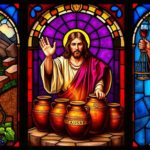
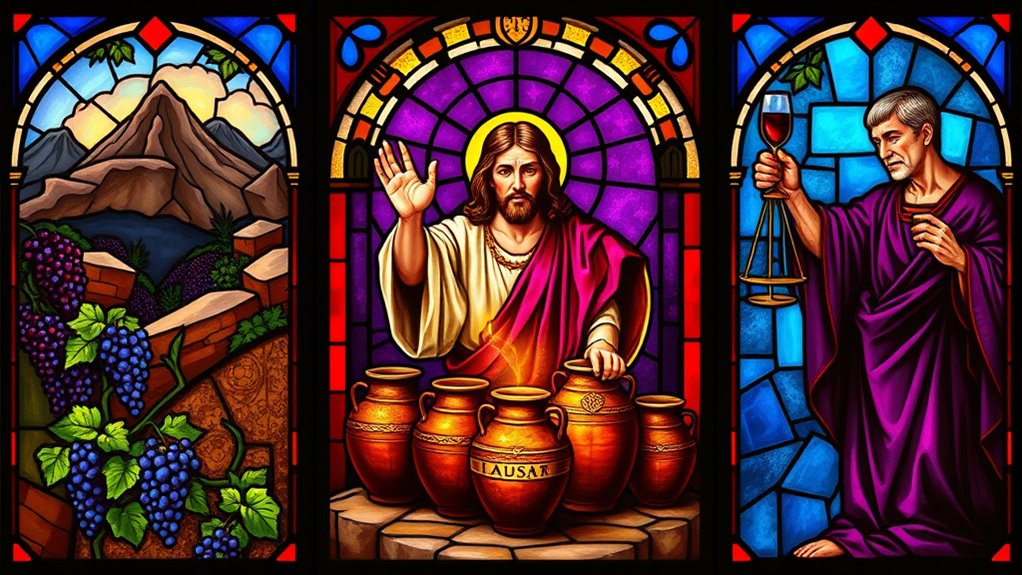
Jesus himself drank wine and transformed water into wine at a wedding in Cana (John 2:1-11), demonstrating acceptance of moderate use in celebration.
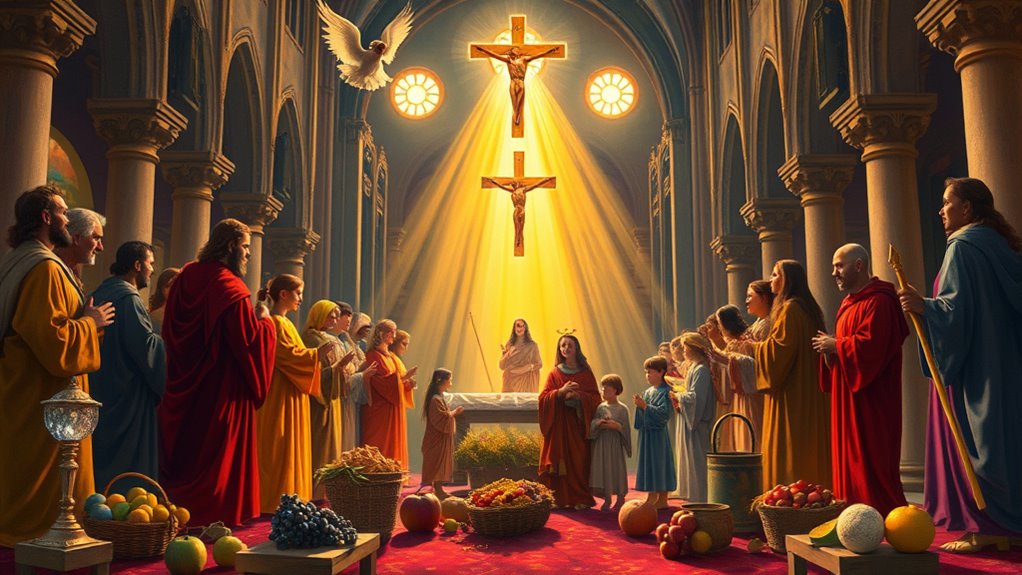
Wine appeared regularly in Jewish festivities, including Passover, which Jesus observed and incorporated into the Lord’s Supper (Luke 22:14-20).
Paul advised Timothy to use “a little wine” for medicinal purposes (1 Timothy 5:23), suggesting purposeful, controlled consumption.
Archaeological findings in Israel confirm widespread wine production through discovered winepresses and pottery with residue.
The biblical pattern favors discernment over prohibition, urging believers toward sobriety and responsibility.
The Bible warns that wine is a mocker and can lead to destructive consequences when consumed without wisdom (Proverbs 20:1).
The Dangers of Drunkenness and Standards for Spiritual Leadership
While the Bible acknowledges wine as part of celebration and daily life, Scripture draws a firm line against drunkenness, classifying it among serious spiritual and moral failures. Many biblical texts were written in original languages such as Hebrew and Koine Greek, reflecting their historical contexts. Proverbs 20:1 and Ephesians 5:18 warn that intoxication leads to loss of wisdom and judgment.
Galatians 5:21 lists drunkenness among works of the flesh that exclude people from God’s kingdom. The consequences extend beyond spiritual matters: Proverbs 23:29-35 describes poverty, quarrels, wounds, and red eyes as outcomes of excessive drinking.
Scripture holds spiritual leaders to higher standards, requiring sobriety and self-control. Leviticus 10:9-11 commanded priests to abstain from wine while serving, emphasizing the need to distinguish between holy and unholy.
Isaiah 28:7 depicts drunk priests and prophets stumbling in judgment, illustrating how intoxication undermines spiritual authority and clarity. Nazarites abstained from wine and grape products as part of their vow of holiness and dedication to God. Believers are encouraged to exercise self-control, a fruit of the Spirit, to maintain spiritual vigilance and resist worldly distractions.