


The Bible records several instances of suicide, including King Saul, Judas Iscariot, and Ahithophel, each occurring under circumstances of shame, despair, or political failure, yet offers no explicit commandment addressing the act itself. Scripture emphasizes God’s sovereignty over life and death, with passages like 1 Samuel 2:6 and Job 14:5 affirming that human days are determined by divine authority alone. The biblical narrative encourages believers to trust God’s plan amid suffering, recognizing Christ’s lordship over both living and dead. Further exploration reveals how these principles intersect with questions of hope and eternal destiny.
Key Takeaways
- The Bible records several suicide accounts including Saul, Judas, and Samson, each driven by shame, despair, or vengeance.
- Scripture does not explicitly condemn suicide but emphasizes God’s ultimate authority over human life and death.
- God determines the length of human life and possesses sovereignty over both physical and eternal destiny.
- Biblical teaching encourages trusting God’s plan amid suffering rather than taking control of one’s own death.
- Jesus holds authority over death and Hades, offering hope that extends beyond physical death for believers.
Biblical Examples and Accounts of Suicide

The Bible records several instances of suicide among its historical figures, each occurring within distinct circumstances that shaped the individual’s final choice. Scholars note that archaeological evidence supports the historical context of many such accounts. King Saul fell on his sword after defeat in battle to avoid capture by enemies, and his armorbearer followed suit (1 Samuel 31:4-6).
Judas Iscariot hanged himself after betraying Jesus, overwhelmed by guilt (Matthew 27:5).
Ahithophel, counselor to King Absalom, took his life when his advice was rejected (2 Samuel 17:23).
Zimri set fire to the royal palace with himself inside after losing political support (1 Kings 16:18-19).
Samson pulled down temple pillars, killing himself alongside his enemies in an act of revenge (Judges 16:29-30). Abimelech requested his armor-bearer to kill him to avoid the dishonor of being killed by a woman (Judges 9:54).
The Bible also records one attempted suicide when Paul and Silas’s jailer nearly took his own life after an earthquake freed the prisoners, but Paul stopped him from proceeding (Acts 16:25-28).
These accounts reveal motivations ranging from shame and political failure to despair and vengeance.
Understanding God’s Sovereignty Over Life and Death

When examining biblical teaching on life’s ultimate boundaries, Scripture consistently presents God as possessing complete authority over when human life begins and ends. In first-century Palestine, people typically spoke Aramaic in daily life. First Samuel 2:6 declares that the Lord “brings death and makes alive,” while Job 14:5 states that human days are determined and boundaries set by God alone.
This sovereignty extends beyond physical death to eternal destiny. Jesus Christ affirmed this authority through His resurrection, breaking death’s power for believers according to Hebrews 2:14. The biblical text emphasizes God’s control through specific Hebrew verb forms: the Hiphil form indicates direct, causative involvement in bringing about death and resurrection, while the Piel form emphasizes God’s active giving of life.
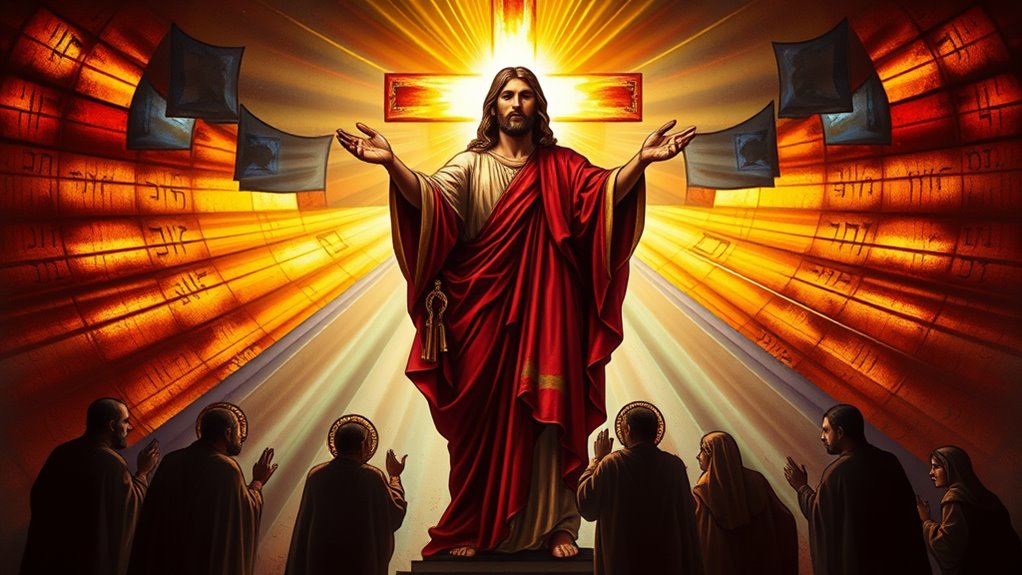
Romans 14:7-9 teaches that Christ is Lord over both living and dead, meaning believers belong to Him in life and death. Revelation 1:17-18 reveals that Jesus holds the keys of Death and Hades, demonstrating His absolute authority over the realm of the dead. While God’s sovereignty coexists with human responsibility, Scripture calls followers to trust His higher ways, even amid suffering, finding peace in His eternal control.