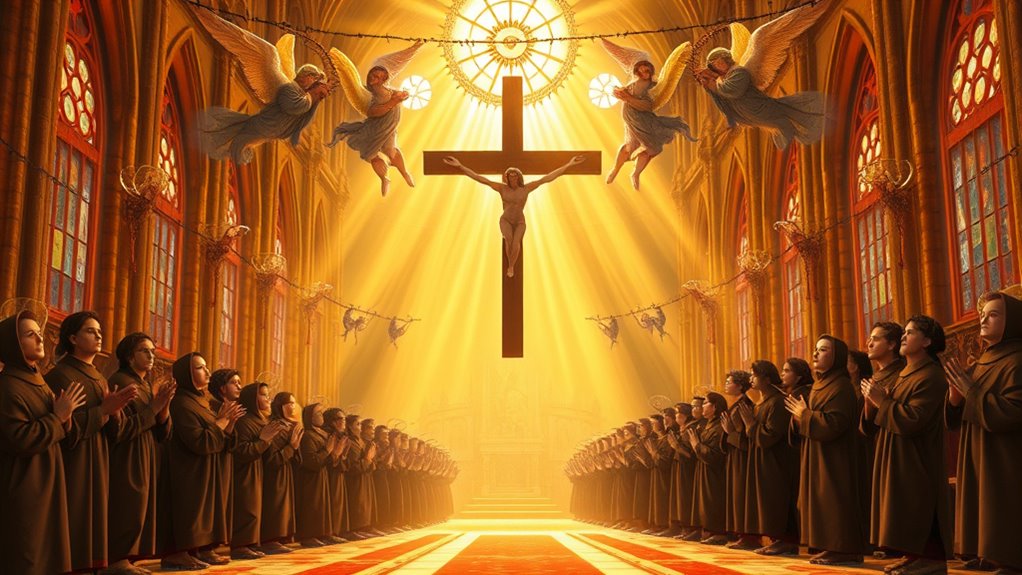
On December 13, 2025, Notre-Dame Cathedral in Paris hosted France’s largest collective beatification, honoring fifty Catholics killed by Nazis between 1944 and 1945. The martyrs included priests, seminarians, Catholic Scouts, and Young Christian Workers, over 80% under thirty years old, who died in concentration camps like Dachau, Buchenwald, and Mauthausen. Cardinal Jean-Claude Hollerich presided over the ceremony recognizing those who refused to abandon their faith despite persecution. Their deaths from typhus, execution, and imprisonment conditions challenged Nazi anti-Christian ideology through steadfast witness, a legacy that continues to inspire.
When Nazi forces swept across France in 1940, they found resistance not only from soldiers but from young Catholics who would risk everything to serve forced laborers shipped to German factories.
On December 13, 2025, fifty of these martyrs were beatified at Notre-Dame Cathedral in Paris, marking the largest collective beatification ever held in France.
Paris witnessed France’s largest collective beatification as fifty Catholic martyrs received recognition for their ultimate sacrifice during Nazi occupation.
Cardinal Jean-Claude Hollerich of Luxembourg presided over the ceremony honoring Catholics killed between 1944 and 1945 for refusing to abandon their spiritual duties.
The fifty French martyrs were part of 174 new blessed declared by Pope Leo XIV, a group that also included 124 Spanish Civil War victims.
During the Angelus on December 14, the Pope praised them as courageous witnesses to the Gospel.
The persecution began after the Vichy regime enacted the Service du Travail Obligatoire in 1943, forcing French workers into German factories.
French Catholics formed a clandestine network to accompany these laborers, providing spiritual support that challenged Nazi ideology.
This apostolate, rooted in what the Church calls odium fidei—hatred of the faith—cost them their lives. The Church’s understanding of drunkenness as a moral failing influenced its pastoral care and emphasis on sobriety.
Among the martyrs was Father Raimond Cayré, a twenty-eight-year-old diocesan priest who died of typhus in Buchenwald in October 1944.
Father Gerard Martin Cendrier, a twenty-four-year-old Franciscan, perished in the same camp three months later.
Roger Vallée, a twenty-three-year-old seminarian, died in Mauthausen, while Jean Mestre, nineteen and a member of the Young Christian Workers, was killed in Gestapo custody.
The youngest were Catholic Scouts aged twenty-one and twenty-two, executed by gunfire and beheading.
More than eighty percent of the martyrs were under thirty at death.
The group included four Franciscans, nine diocesan priests, three seminarians, fourteen Catholic Scouts, and nineteen Young Christian Workers members.
They died in concentration camps including Buchenwald, Mauthausen, Dachau, and Zöschen, from typhus, tuberculosis, execution, or what church documents describe as ex aerumnis carceris—the suffering of imprisonment.
Dachau alone held 2,720 clergy, with over 1,000 perishing in the brutal conditions that targeted priests as primary enemies of the Nazi state.
Their willingness to die for their faith challenged Nazi totalitarian and anti-Christian ideology at its core.
Cardinal Hollerich emphasized their testimony of love through steadfast service, a witness that continues to inspire faithful today.