





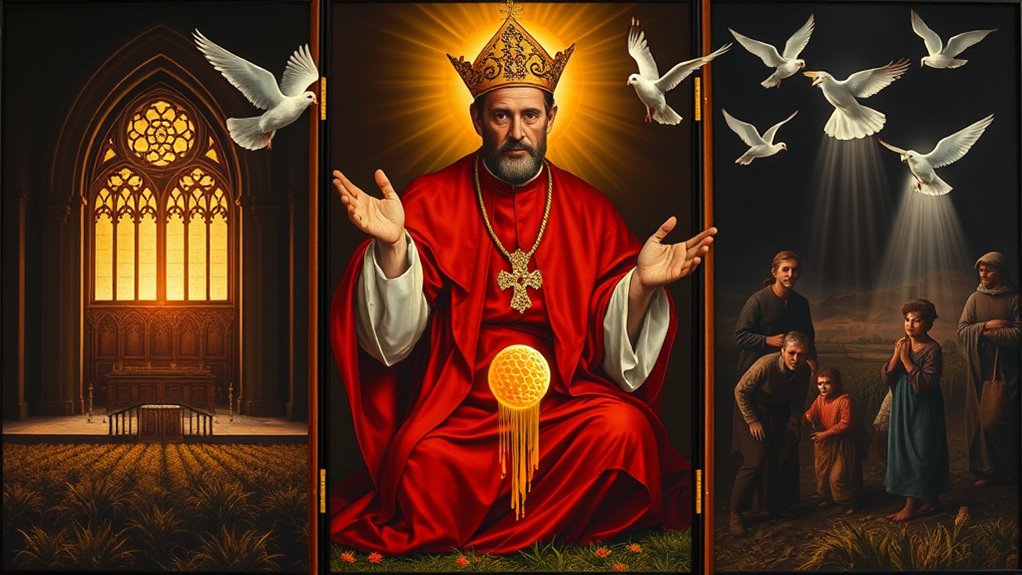
St. Francis de Sales revolutionized Catholic missionary work in sixteenth-century France by rejecting formal authority in favor of personal encounter and patient dialogue. Facing 72,000 Calvinist residents in the Chablais countryside, he traveled on foot to meet workers in their fields, building trust through respectful conversation rather than confrontation. He famously taught that a spoonful of honey attracts more flies than vinegar, combining solid doctrine with pastoral devotion. Within four years, nearly all residents returned to Catholicism. The methods he pioneered for ordinary believers continue to shape evangelical outreach today.
The countryside of Chablais in sixteenth-century France presented a formidable challenge to any missionary: 72,000 residents had embraced Calvinism, churches stood empty or damaged, and Catholic practice had nearly vanished from daily life. Francis de Sales entered this region without official delegation or funds from the Duke of Savoy, relying instead on methods that would prove remarkably effective. Within four years, nearly all residents had returned to Catholicism, with only about 100 Calvinists remaining by the mission’s end.
His approach centered on personal encounter rather than confrontation. Francis traveled on foot to meet workers and peasants in their fields, establishing man-to-man relations that led to genuine personal witness. He treated opponents with respect and charity even when they insulted him, preferring dialogue over debate. This personal contact preceded his preaching, creating trust that formal proclamations alone could not achieve.
Personal encounter and respectful dialogue build the trust that formal proclamations alone cannot achieve in transforming hearts.
Francis demonstrated pastoral persistence in both large and small settings. He preached to tiny Catholic flocks with the same care he gave to crowds, visited the sick, and administered the Eucharist faithfully. Protestant ministers often avoided his events, but he continued his efforts, drawing strength from daily Mass and prayer. He also prepared new workers and sought sustainable means for the mission’s continuation. His father had refused funding for the initial mission, yet Francis persevered through these financial obstacles.
His communication strategy blended ancient methods with practical innovation. While he employed letter writing for spiritual direction, he preferred spoken words for their living impact. He particularly targeted influential Catholics, understanding that swaying elite members could affect broader communities. He coined the phrase that a spoonful of honey attracts more flies than vinegar, embodying this principle in his interactions. His frequent communication with those he discipled ensured they received ongoing guidance and support.
Francis combined solid orthodoxy with intense pastoral devotion, never compromising doctrine while serving his neighbors’ salvation despite his personal short temper. He modeled his work after Jesus’ encounters in Galilee and Judea, sometimes going to life-threatening extremes to save souls. Known today as the Doctor of Divine Love, his methods remain relevant for contemporary evangelization, demonstrating how ordinary encounters and genuine charity can transform entire communities. His legacy guides disciples on the path to holiness through practical, person-centered evangelization. He also emphasized forgiveness and grace as foundational practices for sustained reconciliation and spiritual growth.