


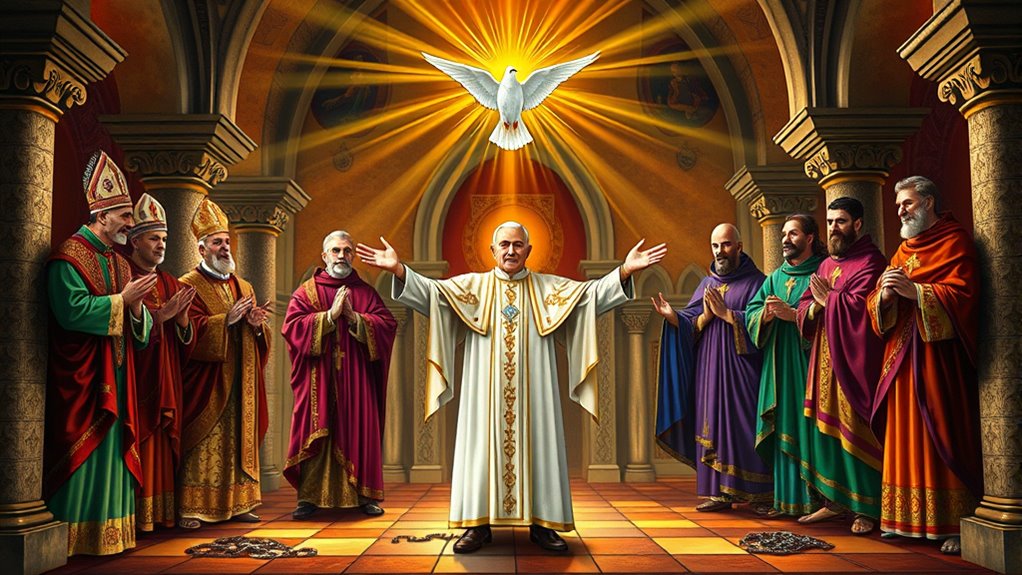
On February 5, 2026, Pope Leo XIV welcomed representatives from six Eastern Orthodox Churches to the Vatican, urging them to “disarm hearts” by removing centuries-old prejudices that have divided Christians. The meeting, organized by the Department for Promoting Christian Unity, included delegates from Armenian, Coptic, Ethiopian, Eritrean, Malankara, and Syriac Orthodox traditions. The Pope emphasized that growing together in shared faith could become “leaven for peace on earth,” continuing dialogue efforts that began with the 1964 Unitatis Redintegratio decree and built upon recent synodality commitments exploring paths toward reconciliation.
In a gesture toward reconciliation centuries in the making, Pope Leo XIV welcomed representatives from six Eastern Orthodox Churches to the Vatican on February 5, 2026, urging them to “disarm hearts” by removing prejudices that have kept Christian communities apart. The meeting, organized by the Department for Promoting Christian Unity, brought together delegates from the Armenian, Coptic, Ethiopian, Eritrean, Malankara, and Syriac Orthodox Churches for a familiarization visit focused on overcoming alienation through dialogue. The Pope emphasized that diversity of traditions represents a common heritage requiring honest conversation rather than division. He called for disarming hearts to foster charity and closer cooperation, arguing that stronger unity bonds among Christians could become leaven for peace on earth and reconciliation among all people. His message centered on supporting one another to grow in shared faith in Christ as the source of peace. The Pope invoked the words of Constantinople Patriarch Athenagoras to support his concept of internal disarmament as a spiritual struggle with oneself.
Pope Leo XIV calls on Eastern Orthodox representatives to disarm hearts and remove centuries-old prejudices dividing Christian communities through dialogue.
Significant progress has occurred since the 1964 Unitatis Redintegratio decree launched modern ecumenical efforts. Annual delegations now exchange visits between Rome on June 29 and Istanbul on November 30, reflecting renewed fraternity experienced with intensity. The recent Synod on synodality affirmed an irreversible commitment to dialogue, with listening without condemning identified as the path forward. The renewed focus on covenant and shared roots reminds Christians of their common biblical heritage and promises to be a foundation for continued rapprochement with Israel’s biblical heritage.
Historical disputes that once sparked bitter arguments have begun losing their acrimony in the current climate of dialogue. The Filioque addition, which divided East and West for centuries, now invites hopes for mutual acceptance through what Pope Francis has called reconciled differences, where disagreements are embraced in love rather than opposition. Both Catholic and Orthodox traditions affirm the Holy Spirit as life-giving, uniting Christians despite theological variances, echoing Romans 8:2 on the Spirit’s life in Christ Jesus. Among the historical causes of division were disagreements on clerical celibacy in the Western tradition that exacerbated tensions between the churches.
Pope Francis previously requested an end to centuries-old misunderstandings over Easter date calculations, calling for courage to end this division and referencing Saint Paul VI’s agreement proposal. Ecumenical Patriarch Bartholomew has described dialogue as a Gospel obligation and Christian duty for the baptized, in obedience to Christ’s prayer for unity in John 17:21, noting that what unites Christians exceeds what divides them.