
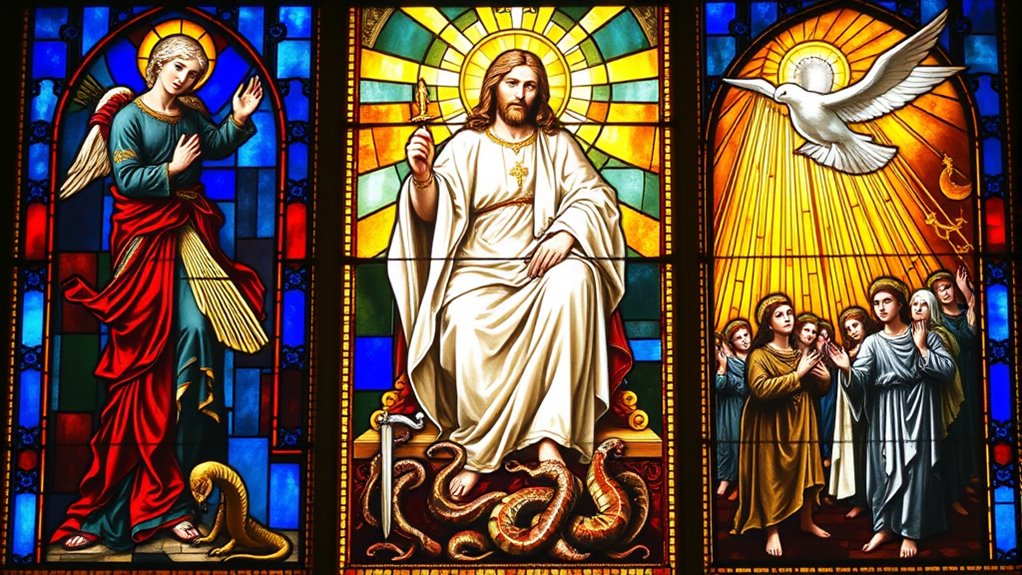




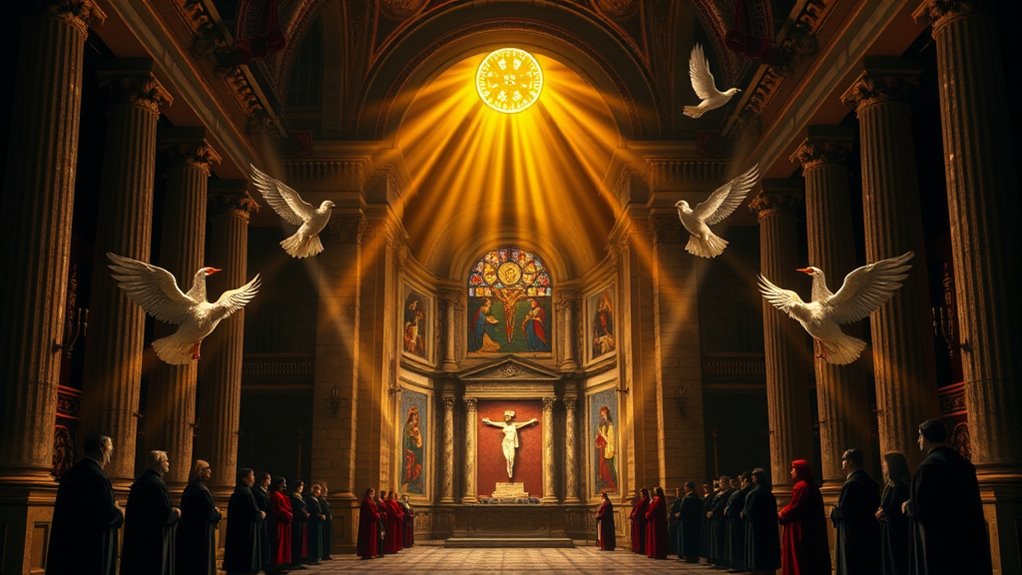
The European Court of Human Rights is reviewing whether Christian icons in Greek courtrooms violate religious freedom protections under the European Convention. The case, Union of Atheists v. Greece, follows a 2009 ruling that found crucifixes in Italian public schools violated Article 9 rights. Today, Bavaria maintains crosses in government offices while France permits religious imagery serving cultural purposes. With anti-Christian hate crimes reaching 2,444 incidents across 35 countries in 2023 and two-thirds of Protestants opposing public crosses, the decision will shape religious symbol policies across 46 Council of Europe member states and illuminate how secular governance intersects with historical identity.
Across Europe’s courtrooms, town halls, and government offices, Christian icons and crucifixes have hung for centuries, but their presence now stands at the center of a legal challenge that could reshape public spaces in 46 nations. The European Court of Human Rights is considering a case brought by the Union of Atheists v. Greece, where applicants identifying as atheists requested removal of icons from a Greek courtroom during religious hearings. Greek courts denied these requests, and ADF International intervened to defend displays reflecting historical traditions.
Christian symbols displayed for centuries in European public institutions now face legal scrutiny that could transform 46 nations’ courtrooms and government spaces.
The issue carries significant weight given Europe’s long practice of displaying religious symbols in public institutions. Bavaria, Germany maintains crosses in every government office, while Italian state buildings have displayed crucifixes for generations. French courts recognize religious imagery as permissible when serving cultural or historical purposes, treating these symbols as part of Europe’s heritage that has shaped national identity. Austria and Spain similarly maintain religious artwork in historic court buildings, continuing traditions that reflect their cultural heritage.
Yet precedent cuts both ways. In 2009, Lautsi v. Italy found that crucifixes in Italian public schools violated Article 9 of the Convention, ruling that exposure contradicted religious freedom of children and parents’ education rights. Italy was ordered to pay 5,000 Euros to the applicant, with the court interpreting the crucifix as a predominant religious sign influencing non-believers and minorities.
The current case unfolds against a backdrop of rising tensions. ODIHR data recorded 2,444 anti-Christian hate crimes across 35 European countries in 2023, including 232 personal attacks involving harassment, threats, and physical violence. France reported nearly 1,000 incidents, while Germany saw a 105% increase to 277 cases. In 2019 alone, over 3,000 attacks targeted Christian churches, schools, and symbols across Europe. The Gatestone Institute documented that these attacks equated to more than five incidents per day across the continent during that year.
Public opinion remains divided. Two-thirds of Protestants oppose displaying crosses in public buildings, yet symbols continue appearing in new contexts. The legal question centers on whether culturally rooted symbols compromise court objectivity and fair trial rights, or whether the European Convention protects both freedom of religion and heritage displays. The ruling will determine how 46 Council of Europe states balance secular governance with historical identity. A related debate concerns how burial and cremation practices intersect with cultural heritage and religious expression in public policy.