
Pope Leo XIV and Patriarch Bartholomew I have issued a joint statement urging governments to stop exploiting spiritual beliefs for partisan gains, warning that weaponizing religious symbolism deepens societal polarization and threatens democratic integrity. The appeal follows recent tensions, including incidents in Armenia where political leaders made unsubstantiated accusations against clergy, and U.S. protests over the politicization of sacred spaces. Scholars link these patterns to totalitarian-era concepts of “political religion,” where boundaries between spiritual authority and political power erode. Faith leaders across Christian, Muslim, and Jewish communities emphasize collective responsibility to preserve religious freedom and social cohesion through dialogue and restraint.
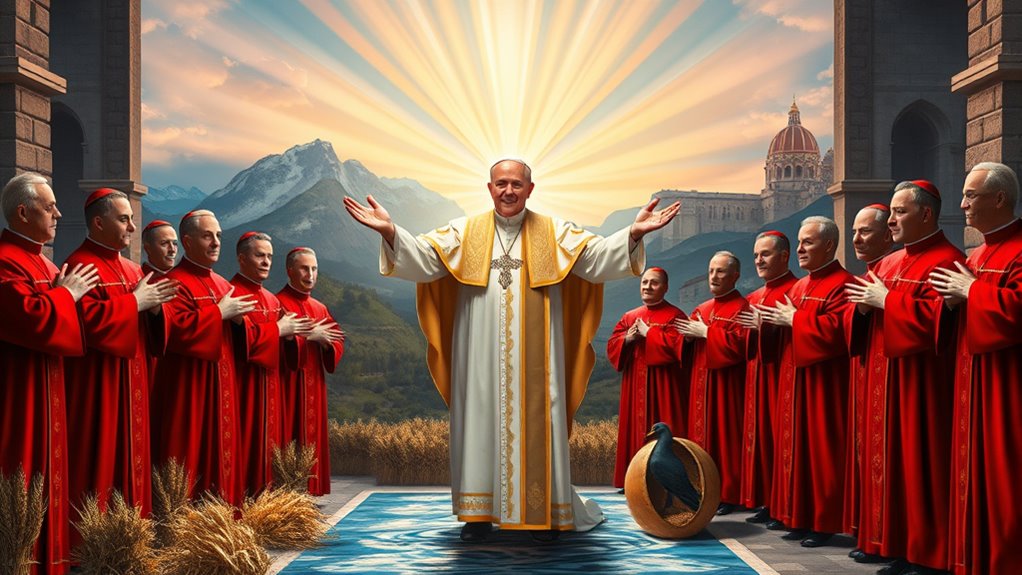
As religious symbols and sacred language increasingly appear in political campaigns across multiple continents, faith leaders from diverse traditions are calling on government officials to stop exploiting spiritual beliefs for partisan gain. They also urged dialogue about female ministry and other contested religious roles to prevent further polarization. Pope Leo XIV and Patriarch Bartholomew I issued a joint statement highlighting patterns they describe as dangerous to both democratic governance and religious integrity.
The statement comes amid several high-profile incidents. In Armenia, Prime Minister Nikol Pashinyan posted allegations on Facebook about clergy violating celibacy vows, implying he possessed information about bishops and the Catholicos having forbidden sexual relations. The campaign included offensive language and disclosed identifiable information about an alleged female partner, prompting condemnation from seventeen civil society organizations. High-ranking clergy faced insults and threats, while critics across political and religious lines demanded Pashinyan remove the post and issue a public apology. His wife Anna Hakobyan accused clergy of severe crimes including pedophilia and criminal activity, though no clergy in Armenia has been charged with such offenses.
Similar concerns emerged in the United States, where Christian leaders condemned the use of religious sites as political tools. A formal release highlighted the misuse of sacred spaces for political gain, with Bishop Arora calling on churches to confront the capture of Christian language and symbols by populist forces. The statement specifically challenged figures using religion to advance political agendas. Peaceful protesters were dispersed with tear gas to clear a path for a presidential photo opportunity at a historic church.
Two hundred interfaith leaders also condemned anti-Muslim attacks on politician Zohran Mamdani, describing tactics that exploit fear to incite prejudice against Muslim communities. The statement deplored what leaders called the politics of fear targeting citizens based on religious identity.
Scholars trace these patterns to twentieth-century totalitarian ideologies. Thinkers including Eric Voegelin, Raymond Aron, and Waldemar Gurian labeled such approaches “political religion,” describing how totalitarian forms erase distinctions between spiritual and temporal authority. Luigi Sturzo identified this as a radical intensification of religious sentiment abuse, a phenomenon Michael Burleigh has explored extensively.
Religious leaders emphasize that exploiting faith for political ends risks entrenching societal divisions and undermining democratic norms. Their unified response, spanning Christian, Muslim, and Jewish communities, reflects growing alarm about the weaponization of religious difference. Civil society organizations are calling for collective responsibility to address these trends before they further erode both religious freedom and social cohesion.