In early 1274, as Thomas Aquinas entered the Cistercian monastery at Fossa Nuova during a journey to the Council of Lyon, he quietly told his companion Reginaldo that he would rest there forever. The theologian died days later on March 7, at approximately forty-nine years old, making his whispered statement both prediction and peaceful acceptance of his approaching end. This declaration, remembered for seven and a half centuries, came after Aquinas had ceased writing following a profound spiritual experience in December 1273, though his final acts centered on receiving the Eucharist and affirming his faith.
In the early months of 1274, Thomas Aquinas set out on a journey he would never complete. The Dominican friar, traveling to the Council of Lyon at Pope Gregory X’s request, fell ill along the way. He sought shelter at the Cistercian monastery of Fossa Nuova in central Italy, where he would spend his final days.
A journey to Lyon interrupted by illness, the great theologian found his final resting place among Cistercian monks in 1274.
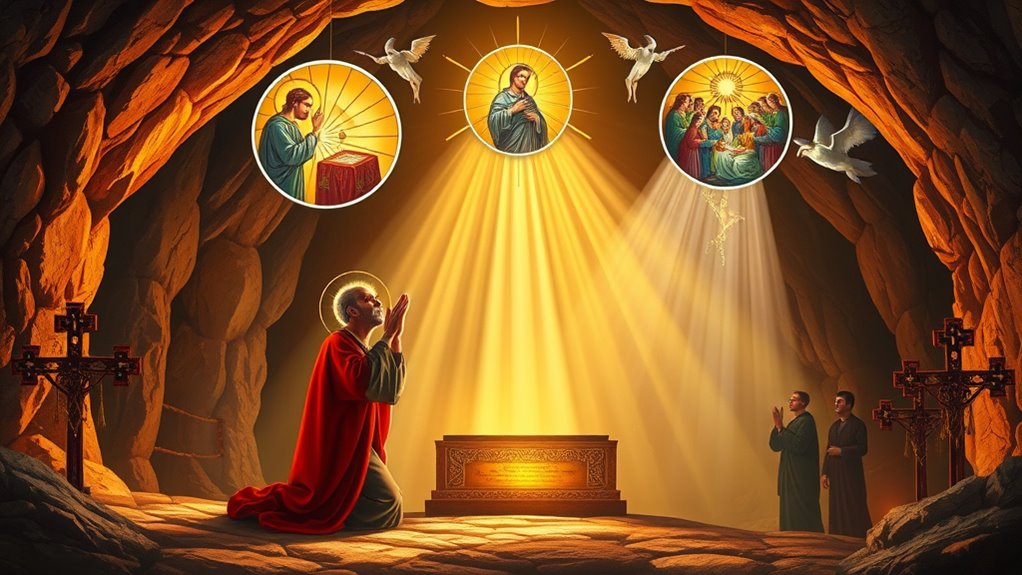
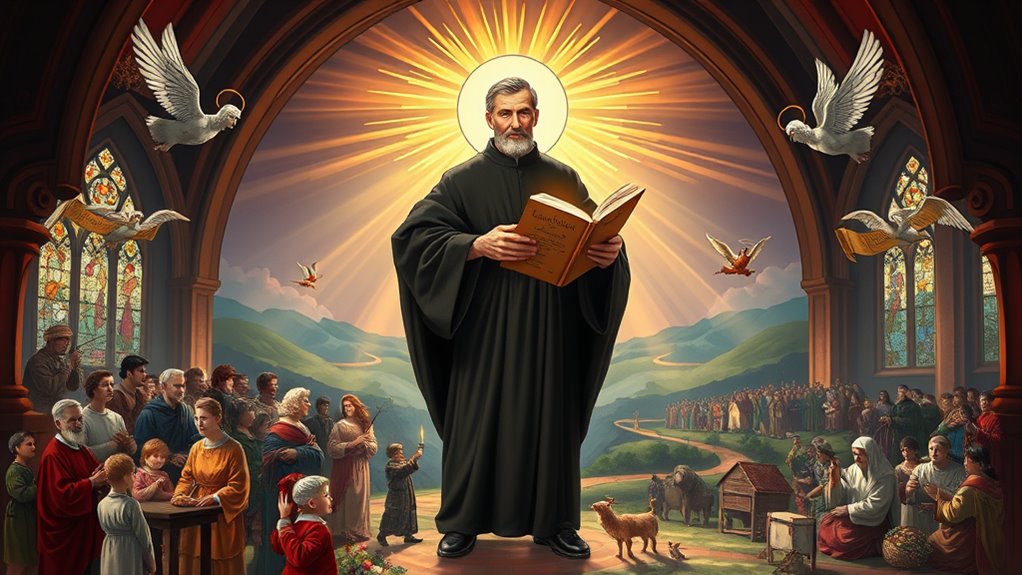
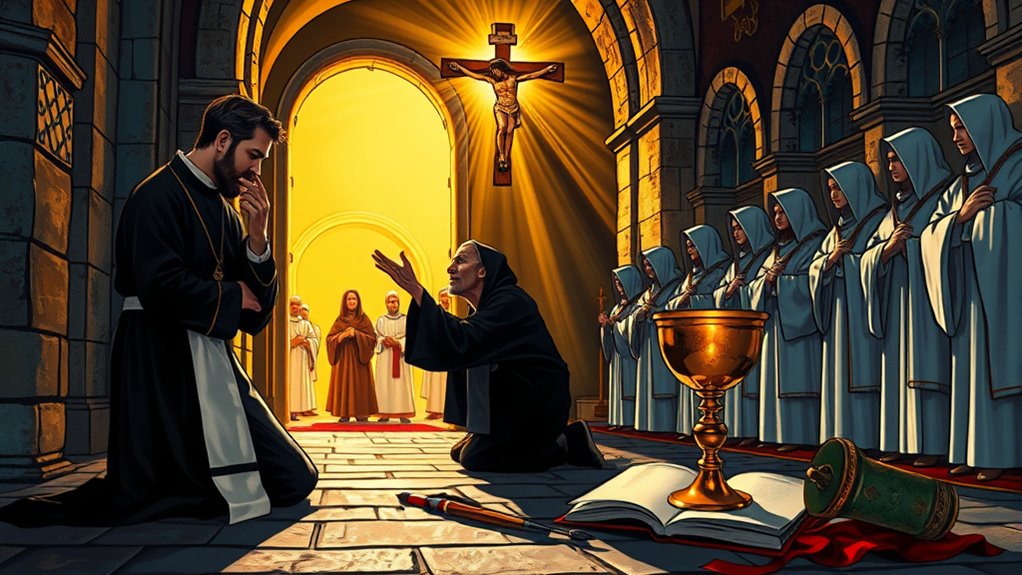
Upon entering the cloister, Aquinas turned to his companion Reginaldo and whispered words that would be remembered for centuries. He declared he would rest forever in that place, living there by his own desire. The prophecy, spoken quietly to his faithful secretary, proved accurate. He died at Fossa Nuova on March 7, 1274, at approximately forty-nine years old.
The months preceding his death had been marked by a profound change. On December 6, 1273, during Mass, Aquinas experienced a lengthy ecstasy that altered his perception of his life’s work. When Reginaldo urged him to continue writing, the theologian replied simply that he could not. He laid aside his pen, declaring an end to his writing labors, though he made no request to destroy or correct his extensive theological works. After completing his treatise on the Eucharist at Naples, a voice from the crucifix reportedly praised his writings.
As death approached, the monks who had offered him hospitality witnessed his final profession of faith. Aquinas received the Sacred Viaticum, the Eucharist given to the dying, and pronounced his belief in Jesus Christ as true God and Man. He affirmed his conviction in the sacrament and submitted all his teachings to the Holy Roman Church. Among his theological works, Aquinas had concluded that many signs will precede Christ’s coming to judgment, a position he reasoned from the judicial dignity requiring visible preparation.
In what became known as his last legacy, he described the Viaticum as the price of his soul’s redemption and the purpose for which he had studied, watched, and labored.
The Church recognized his sanctity forty-nine years later when Pope John XXII canonized him on July 18, 1323. His whispered prophecy at Fossa Nuova, spoken in weakness to a trusted friend, marked the end of a productive life dedicated to teaching and preaching. The quiet declaration proved both prediction and acceptance of his approaching death. Additionally, his work deeply engaged with the Church’s teaching on the covenant promises that shape Christian theological reflection.