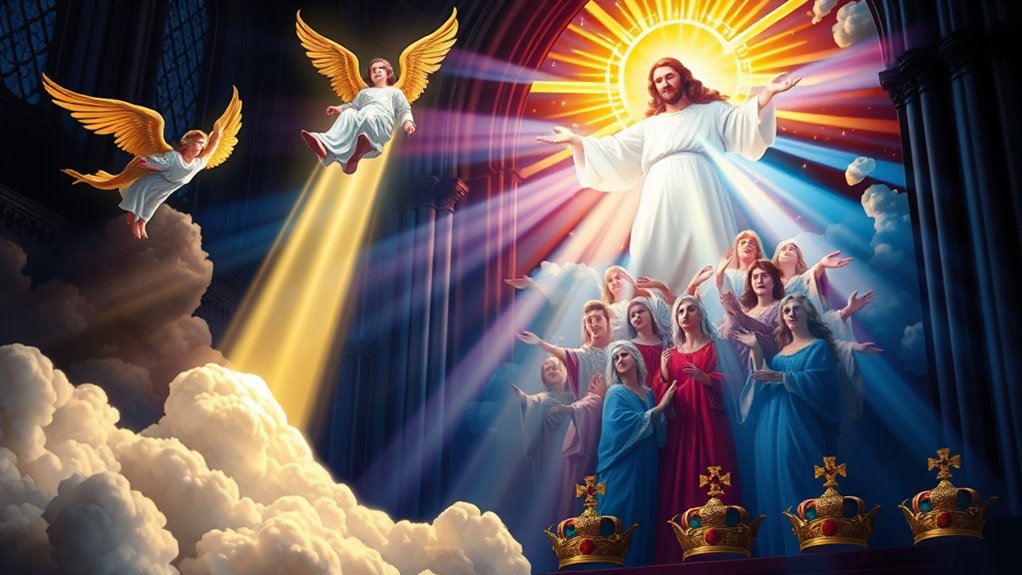
The Bible presents heaven as both a current reality and a future promise. According to Scripture, believers who die enter God’s presence immediately, experiencing worship and freedom from suffering. Looking ahead, Revelation 21 and Isaiah 65 describe a new heaven and new earth where God dwells directly with humanity, removing all tears, death, and pain. This renewed creation will feature the New Jerusalem, symbolizing divine perfection through imagery of jasper, gold, and pearl. The passages below explore these promises in greater detail.
Key Takeaways
- Heaven is a real place where God dwells, described with imagery of gold streets, jasper walls, and pearl gates.
- Believers enter heaven immediately upon death, experiencing joy, worship, and direct fellowship with God and Jesus Christ.
- Eternal life begins now through faith in Christ, not just as a future destination after death.
- In heaven, there is no death, pain, sorrow, or tears—only perfect peace and freedom from sin’s curse.
- God will create new heavens and a new earth where righteousness dwells and He lives directly among humanity.
The New Heaven and New Earth: God’s Promise of Restoration
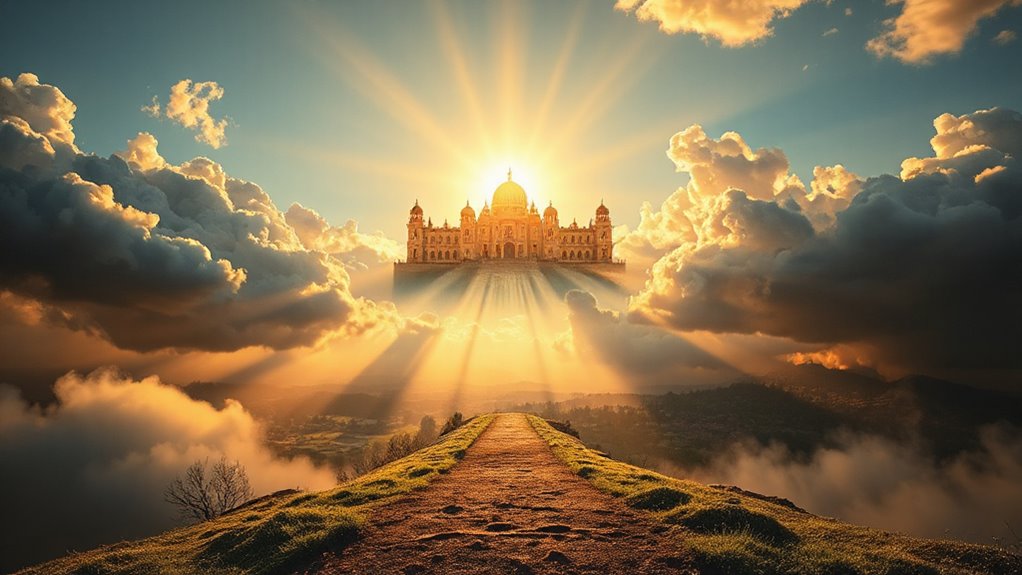
The Bible presents the new heaven and new earth as God’s ultimate restoration of creation, a promise woven through both the Old and New covenants. Isaiah 65:17–19 first prophesies God creating new heavens and a new earth where former sorrows disappear.
Revelation 21:1-5 describes the first heaven and earth passing away, replaced by the holy city New Jerusalem descending from heaven. Second Peter 3:13 echoes this promise of renewal where righteousness dwells.
This transformation is complete, not mere renovation, indicating a cosmos freed from sin, death, and decay. Believers often connect this promise with the name of Jesus as Yahweh saves, emphasizing the theme of divine rescue that runs through Scripture. The passage emphasizes God’s presence dwelling directly with humanity on this renewed creation.
All tears, death, sorrow, and pain will be wiped away completely, signaling perfect comfort and unbroken fellowship with the divine. Revelation 22 reveals that no more curse will exist in this eternal state, marking the complete lifting of the curse from creation. The New Jerusalem features walls of jasper, streets of pure gold, and twelve gates each made of pearl, symbolizing divine beauty and perfection.
Life in Heaven: What Awaits Believers in Eternity

Beyond the transformation of creation itself, Scripture describes the specific conditions believers will encounter in the eternal state.
Eternal life begins in the present through faith in Jesus Christ, defined in John 17:3 as knowing God personally rather than merely existing endlessly. Believers currently possess this life, not as distant hope but immediate reality (1 John 5:11–12). The Bible’s New Testament writings were based on eyewitness accounts, which supports the reliability of what it teaches about eternal life. This eternal life is independent of time, functioning outside and beyond temporal limitations.
Upon death, the spirit separates from the body and enters heaven temporarily, awaiting bodily resurrection at Christ’s return (Ecclesiastes 12:7; Philippians 1:23). Heaven offers direct fellowship with God and Jesus, characterized by worship, joy, and freedom from suffering. Believers’ spirits are often led there by angels, who serve as guides into the heavenly realm (Luke 16:22; Hebrews 1:14).
Rewards for earthly faithfulness vary among believers, reflecting individual service and motives (Matthew 25:20-21; 1 Corinthians 4:2,5). Even small acts of kindness receive acknowledgment (Mark 9:41).