

The Bible offers both restrictive passages and affirming examples regarding women preaching. First Timothy 2:11-12 instructs women to learn quietly and prohibits teaching or exercising authority over men in church settings, a stance rooted in creation order. Yet Scripture also shows women like Deborah judging Israel, Huldah authenticating God’s law for King Josiah, and Priscilla teaching Apollos alongside her husband. These examples reveal women exercising prophetic and spiritual authority across biblical history. The tension between instruction and practice continues to shape discussion about women’s roles in ministry today.
Key Takeaways
- 1 Timothy 2:11-12 prohibits women from teaching or exercising authority over men in church settings.
- The restriction is based on creation order and Eve’s deception, reflecting traditional gender roles in worship.
- Women like Deborah, Huldah, and Anna exercised prophetic authority and leadership roles throughout biblical history.
- Priscilla taught Apollos, and Phoebe served as deacon, demonstrating women’s participation in early church ministry.
- Women are encouraged to teach other women and children while debates continue about public preaching roles.
Biblical Passages on Women’s Teaching and Authority in the Church
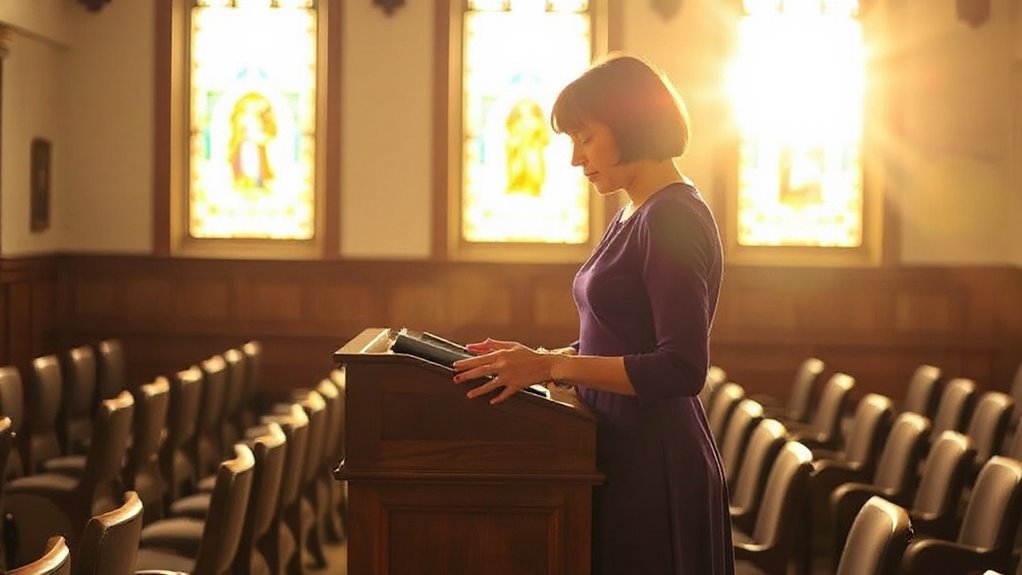
The question of women’s roles in church teaching and leadership rests largely on a handful of New Testament passages, with 1 Timothy 2:11-12 standing as the most direct and debated scripture on the matter. Historically, church canons such as the Septuagint influenced which texts were used in formation of doctrine.
In this text, Paul commands that women learn quietly with full submission and prohibits them from teaching or exercising authority over men. He grounds this instruction in creation order, noting that Adam was formed first, then Eve, and that Eve was deceived.
Many scholars understand this prohibition to apply specifically to public church teaching roles like pastors or elders who hold spiritual authority over men, not as a blanket ban on all teaching by women. The passage also emphasizes modesty and proper attire for women in worship settings.
The passage serves as a testament to the traditional understanding of gender roles within the church community. Women are still encouraged to teach other women, children, and serve in various capacities within the church.
Women in Leadership Throughout Scripture: Examples and Implications

While the New Testament contains specific instructions about women’s teaching roles in church settings, the broader biblical narrative presents numerous examples of women who exercised significant leadership across Israel’s history and the early Christian movement.
Deborah served as both judge and prophetess, leading Israel to military victory and forty years of peace. Huldah authenticated the Book of the Law for King Josiah, guiding national reform through prophecy. Their ministries highlight prophetic authority and the varied forms of leadership women held across Israel’s history.
Women like Deborah and Huldah wielded prophetic authority and shaped Israel’s destiny through divine guidance and decisive leadership.
In the New Testament, Lydia hosted early Christian gatherings in her home, while Priscilla taught Apollos alongside her husband Aquila. Phoebe served as deacon and benefactor to the church at Cenchreae. Anna the prophetess served in Jerusalem’s temple, where she devoted herself to prayer and fasting, and publicly proclaimed Jesus’ redemption to those awaiting the Messiah’s arrival.
These women operated within patriarchal societies yet exercised spiritual authority, business leadership, and prophetic ministry, suggesting complex dynamics regarding women’s roles in biblical communities. Esther demonstrated courageous leadership in critical moments, using her position as queen to boldly protect the Jewish people from destruction.