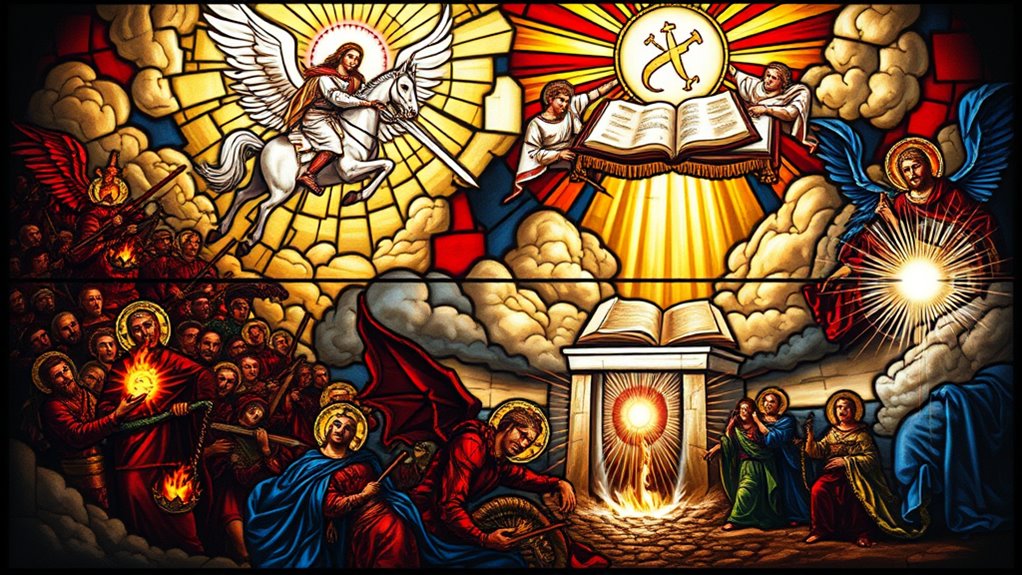






The Bible presents relationships as central to human design, not as optional arrangements. Genesis 2:18 establishes that isolation contradicts God’s intent, while Matthew 22:37–39 condenses the entire Law into loving God and loving others. First John 4:7–8 traces love’s origin directly to God. Healthy relationships, according to Scripture, require honesty, patience, forgiveness, and humility. Those exploring how these principles apply specifically to marriage, friendship, and family will find clearer guidance ahead.
Key Takeaways
- God designed humans for connection, as Genesis 2:18 confirms it is not good for a person to be alone.
- Love originates from God, meaning all meaningful relationships are ultimately rooted in a spiritual source.
- Biblical love requires patience, humility, forgiveness, and faithfulness, as described across 1 Corinthians 13 and Colossians 3.
- Marriage is a permanent covenant, with husbands called to love wives as Christ loved the church.
- Without love, every gift and sacrifice amounts to nothing, making love the core standard for all relationships.
What the Bible Says About Relationships

The Bible treats relationships not as a social convenience but as part of how human beings were made to exist. Genesis 2:18 records God’s declaration that it is not good for a person to be alone, positioning connection as intentional rather than incidental. From there, Scripture builds a consistent framework. Catholics, as a branch of Christianity, also emphasize relationships within the life of the Church and sacraments as means of grace, especially in communal contexts like the Eucharist and parish life where sacraments shape communal bonds.
First John 4:7-8 identifies love as originating from God, suggesting that meaningful relationships carry a spiritual source. Matthew 22:37-39 condenses the entire Law into two commands: love God and love one’s neighbor. John 13:34-35 adds that mutual love among believers serves as outward evidence of Christian identity.
The Bible, across multiple books and contexts, presents relationships as purposeful structures meant to reflect something larger than personal preference or circumstance. Proverbs 15:1 teaches that a soft answer turns away wrath, showing that how a person speaks directly shapes the health of their relationships.
Hebrews 10:24-25 instructs believers to spur one another on toward love and good deeds, framing community and mutual encouragement as essential components of how relationships are meant to function.
Character Traits Biblical Relationships Require

Knowing that relationships are intentional by design raises a natural question: what kind of person does Scripture expect one to be within them? The Bible identifies several specific character traits.
Love, described in 1 Corinthians 13:4–7, keeps no record of wrongs and bears with imperfection. Many readers find starting with the Gospels helpful to see how Jesus modeled loving relationships in practice.
Humility and meekness, referenced in Colossians 3:12–13, support forgiveness and mutual tolerance.
Patience, drawn from Romans 12:12, accepts difficulty without demanding immediate resolution.
Faithfulness, listed among the fruit of the Spirit in Galatians 5:22–23, preserves trust over time.
Gentleness and integrity, noted in Ephesians 4:25, encourage honest and direct communication.
Courage, grounded in Joshua 1:9, enables believers to pursue reconciliation rather than avoidance.
Together, these traits form a consistent, practical standard Scripture sets for relational life. Paul makes clear in 1 Corinthians 13 that without love, every gift and sacrifice amounts to absolutely nothing. Proverbs 11:3 reinforces this standard by teaching that integrity guides the upright, while those who walk in crooked paths find themselves destroyed by their own treachery.
How These Principles Shape Marriage, Family, and Friendship
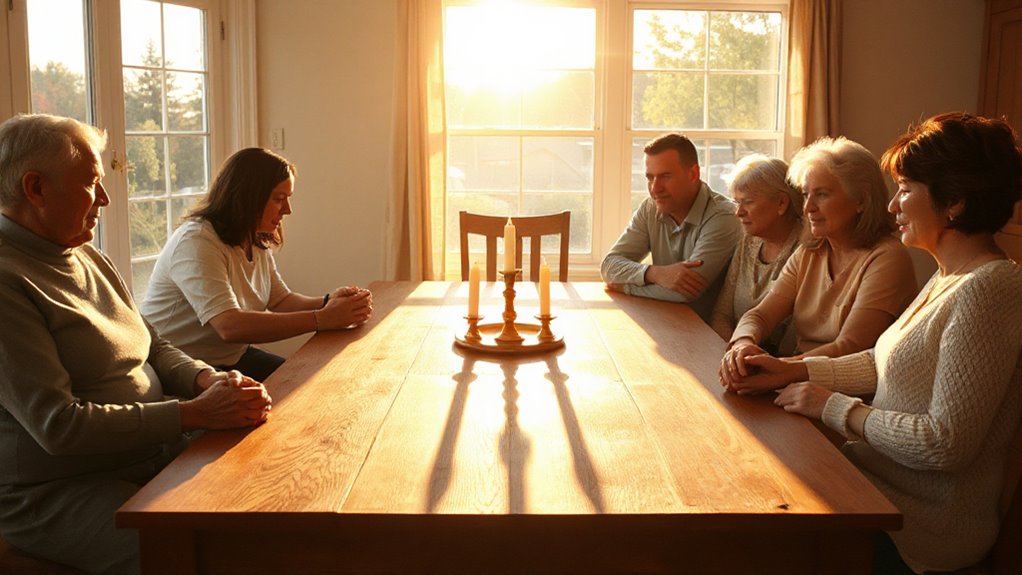
Scripture does not treat marriage, family, and friendship as separate concerns but as overlapping relationships each shaped by the same underlying principles.
Genesis 2:24 establishes that marriage creates a permanent bond, while Ephesians 5:25 directs husbands to love their wives as Christ loved the church. The doctrine of the Trinity highlights how distinct persons can share one divine essence, providing a model for unity amid distinct roles shared essence.
Marriage is not a contract to be renegotiated but a permanent bond sustained by sacrificial love.
Malachi 2:16 reinforces this permanence by stating plainly that God hates divorce.
Within family, Ephesians 5:22-23 assigns defined roles meant to reflect a larger spiritual order.
Friendship draws from the same well.
Romans 12:10 calls for honoring others above oneself, and Ephesians 4:32 instructs mutual forgiveness modeled after Christ.
Across all three relationships, the consistent pattern is the same: commitment, sacrifice, and humility appear not as ideals reserved for one setting but as expectations that carry across every meaningful human bond. Jesus taught that marriage originates not from human tradition but from God’s design at creation, grounding its permanence in what the Creator established from the beginning.
The Hebrew word for helper, ezer, describes one who supplies strength where another lacks, pointing to the complementary nature God built into the relationship between man and woman from the start.