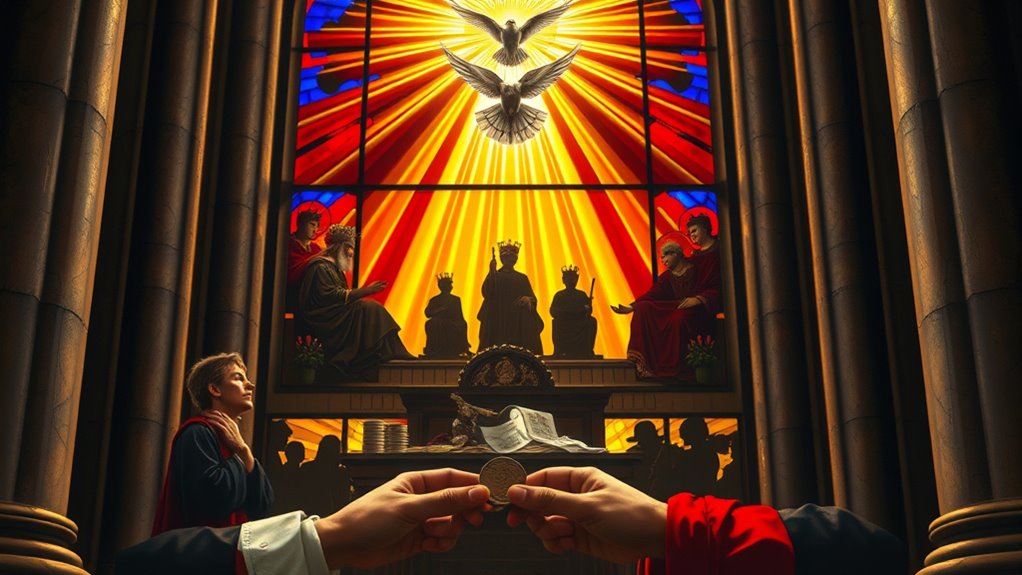
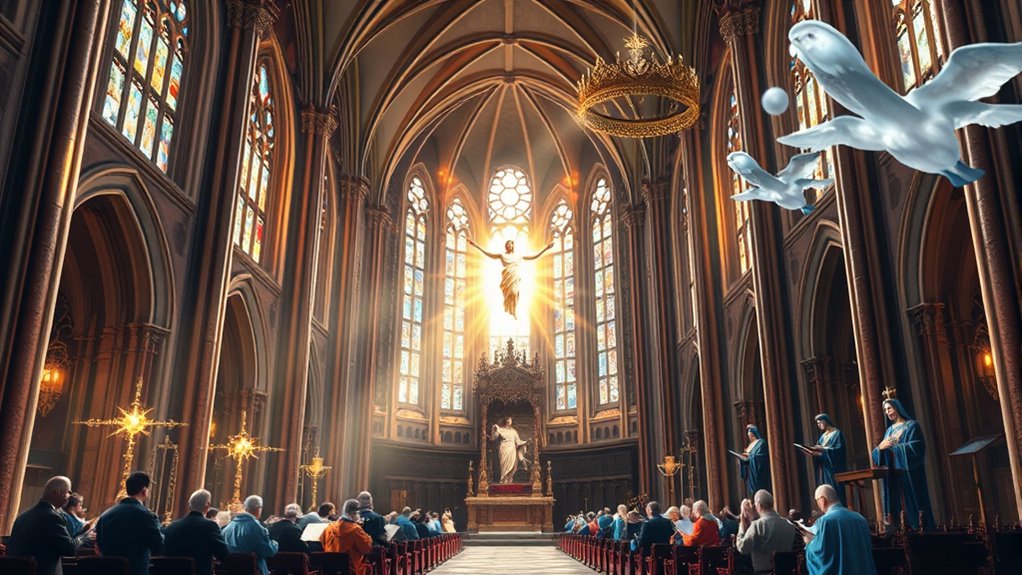
Catholicism represents one major branch within Christianity, meaning all Catholics are Christians, but not all Christians are Catholics. The key differences center on authority and doctrine. Catholics recognize the Pope’s spiritual leadership and draw guidance from Scripture, Sacred Tradition, and Church teaching, while most other Christians reject papal authority and follow Scripture alone. Catholics believe salvation involves faith, grace, and good works through seven sacraments, whereas many Protestant denominations emphasize salvation by faith alone and recognize only two sacraments. Understanding these distinctions helps clarify the broader theological landscape.
When people encounter the terms “Catholic” and “Christian,” they often wonder whether these represent two different religions or if one fits within the other. The relationship is actually straightforward: Catholicism is a branch within Christianity, meaning all Catholics are Christians, but not all Christians are Catholics. Catholics typically use translations approved by the Church, and in the United States the New American Bible is commonly used in liturgy.
Christianity broadly encompasses various denominations including Protestantism, Orthodoxy, and Catholicism, all united by their faith in Jesus Christ.
Christianity encompasses diverse denominations—Protestant, Orthodox, and Catholic—all unified through their shared faith in Jesus Christ as Lord and Savior.
The distinction becomes clearer when examining authority and scripture. Catholics recognize the Pope as their supreme spiritual leader and successor to Saint Peter, a position most other Christian denominations reject.
While Protestant Christians typically adhere to “Sola Scriptura,” accepting the Bible alone as their rule of faith, Catholics draw from three sources: the Bible, Sacred Tradition, and the teaching authority of the Church called the Magisterium.
Catholic Bibles also contain 73 books, including the Deuterocanonical books, whereas Protestant Bibles have 66 books.
Perhaps the most significant theological difference lies in salvation doctrine. Catholics teach that salvation involves God’s grace working through both faith and good works, viewing it as an ongoing process enhanced by participation in sacraments.
Protestants emphasize “sola fide,” or salvation by faith alone, considering it a completed status in Christ regardless of works.
The Council of Trent formally rejected the faith-alone doctrine, establishing this as a fundamental divide.
Sacramental practices further distinguish these traditions. Catholics recognize seven sacraments, including Baptism, Confirmation, Eucharist, Penance, Anointing of the Sick, Holy Orders, and Matrimony.
Most Protestant denominations acknowledge only two sacraments—Baptism and the Lord’s Supper—often viewing them symbolically rather than as means of grace.
Catholics also hold that the Eucharist involves transubstantiation, where bread and wine become Christ’s actual body and blood.
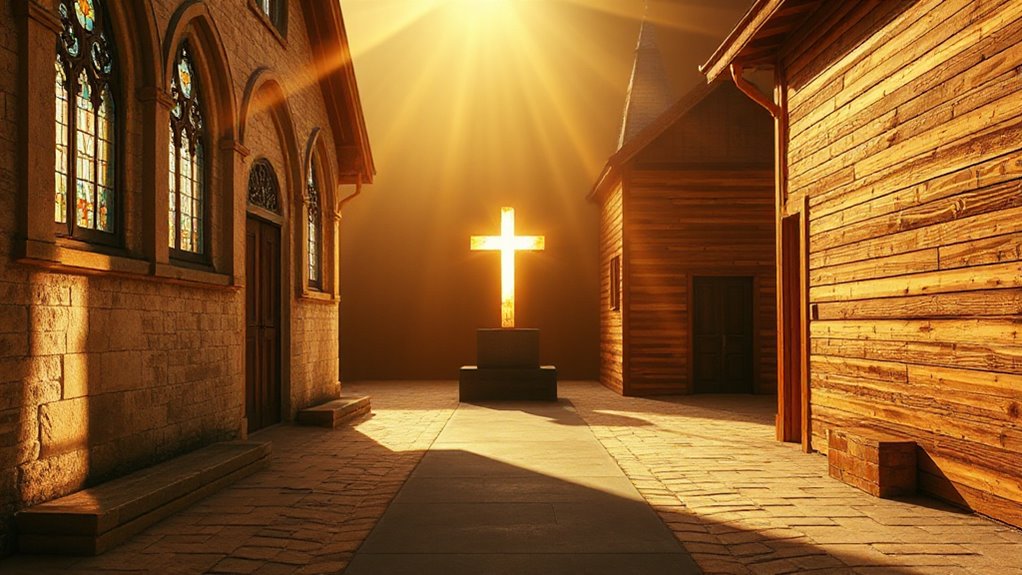
Additional differences include Catholic veneration of Mary and saints as intercessors, along with doctrines like the Immaculate Conception and Assumption of Mary, which most Protestant traditions reject. Catholic worship can take place in diverse locations such as prisons or homes, not just traditional church buildings. This ongoing theological debate has persisted since the 16th century Reformation, creating a significant religious schism that continues to shape Christian denominations today.
Despite these distinctions, both groups share fundamental Christian beliefs about Jesus Christ’s divinity and role in salvation.
Frequently Asked Questions
Do Catholics Pray to Saints Instead of God?
Catholics do not pray to saints instead of God, but rather ask saints to intercede on their behalf. This practice complements direct prayer to God rather than replacing it.
Catholics distinguish between worship, which belongs to God alone, and veneration of saints. They view saints as spiritual friends who can offer prayers to God for the living.
They cite biblical passages like Revelation 5:8 as support for heavenly intercession.
Why Do Catholics Have a Pope While Other Christians Don’t?
Catholics believe their pope holds direct succession from the apostle Peter, whom they consider the first bishop of Rome based on biblical passages like Matthew 16:17-19.
The Catholic Church developed this hierarchical structure over centuries, with papal authority formally defined at Vatican I in 1870.
Most Protestant churches reject papal supremacy, believing in Scripture alone as ultimate authority and emphasizing the priesthood of all believers rather than centralized leadership.
Can Catholics and Non-Catholic Christians Attend Each Other’s Services?
Catholics and non-Catholic Christians can attend each other’s worship services for prayer, fellowship, or special occasions.
However, Catholic canon law requires Catholics to attend Mass at a Catholic church to fulfill their Sunday obligation, meaning attendance at Protestant services cannot substitute for this requirement.
Non-Catholic Christians generally face no restrictions when attending Catholic Mass, though communion practices may vary between denominations.
Do Catholics Believe in Being “Born Again” Like Other Christians?
Catholics do believe in being “born again,” though they define it differently than many Protestant Christians. Catholic theology locates spiritual rebirth primarily in baptism, where individuals receive the Holy Spirit and are cleansed of original sin.
While evangelical Protestants often emphasize a single conversion moment, Catholics view being born again as beginning with baptism and continuing through lifelong participation in sacraments like Mass and confession.
Are Catholic Priests Allowed to Marry Like Other Christian Ministers?
Catholic priests in the Latin Rite cannot marry, taking vows of celibacy upon ordination. This differs from most Protestant ministers, who can marry freely.
The Catholic Church established mandatory celibacy at the Second Lateran Council in 1139, viewing it as total commitment to God.
However, Eastern Catholic Churches allow married men to become priests, and rare exceptions exist for married Anglican converts joining Catholicism.