

The Bible warns that pride leads to personal and spiritual ruin, with Proverbs 16:18 stating, “Pride goes before destruction, and a haughty spirit before a fall.” James 4:6 emphasizes that God opposes the proud but gives grace to the humble. King Nebuchadnezzar’s arrogance resulted in madness until he acknowledged God’s sovereignty, while Jesus modeled humility through servant leadership and sacrifice. Scripture consistently presents humility as the path to divine favor, with practical guidance on cultivating this virtue through acknowledging dependence on God and serving others.
Key Takeaways
- Pride leads to destruction and downfall, as warned in Proverbs 16:18: “Pride goes before destruction, and a haughty spirit before a fall.”
- God actively opposes the proud but extends grace to the humble, according to James 4:6.
- Biblical examples like Nebuchadnezzar and Satan demonstrate pride’s devastating consequences, including madness and eternal separation from God.
- Jesus modeled humility through servant leadership, washing disciples’ feet, and accepting death on a cross for humanity’s salvation.
- Humility is an active choice involving submission to God, accepting correction, and serving others to receive divine favor.
Biblical Warnings: How Pride Leads to Destruction

The Bible presents pride not as a minor character flaw but as a dangerous spiritual condition that consistently precedes personal and communal ruin. Proverbs 16:18 establishes this pattern clearly: “Pride goes before destruction, and a haughty spirit before a fall.” This warning appears throughout Scripture, supported by concrete examples like King Nebuchadnezzar, whose arrogance led to a period of madness until he acknowledged God’s sovereignty (Daniel 4:28-33). Many Old Testament books were written in Hebrew, reflecting Israelite culture and religion.
The consequences extend beyond individual suffering. Proverbs 13:10 identifies pride as a source of relational strife, while James 4:6 notes that “God opposes the proud, but gives grace to the humble.” Pride also impairs wisdom, preventing individuals from acknowledging their limitations and weaknesses. Pride’s destructive power is evident in Satan’s own fall, where Lucifer’s arrogance transformed him from an exalted being into God’s adversary. These passages suggest that humility offers a practical alternative, one that invites divine favor rather than resistance.
The Path of Humility: God’s Alternative to Pride

While Scripture consistently warns against pride’s destructive power, it presents humility not merely as pride’s absence but as an active, deliberate posture that reshapes how believers relate to God and others.
First Peter 5:6 commands believers to “humble yourselves under God’s mighty hand,” a phrase suggesting intentional submission rather than passive waiting. This path involves casting anxieties on God, acknowledging sinfulness, and accepting correction. God’s sovereignty brings about circumstances intended to humble individuals, using life’s trials as instruments to develop this essential virtue.
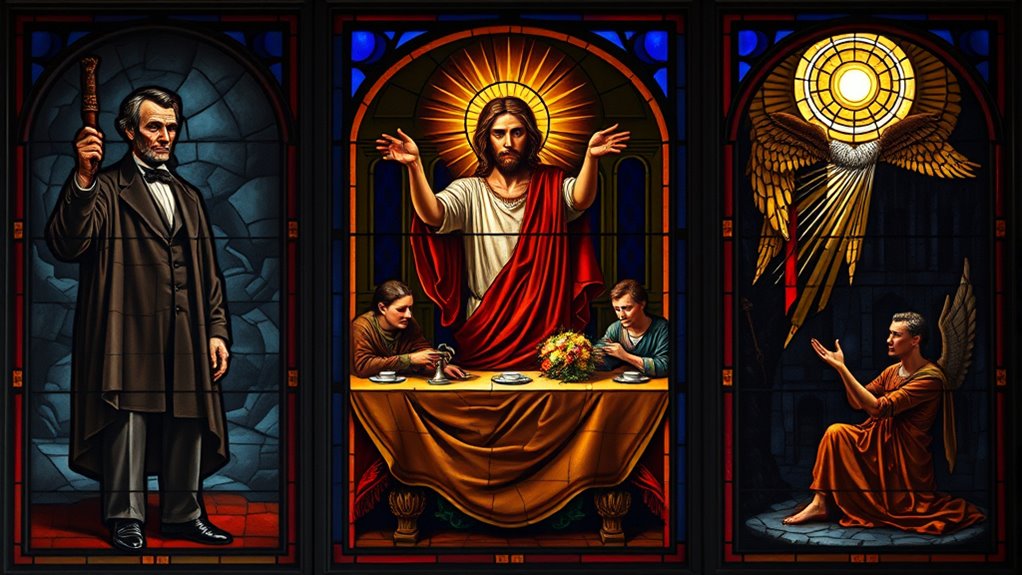
Jesus modeled this alternative through servant leadership, washing His disciples’ feet despite His divine status. Matthew 20:26-28 demonstrates that true greatness involves serving others, as Christ taught His disciples that whoever wants to become great must be a servant.
Philippians 2:5-8 recounts how Christ “humbled Himself” by taking human form and accepting death on a cross. Catholic tradition, which upholds the deuterocanonical books, highlights humility themes across additional Old Testament writings.
The gospel teaches that God “opposes the proud but gives grace to the humble,” according to James 4:6, establishing humility as the prerequisite for receiving divine favor and entering God’s kingdom.