


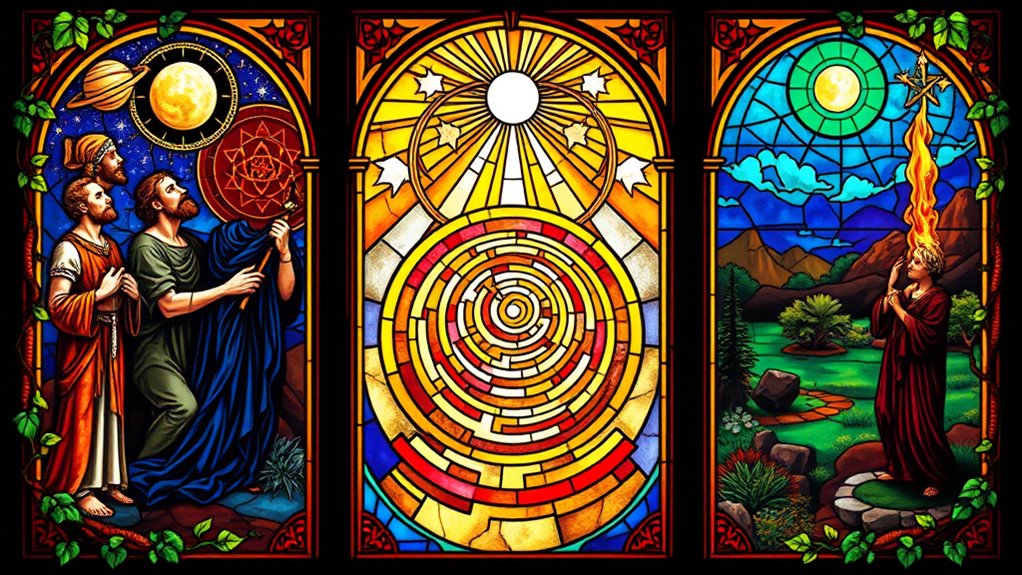
Modern spiritual trends often recycle ancient philosophical errors because human impulses toward self-transformation remain constant across centuries. Practices like mindfulness apps and corporate meditation programs strip techniques from their original ethical frameworks, mirroring mistakes that Axial Age thinkers identified around 600 BC. The “spiritual but not religious” movement resurrects individualized paths that bypass communal responsibility, repeating patterns rejected by earlier traditions. Renaissance syncretism and New Age blending demonstrate how each generation repackages similar concepts through contemporary technology and language. Understanding these historical cycles reveals why certain approaches persistently fail to deliver lasting transformation.
Across contemporary wellness centers, corporate offices, and smartphone apps, ancient spiritual practices have found new life stripped of their original religious contexts. Meditation evolved from sacred rituals into secular MBSR programs in hospitals and mindfulness apps designed for stress reduction. Corporate trainings now adapt techniques once tied to specific spiritual paths, while VR meditation and AI-guided programs deliver ancient wisdom through technology. This transformation mirrors historical patterns that extend back thousands of years.
Ancient spiritual practices now inhabit wellness apps and corporate offices, stripped of religious context yet following transformation patterns thousands of years old.
The roots of this phenomenon reach to the Axial Age around 600 BC, when ideas about the divine self first emerged across multiple cultures. The “Spiritual but Not Religious” movement traces directly to these ancient concepts, which experienced revival during the Renaissance and Scientific Revolution despite resistance from reformers. Protestant reformers introduced sola scriptura partly to counter personal revelations that conflicted with Scripture, whether from radical groups or Rome itself. The shift from external rituals to personal meditation and prayer during the Reformation echoed Greco-Roman individualism that Christianity and Buddhism had already adopted.
Ancient Greece and Rome contributed contemplation and wisdom pursuit that became foundational to multiple traditions. Prayer beads like the Catholic rosary and Buddhist mala trace to Greek and Roman use, while meditation itself has roots in Greco-Roman philosophical contemplation, as documented by Hadot in 2002. The labyrinth as a soul journey symbol persists from antiquity to modern traditions. Traditional societies conceived ritual as creating special temporal spaces for transcendence and profound change. These practices moved from ancient nature worship and ancestor reverence through Mesopotamian and Egyptian priestly mediation toward increasingly personal spiritual paths.
Modern movements continue this trajectory. The New Age movement eclectically draws from Eastern, esoteric, and metaphysical ideas, incorporating meditation, astrology, crystal healing, and channeling for personal transformation. Neopaganism revives pre-Abrahamic practices through Wicca, Druidry, and Heathenry, emphasizing nature reverence and celebrating natural cycles. Ancient spiritual practices have transformed into evidence-based therapeutic techniques, with Buddhism’s Four Noble Truths and Eightfold Path influencing mindfulness beyond religious boundaries. Renaissance figures like Marsilio Ficino blended Neoplatonism with Christian identity, demonstrating that syncretism predates modern spiritual mixing. The concern for individual souls that was common in ancient cultures persists through the modern age, suggesting these patterns reflect enduring human impulses rather than genuine innovation. The result is that many modern adaptations also bypass traditional calls to communal responsibility and stewardship and generosity embedded in older religious systems.