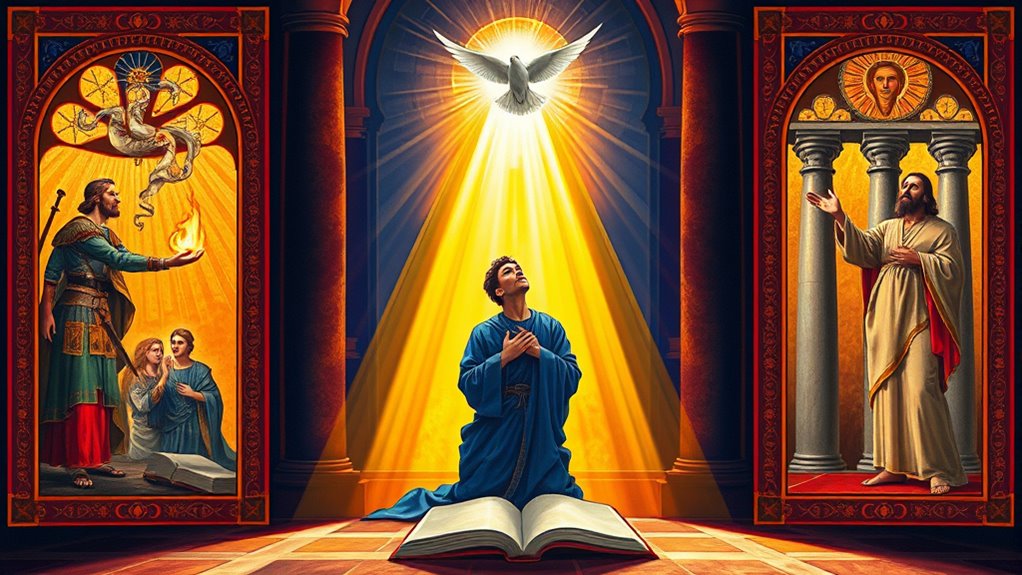
The 1858 Lourdes apparitions to fourteen-year-old Bernadette Soubirous transformed Catholic devotion by offering physical evidence of faith through miraculous healings at a newly discovered spring, drawing crowds from 150 to 3,000 within weeks. The Lady’s self-identification as the Immaculate Conception validated recent Church doctrine, while Church investigations culminating in the 1860 episcopal declaration established a modern framework for vetting supernatural claims. Lourdes now attracts four to six million annual pilgrims, demonstrating how Marian devotion bridges traditional belief and contemporary skepticism in ways that continue to shape global religious practice.
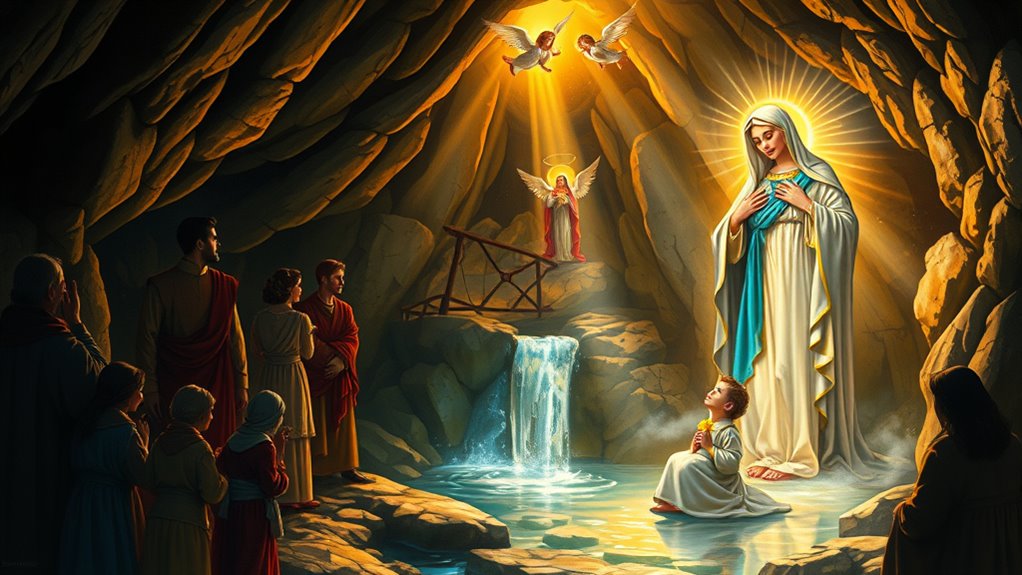
On a cold February morning in 1858, fourteen-year-old Bernadette Soubirous ventured to the Massabielle Grotto near Lourdes, France, gathering firewood with her sister and a friend. A gust of wind announced the arrival of a Lady dressed in white with a white veil, blue belt, and yellow roses on her feet. Together, Bernadette and the Lady prayed the Rosary before the figure vanished. This first encounter began a series of eighteen apparitions that would extend until July 16, the Feast of Our Lady of Mount Carmel. The events at Lourdes quickly became linked in popular devotion to older traditions of pilgrimage and sacred places associated with biblical covenants.
A fourteen-year-old peasant girl encountered a mysterious Lady in white at the grotto, beginning eighteen apparitions that would transform Lourdes forever.
The Lady’s messages grew increasingly specific. On February 21, she asked for prayers for sinners. Three days later, she instructed Bernadette to perform penance and kiss the ground for sinners. On March 2, she requested that priests build a chapel and come in procession, a message repeated before 3,000 witnesses the following day. On March 25, the Lady identified herself as the Immaculate Conception, using theological language unfamiliar to the uneducated peasant girl.
Crowds swelled as word spread. February 23 drew 150 people, March 1 brought over 1,500 including the first priest, and March 3 attracted 3,000 onlookers. During these gatherings, unexplained events occurred. Catherine Latapie’s dislocated arm healed after washing in the spring water on March 1, marking what would later be recognized as the first official miracle on January 18, 1862. Dr. Douzous witnessed a candle flame touch Bernadette’s hand without burning her skin. The Lady had instructed Bernadette to dig in the mud, an act that produced dirty water which became a spring used for drinking and bathing. Among the earliest healings was Justin Bouhort, a sickly child from Lourdes who could not walk, whom his mother bathed at the Grotto despite public prohibition, and who took his first steps after falling into sound sleep during the journey home.
Church authorities moved carefully. A commission began investigating on November 17, 1858. The local bishop declared the apparitions authentic on January 18, 1860, stating the faithful were justified in believing their reality. Pope Leo XIII authorized a special office and Mass, and Pope Pius X extended the feast to the universal Church in 1907.
The impact proved enduring. Lourdes transformed into a major pilgrimage destination alongside Fátima and Guadalupe, now drawing four to six million visitors annually. The spring water has remained associated with healings since 1858, establishing the Sanctuary as a place where faith and hope converge for seekers worldwide.