

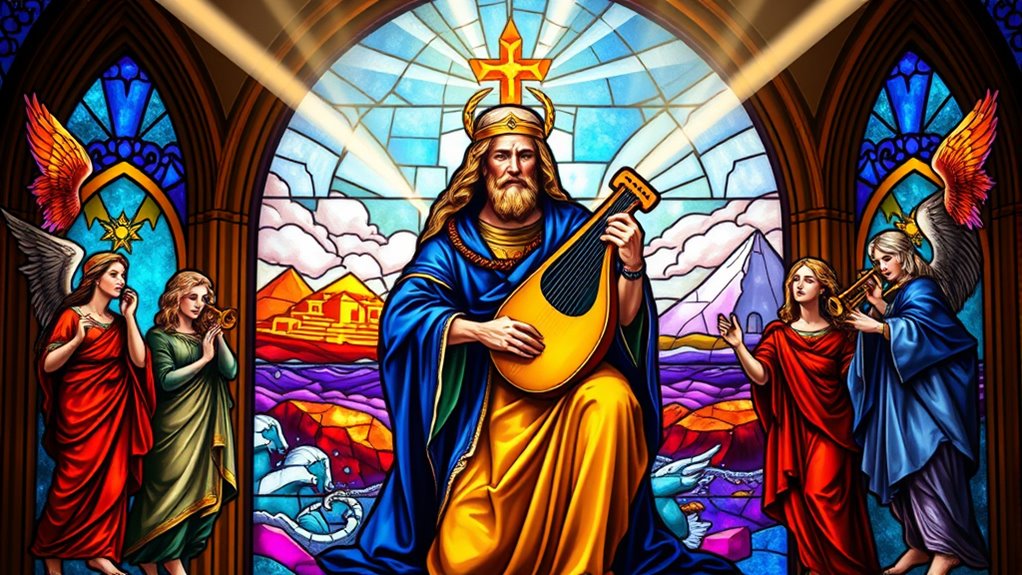


The Bible describes the Jewish people as a community shaped by covenant, ancestry, and a distinct role in sacred history. Their origins trace through Abraham, Isaac, and Jacob, leading to twelve tribes and a national identity grounded in the covenant at Sinai. Identity depended on covenant relationship rather than ethnicity alone. Scholars continue debating whether ancient promises still apply today, and the contested passages carry more context than surface readings suggest.
Key Takeaways
- The Bible traces Jewish identity through Abraham, Isaac, and Jacob, presenting them as central to sacred history through covenant and ancestry.
- God established an “everlasting covenant” with Abraham in Genesis 17, promising land, nationhood, and blessing for all peoples.
- Circumcision served as the physical sign of the covenant, defining belonging through sacred relationship rather than ethnicity alone.
- Biblical prophets like Jeremiah distinguished between God’s discipline of Israel and permanent rejection, linking their survival to cosmic order.
- Contested passages like John 8:44 reflect intra-Jewish debate rhetoric and must be read in historical context to avoid misinterpretation.
How Does the Bible Actually Describe the Jewish People?

The Bible describes the Jewish people not simply as an ethnic group but as a community defined by history, ancestry, and covenant.
Their origins trace through Abraham, Isaac, and Jacob, the patriarchs whose family line eventually formed twelve tribes and a distinct national identity.
The term “Jew” originally referred to inhabitants of Judah, but after the Babylonian exile, it expanded to describe the broader people of Israel.
Biblical texts, from Genesis through the New Testament, consistently present the Jewish people as central to the unfolding of sacred history.
Their identity is grounded in the covenant at Sinai, where God gave the Torah to Moses.
This covenant, rather than ethnicity alone, defined what it meant to belong to this people. Circumcision was established as a sign of the covenant given to Abraham as a physical mark of this sacred relationship.
Jacob’s name was changed to Israel, making him the patriarch from whom the entire nation of Israel takes its name and identity.
Archaeological discoveries and external sources also corroborate many historical details about Israel’s past, supporting the Bible’s portrayal of the people as a historical community.
What the Bible Promises the Jewish People: and Whether It Still Applies

Few questions in biblical interpretation have generated more sustained debate than whether the promises God made to Abraham and his descendants remain in force today.
Genesis 12 and 17 outline three core commitments: land, nationhood, and blessing for all peoples.
At the heart of the Abrahamic covenant lie three foundational promises: land, nationhood, and universal blessing.
Genesis 17 calls this arrangement an “everlasting covenant,” language that some interpreters take as evidence the promises were never cancelled.
Jeremiah 31:35-37 links Israel’s survival to cosmic order, while Jeremiah 30:11 distinguishes discipline from permanent rejection.
The biblical pattern across cited texts presents exile and scattering not as covenant endings, but as interruptions followed by restoration.
Some theologians argue that Jesus, as a genealogical heir of Abraham and David, is the singular fulfillment of these promises, meaning all covenant benefits flow through union with Christ rather than through ethnic or national identity alone.
Deuteronomy conditions future inhabitation of the land on obedience to Yahweh, introducing warnings that unfaithfulness could result in loss of the land.
Whether these promises apply strictly to ethnic Israel, or extend more broadly, remains an active and genuinely complex conversation among scholars, theologians, and careful readers.
The discussion also intersects with questions about the biblical canon, including the role of the deuterocanonical books in shaping early Christian and Jewish understandings of covenant and restoration.
How to Interpret Contested Bible Passages About Jews

Some of the most disputed passages in the Bible become clearer when readers begin with a simple but important question: who is speaking, to whom, and why?
John 8:44, for example, appears in an intra-Jewish debate inside a Gospel narrative.
The Protestant Theological University notes that its “children of the devil” language functions as debate rhetoric, not a timeless ethnic definition.
Yad Vashem warns that removing such passages from their historical setting has fueled antisemitic readings across generations.
Hartford International University adds that Jews and Christians often interpret the same texts differently because each tradition places them within a distinct larger narrative.
Responsible interpretation, scholars suggest, requires comparing readings across traditions and distinguishing original argumentative purpose from later doctrinal or polemical misuse. The Trinity affirms that distinct persons can share one divine essence, which can inform readings of divine and human identity in the Gospels with shared divine essence.
Joshua Trachtenberg’s research traced medieval antisemitic ideas to the foundational belief that Jews are children of the devil.
Samuel Sandmel, a Reform theologian, concluded in his 1978 work that it is incorrect to exempt the New Testament from anti-Semitism and assign such material only to later historical periods.