





The Bible records women holding significant authority across both testamentary. Deborah served as judge and directed military strategy. Huldah shaped national religious reform through prophetic interpretation. Esther exercised legislative power across 127 provinces. In the New testamentary, Priscilla taught Apollos, Phoebe served as a church deacon, and Philip’s daughters prophesied. Certain Pauline passages create ongoing debate about permanent versus situational restrictions. Denominational conclusions vary widely, and the fuller picture becomes clearer the further one explores.
Key Takeaways
- Deborah served as both judge and prophetess, directing military strategy for Israel within a patriarchal culture.
- Huldah’s prophetic authority shaped national religious reforms under King Josiah, demonstrating recognized female spiritual leadership.
- Paul’s restriction in 1 Timothy 2:11-12 may address a specific Ephesian situation rather than a universal permanent rule.
- The Greek word for “authority” in 1 Timothy 2:12 may specifically mean dominating harshly, not general leadership authority.
- Denominations including Methodist, Presbyterian, and Assemblies of God concluded women’s ordination is fully consistent with Scripture.
The Biblical Women Who Held Real Authority

Scripture presents a notable range of women who exercised genuine authority across civic, military, religious, and royal domains.
Deborah served simultaneously as judge and prophetess, directing both legal rulings and military strategy for Israel.
Huldah delivered a prophetic interpretation of scripture that directly shaped King Josiah’s national religious reforms.
Miriam led Israel in liturgical worship following the Red Sea crossing and is named in Micah 6:4 alongside Moses and Aaron.
Esther navigated Persian royal authority to prevent the destruction of her people.
Jael and the unnamed woman of Thebez each acted decisively in military contexts.
The Queen of Sheba and Candace of Ethiopia both appear as sovereign rulers.
Priscilla, alongside Aquila, took Apollos aside and expounded the way of God more accurately, demonstrating recognized teaching authority in the early church.
These figures span centuries, contexts, and roles, suggesting that female leadership appears throughout the biblical record without systematic condemnation. Notably, Deborah’s leadership emerged within a patriarchal culture where the Lord raised up judges, and she is identified in Judges 4 as both a prophet and leader of Israel. Additionally, historians correlate biblical timelines with external sources to date events to the late first century BC–AD transition.
What the Bible Actually Says About Women in Authority
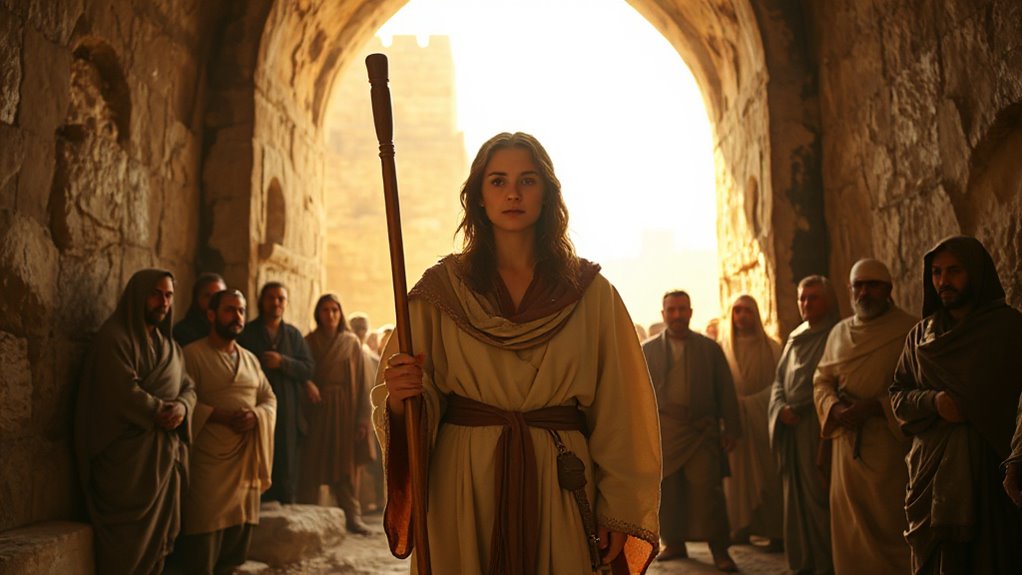
When the biblical text is examined carefully, what emerges is neither a straightforward endorsement of female leadership nor a clear, sweeping prohibition.
Women like Deborah, Huldah, and Miriam held recognized authority in Israel across judicial, prophetic, and worship settings.
In the New Testament, women prophesied, taught, and hosted churches.
Priscilla instructed Apollos directly.
Philip’s four daughters prophesied.
Acts 2 explicitly includes daughters among those receiving the Spirit.
The primary restriction appears in 1 Timothy 2:11-12, where Paul writes that he does not permit a woman to teach or have authority over a man.
Scholars disagree about whether that instruction addressed a specific situation in Ephesus or established a permanent rule.
The tension between that passage and 1 Corinthians 11 keeps the question genuinely open.
Phoebe was recognized by Paul as a deacon of the church, demonstrating that women held formal ministry positions in the early Christian community.
Esther wrote letters with her full royal power across 127 provinces and institutionalized the festival of Purim into written law, demonstrating that women exercised commanding civic and legislative authority in the biblical record.
Jesus and his contemporaries operated in a multilingual context, often speaking Aramaic in daily and religious life.
Why the Same Passages Are Read So Differently
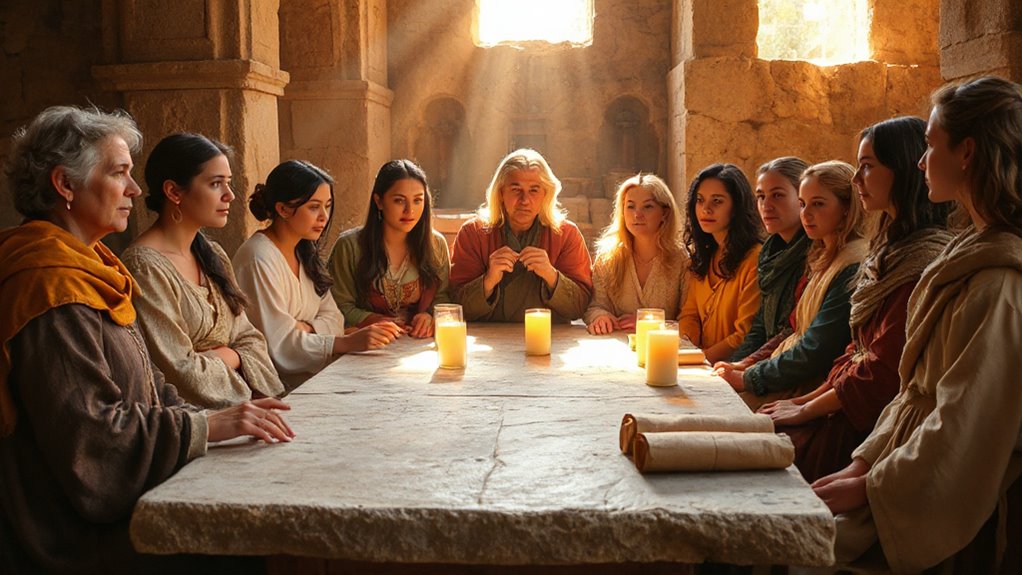
Few debates in Christian communities reveal as much about interpretation as the ongoing disagreement over what the Bible says about women in leadership.
A small set of passages drives most of the tension, particularly 1 Timothy 2:11-12, 1 Corinthians 14:34-35, and 1 Corinthians 11:3.
Some readers treat these verses as universal rules.
Others read them as situational responses to local problems, such as disorder or false teaching in specific congregations.
Word meaning also shifts conclusions.
The Greek word translated “have authority” in 1 Timothy 2:12 may carry the stronger sense of dominating or commanding harshly, which changes the verse considerably.
Translation choices, contextual assumptions, and broader biblical patterns all shape the outcome, explaining why careful readers can study the same text and still reach genuinely different conclusions.
Denominations including Presbyterian, Methodist, Assemblies of God, and Salvation Army have concluded that women’s ordination is consistent with Scripture and have installed women in leadership roles accordingly.
Throughout Scripture, women such as Deborah, Hulda, and Philip’s four daughters functioned in prophetic leadership roles, demonstrating that female ministry was present across both testaments.
Developing a consistent reading routine can help readers trace these patterns and evaluate how specific verses fit broader biblical narratives.