
Christianity has shaped American life for more than 250 years, influencing founding documents, colonial settlements, and reform movements alike. The Declaration of Independence references four divine titles, and natural law theory rooted in Christian tradition informed early legal frameworks. Great Awakenings sparked mass conversions and fueled abolition alongside other reforms. Yet Pew Research data shows nearly 70% of Americans believe Christianity’s influence is declining. The full picture, however, is far more nuanced than that single figure suggests.
How Christianity Shaped America’s Founding Ideals
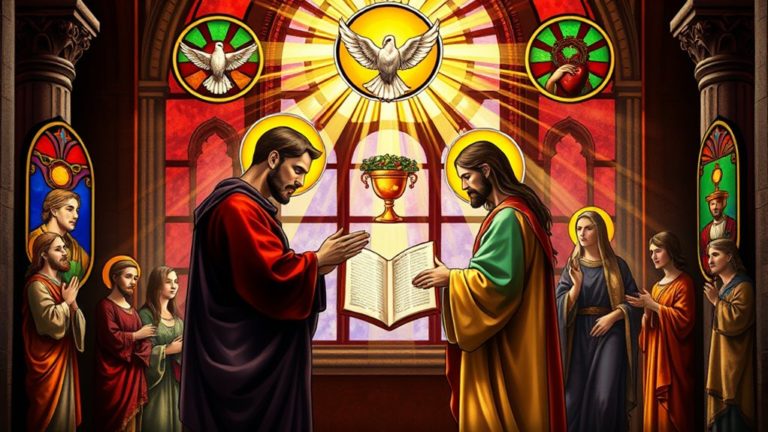
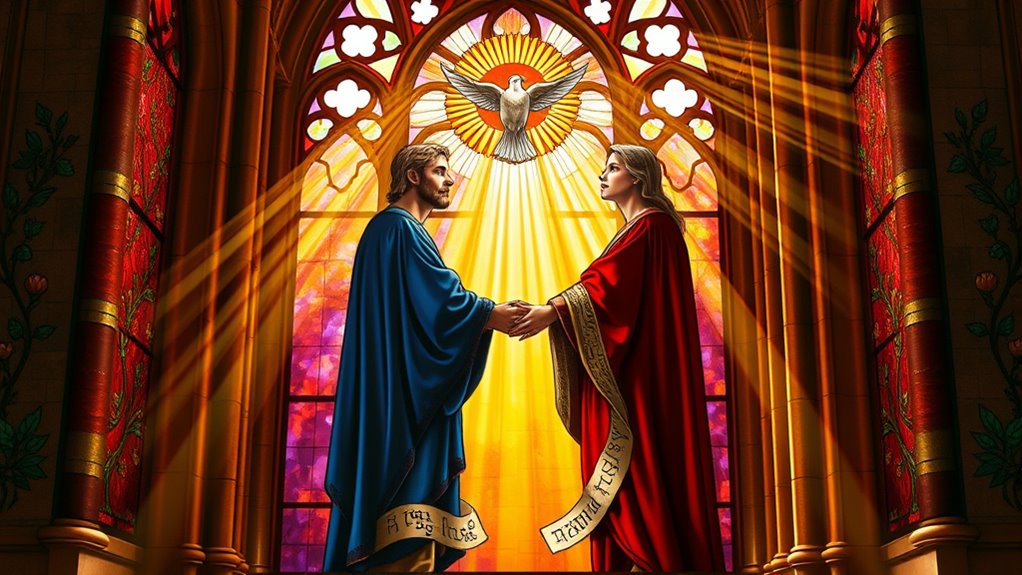
When the founders drafted the Declaration of Independence, they drew heavily on a Christian worldview that shaped nearly every foundational principle they articulated.
They understood humans as created in God’s image, which grounded their concept of inherent dignity.
Rights were considered God-given, not state-granted.
Natural law theory, rooted in Christian tradition, informed their legal and moral frameworks.
The Declaration references four divine titles: Author, Creator, Judge, and Divine Providence.
Founders also argued that republican self-government required virtue, and virtue required religion.
Limited government structures reflected their recognition of human sinfulness, a distinctly theological concern embedded in the Constitution’s design.
Christian ideals and Enlightenment principles functioned as the “warp and woof” of the American Founding, producing a broad consensus on human dignity and moral agency.
Among the 54 signers of the Declaration of Independence, 29 were ordained ministers, reflecting the deeply religious character of those who shaped the nation’s founding commitments.
The founders’ appeals to covenantal promise and continuity echoed biblical patterns of promise and land found in Israel’s origins.
From Colonial Settlements to a Protestant Nation
The ideals embedded in America’s founding documents did not emerge from nowhere—they grew from seeds planted long before the Revolution, in the soil of colonial religious life.
Spanish Catholics founded St. Augustine in 1565. Northern Europeans brought Protestantism to Massachusetts, Virginia, and beyond.
Colonial faith shaped daily life and governance through key patterns:
- Settlers fled European persecution seeking religious freedom
- Indigenous and African spiritual practices quietly reshaped Protestant traditions
- Protestant rationalism rejected divine authority, influencing revolutionary thought
The Maryland Toleration Act of 1649 defined tolerance of Christian varieties of religion and is considered a precursor to the First Amendment.
Catholic missions across the Americas were often run by Augustinians, Franciscans, Jesuits, and Dominicans, serving as partial justification for European colonial efforts.
The Bible’s teachings on justice and submission to governing authorities also influenced colonists’ views on civic responsibility and law, especially the principle of submission to authorities.
How the Great Awakenings Transformed Christianity in America
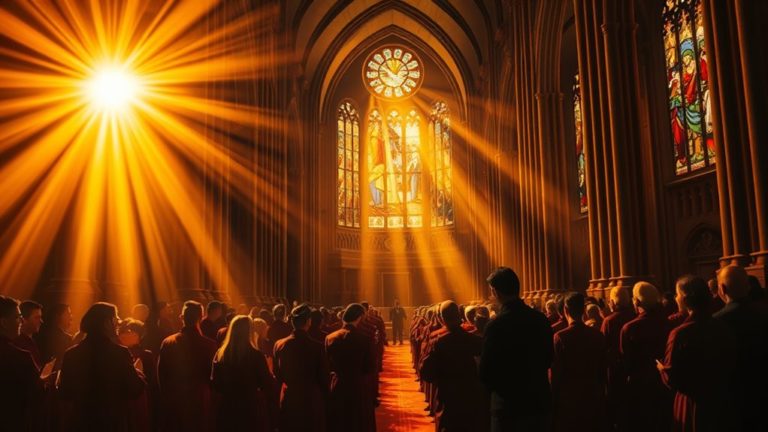
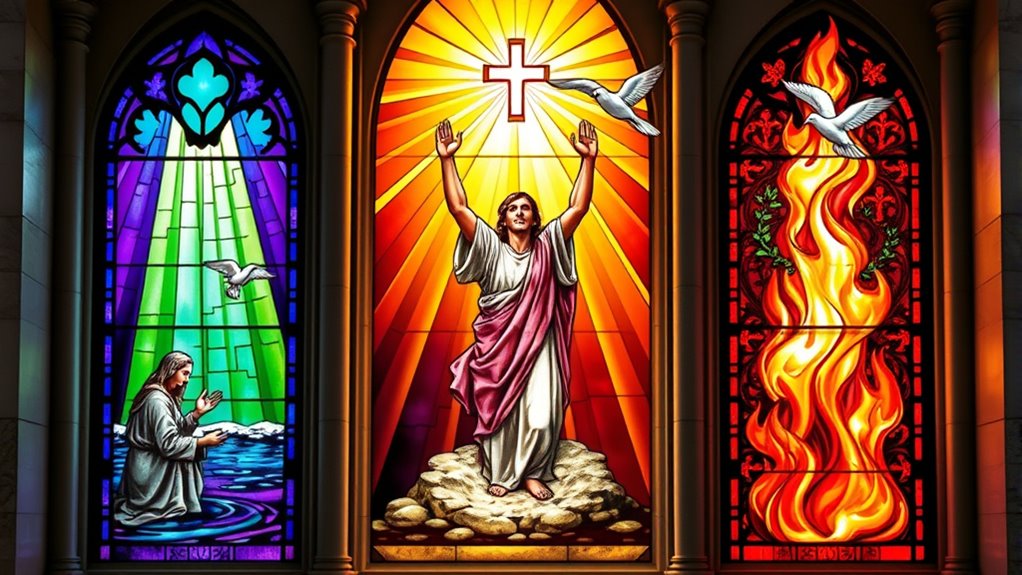
Between the 1720s and the early 1800s, two successive religious revivals—known as the First and Second Great Awakenings—reshaped Christianity across the American colonies and the young republic.
Preachers like Jonathan Edwards and George Whitefield drew tens of thousands of converts during the First Awakening, while Charles Finney recorded 100,000 conversions in 1831 alone.
Both movements weakened established churches, expanded Baptist and Methodist memberships, and founded new institutions, including Princeton.
They also reinforced individual equality before God, strengthened liberty ideals ahead of the Revolution, and helped establish the African Methodist Episcopal Church among independent Black congregations. The First Awakening emerged partly as a reaction against increasing secularization of society and the corporate and materialistic nature of the principal churches. The Second Great Awakening was especially connected to reform movements including temperance, abolition, and women’s rights. Many revival-era leaders urged public engagement based on justice and the common good.
How Christianity in America Justified Both Freedom and Slavery
Religious revivals like the Great Awakenings stirred deep convictions about human dignity and equality before God, yet those same convictions did not produce a unified response to American slavery. These revivals also intensified debates over biblical interpretation and social reform, creating fertile ground for both abolitionist and pro-slavery readings of scripture in American churches.
The Great Awakenings ignited convictions about human dignity — yet those convictions fractured sharply when confronted with slavery.
Scripture became contested ground, with both sides claiming divine authority:
- Pro-slavery theologians cited Leviticus 25:44–46 to justify human ownership
- Abolitionists used Genesis 1:27 to affirm equal human dignity
- Black Christians, including Harriet Tubman, drew on scripture to organize resistance and escape networks
Southern ministers produced the overwhelming majority of published defenses of slavery, framing it as divinely sanctioned household hierarchy alongside biblical arguments for the subordination of women and children.
The Hebrew term eved and the Greek term doulos, both loosely translated as “slave,” carried broader meanings that included servant and hired worker, and biblical terminology’s interpretive flexibility allowed pro-slavery advocates and abolitionists alike to claim scriptural authority for opposing positions.
Christianity’s Contested Place in Modern American Life
Christianity’s place in modern American life is harder to define than at almost any previous point in the nation’s history.
Pew Research data from 2024 shows nearly 70% of U.S. adults believe Christianity’s influence is decreasing, yet 49% consider that decline a negative development.
Meanwhile, 31% said religion was gaining influence in 2025, the highest figure in 15 years, with gains recorded across age groups, political affiliations, and most major religious communities.
Scholars note that Christian institutions remain largely absent from arts, academia, and media. Recent analyses of civic engagement highlight how voting for leaders is one way Christians continue to participate in public life.
A 2024 Pew survey found that 43% of Americans believe evangelical Christians face discrimination, compared to 74% who said the same of Muslims and 72% who said the same of Jews.
The U.S. Constitution forbids Congress from establishing a religion, and expanded application of that prohibition now extends to matters such as prayers in public schools and the removal of religious symbols from public property.
The picture is genuinely mixed: shrinking in some directions, quietly resilient in others.