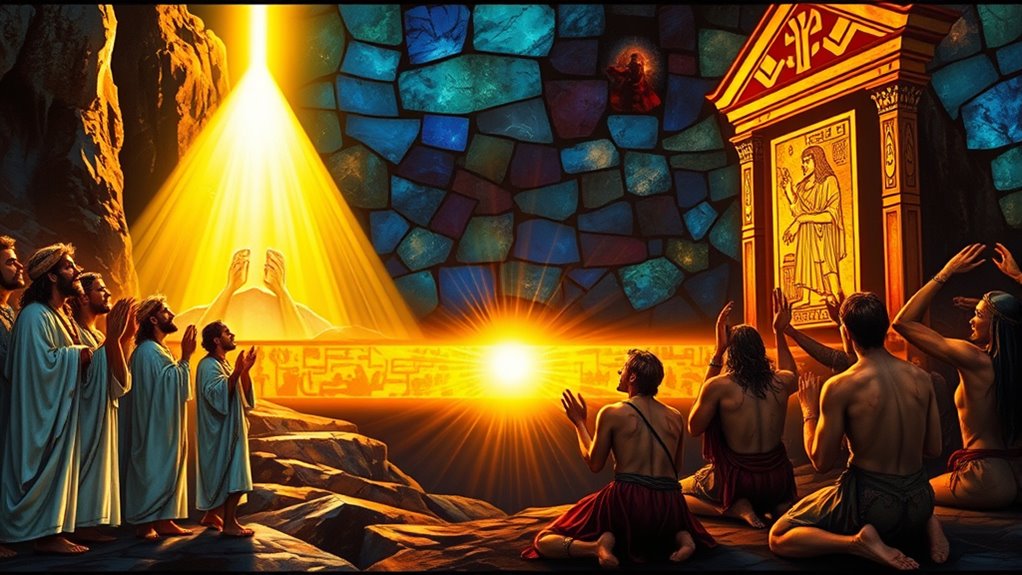

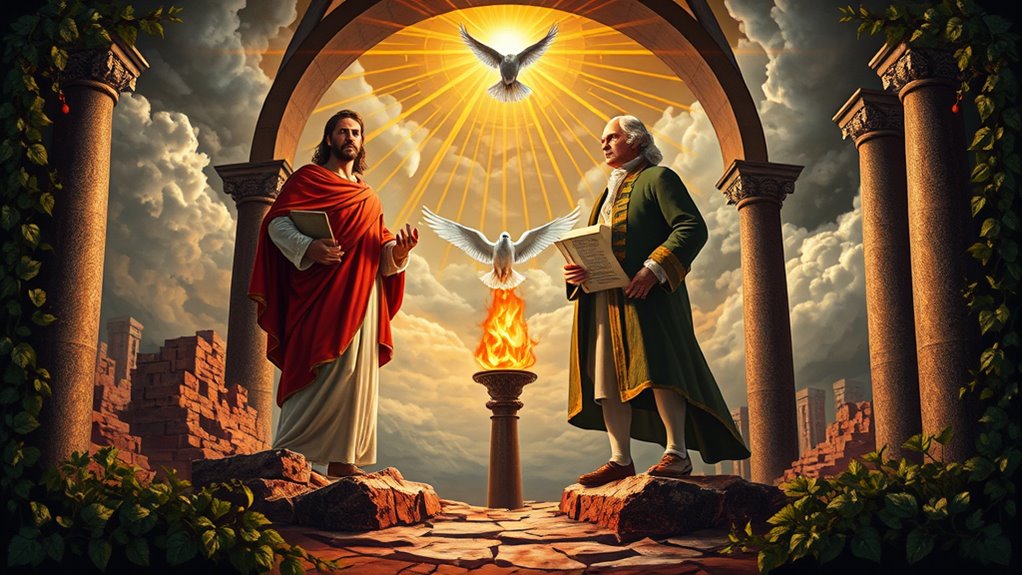
Moses warned Israel, just before entering the Promised Land, that prosperity would tempt them to forget God and credit themselves for their success. Centuries later, George Washington echoed that same concern in his 1796 Farewell Address, declaring religion and morality indispensable to national survival. Both leaders identified the same progression: abundance breeds pride, pride breeds forgetfulness, and forgetfulness leads to collapse. Their warnings, separated by millennia, point toward a pattern worth understanding more closely.
Moses and Washington Both Warned Against Forgetting God
Both Moses and George Washington understood that prosperity poses a unique spiritual danger. Moses cautioned Israel that full stomachs, beautiful homes, and multiplying wealth could quietly shift credit away from God and toward human effort. That forgetfulness, he warned, leads first to pride, then to idolatry, then to destruction. The Bible consistently teaches God’s ownership of all things, which frames why such forgetfulness is spiritually perilous.
Washington echoed a similar concern, cautioning Americans that national success could breed self-reliance at the expense of gratitude toward God. Both leaders recognized the same pattern: people tend to remember God during hardship but forget Him during abundance, making times of blessing among the most spiritually vulnerable moments a nation faces. Moses understood this so well that he warned Israel the default tendency is forgetting, making careful vigilance not a suggestion but a necessity. The wilderness years, marked by thirst, venomous snakes, and scorpions, were designed to humble Israel, ensuring they would recognize God as the source of their survival before entering a land of abundance.
Moses’ Final Warning to Israel Before the Promised Land
As Israel camped on the eastern bank of the Jordan River, Moses delivered what would be his final instructions to the people he had led for forty years.
He commanded them to take his words seriously, calling them not trivial advice but the very life of the nation. The covenant promises rooted their national identity in God’s oath to the patriarchs.
Obedience to God’s law, he said, would allow them to flourish in the land ahead.
Moses also instructed parents to teach these words to their children.
The covenant, he made clear, was not one obligation among many—it was the foundation upon which everything else depended.
Moses warned that if the people turned to graven images of wood and stone, they would provoke God to anger and be utterly destroyed from the land they were about to receive.
Moses also composed a song to serve as a witness between God and Israel, ensuring that when the people broke covenant, the words would stand as testimony against them.
Washington’s Farewell Warning About Morality and Nation
Centuries after Moses stood at the edge of Canaan and urged his people to hold fast to God’s commands as the basis of national life, George Washington delivered a strikingly similar message to a young republic on the edge of its own uncertain future.
In his 1796 Farewell Address, Washington declared religion and morality indispensable supports for political prosperity.
He warned that national morality could not survive without religious principles.
Virtue, he argued, was a necessary foundation of popular government.
Washington believed that without these anchors, the republic’s stability, property, reputation, and liberty would gradually erode. He also cautioned that foreign influence was among the most dangerous threats facing republican government.
This theme echoes biblical teachings that link communal virtue to national well-being and the moral responsibilities of leadership, as seen in accounts of war, command, and later teachings emphasizing peace and compassion.
The Exact Warnings Moses and Washington Shared
Separated by roughly three thousand years and vastly different circumstances, Moses and Washington nevertheless issued warnings that overlapped in striking ways. Both men identified specific dangers threatening their peoples’ futures.
Separated by three thousand years, Moses and Washington issued strikingly overlapping warnings about dangers threatening their peoples’ futures.
- Forgetting past deliverance — Moses warned Israel against forgetting Egypt’s exodus; Washington cautioned Americans against abandoning founding principles. The Bible ties such remembrance to communal stability and ritual practice, particularly through festivals that recalled deliverance and provision festivals of remembrance.
- Idolatry and false loyalty — Moses condemned idol worship replacing God; Washington warned against placing political factions above national unity.
- Disobedience producing destruction — Moses described drought, disease, and enemy conquest following lawlessness; Washington foresaw national collapse following moral decay.
Both leaders believed remembrance and faithfulness were inseparable from survival. Moses made clear that these lessons were not his alone to carry, instructing his people to teach what they had witnessed to children and grandchildren.
Moses delivered these warnings as part of a farewell address on the plains of Moab, rehearsing God’s law to a new generation standing on the threshold of the Promised Land.
How America Is Repeating the Mistakes Both Men Warned Against
The warnings Moses and Washington issued were not meant for their generations alone. Both men described patterns—idolatry, factionalism, forgetting foundational covenants—that tend to repeat when left unaddressed.
Today, political factions openly prioritize power over common good, echoing Washington’s concern. Younger generations receive fewer warnings about past moral failures, mirroring the biblical pattern Moses cautioned against.
Scripture recorded 23,000 deaths in a single day as a lesson for future readers. Neither text treats history as decoration. Both treat it as instruction.
Recognizing these patterns does not guarantee correction, but ignoring them has historically guaranteed collapse. Moses repeated his exclusion from the promised land five times in Deuteronomy, not as personal grievance, but as a warning that losing faith in God’s promises carries lasting consequence.
Washington argued that virtue and morality are necessary springs of popular government, suggesting that institutional structures alone cannot sustain a free society without a moral foundation undergirding them. A civic life grounded in biblical principles supports the kind of public virtue both leaders urged.