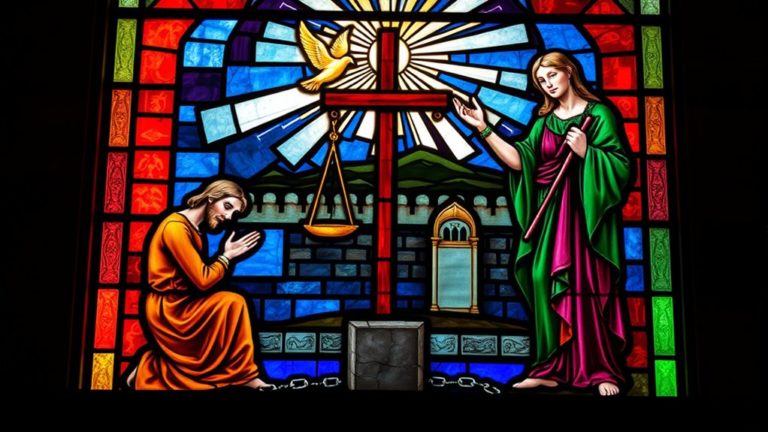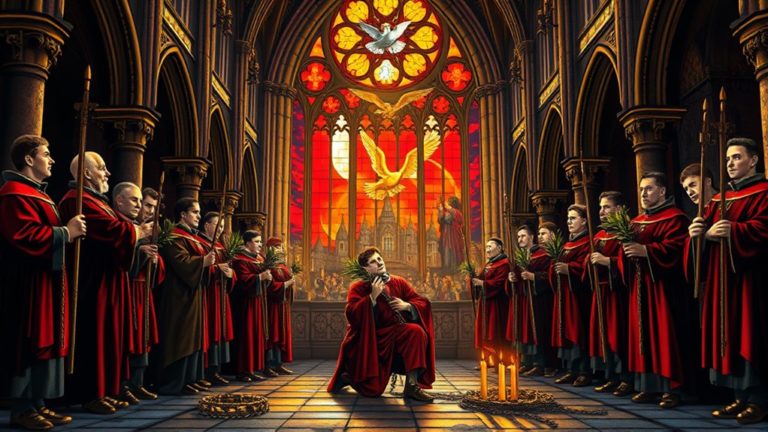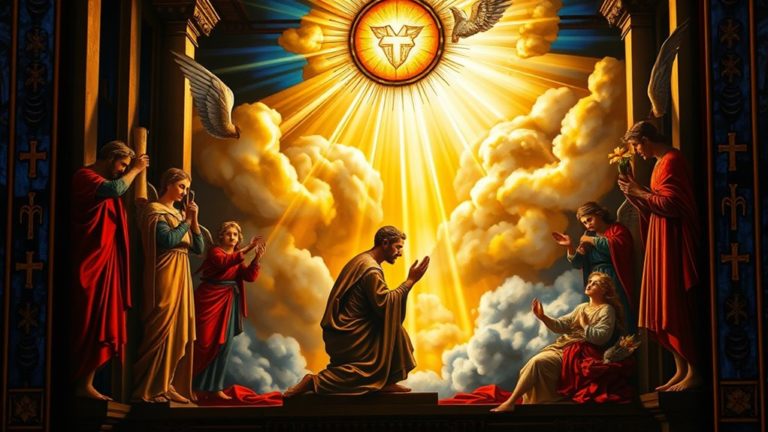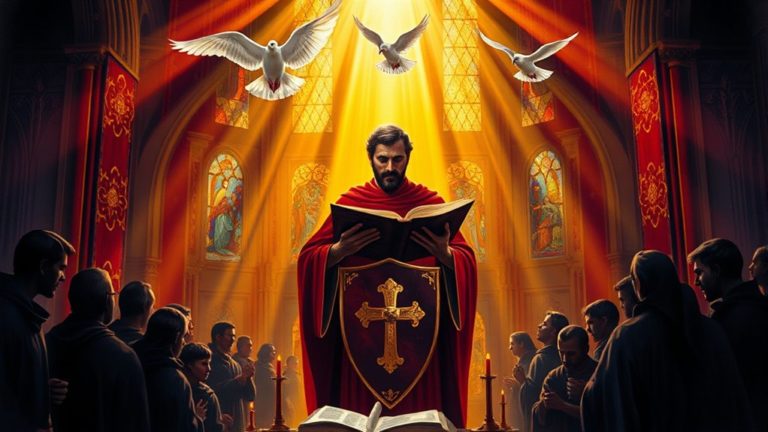
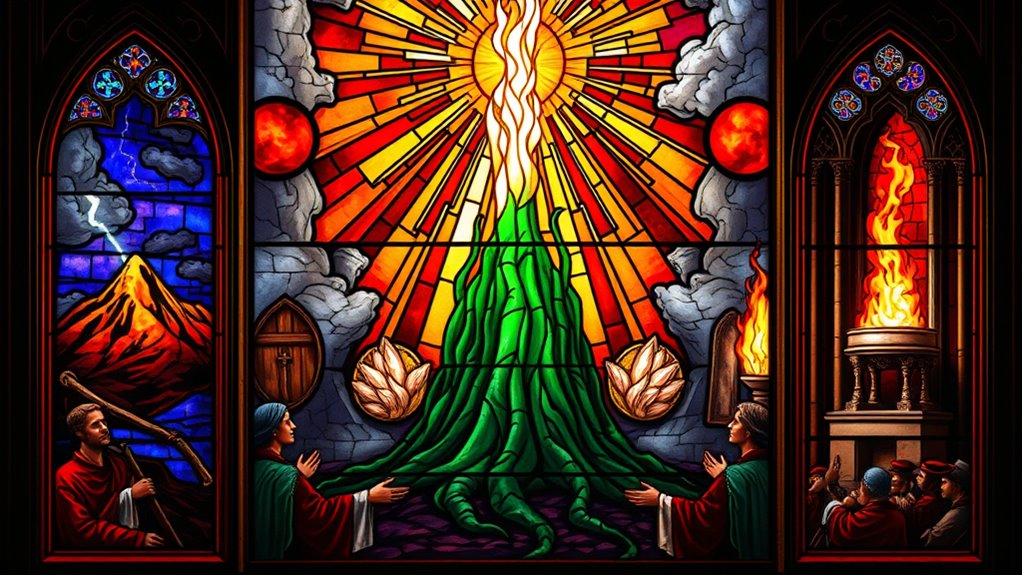
The Bible uses fire in several distinct ways across both covenants. It signals God’s presence, as seen in the burning bush of Exodus 3:2 and the pillar of fire guiding Israel. It represents judgment against sin, most clearly in the destruction of Sodom and Gomorrah. It also refines and purifies, as Malachi 3:2–3 and 1 Peter 1:6–7 describe. Each meaning depends on context, and the full picture of fire’s symbolism runs deeper than any single passage suggests.
Key Takeaways
- Fire symbolizes God’s presence, appearing in the burning bush, pillar of fire, and tongues of flame at Pentecost.
- Fire represents divine judgment against sin, as seen when God destroyed Sodom and Gomorrah with sulfur and fire.
- Fire serves as purification, refining believers like gold, removing impurity while preserving what is valuable.
- Eschatological fire appears in Matthew as final judgment prepared for lawbreakers and rebellious spiritual forces.
- Priests were commanded to keep altar fire burning continually, symbolizing ongoing devotion and God’s constant presence.
The Dual Meaning of Fire in the Bible
Fire appears throughout the Bible carrying two distinct meanings that often seem contradictory at first glance. In some passages, fire signals divine judgment, consuming what is corrupt and opposing holiness. Sodom and Gomorrah stand as a clear example, destroyed by fire as direct punishment for rebellion. The end-times lake of fire continues that same theme of final consequence.
Yet fire also appears as something constructive. Malachi describes a refiner’s fire that removes impurity from metal without destroying the metal itself. This purifying image suggests that fire, in certain contexts, restores rather than ends.
The same symbol carries both meanings depending on what surrounds it. Context determines whether fire represents punishment or sanctification, making it one of Scripture’s most purposeful and carefully applied images. On the Day of Pentecost, tongues of fire rested upon the apostles, connecting fire directly to the empowering and purifying work of the Holy Spirit. This reflects the New Testament understanding of Jesus as divine and active with the Father in the life of the Church, consistent with the doctrine that the Son is God.
God also used fire as a visible sign of his presence and guidance, most notably in the pillar of fire that led Israel through the wilderness by night, assuring the people that he had not abandoned them.
Fire as God’s Presence in Scripture
Beyond judgment and purification, fire in the Bible carries a third function that may be its most consistent: marking the nearness of God.
At the burning bush in Exodus 3:2, fire signals divine presence without destroying the bush itself, establishing a pattern of sacred encounter.
Israel followed a pillar of fire through wilderness darkness, described in Exodus 13:21 as continuous divine guidance.
At Sinai, the LORD descended in fire, and the mountain’s flames accompanied the giving of the law.
Later, glory and fire marked both the tabernacle and Solomon’s temple as places where God dwelt among his people.
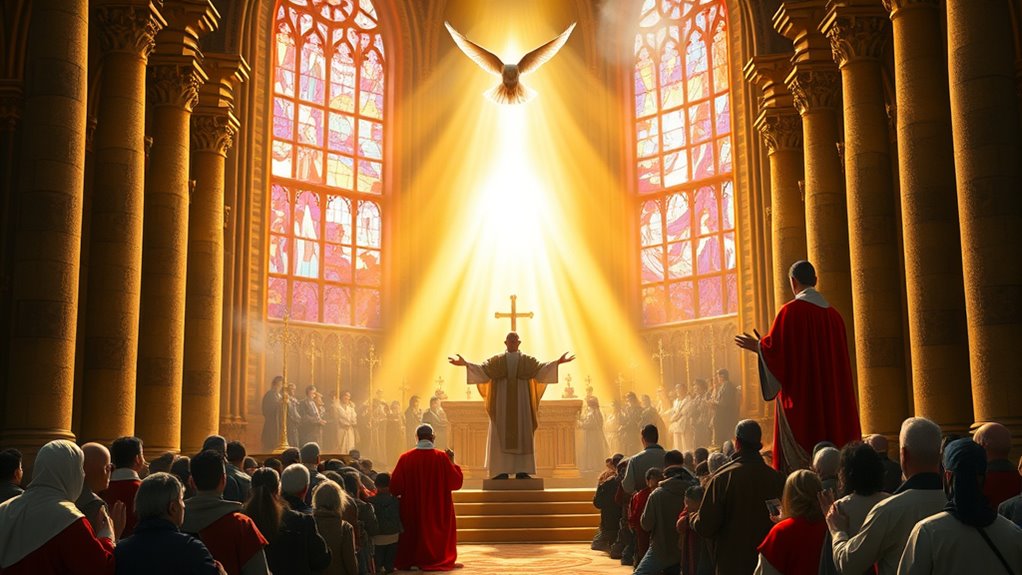
In Acts 2:3, tongues of fire appeared at Pentecost, extending that same pattern into the New world, where fire accompanies the Holy Spirit’s arrival among believers. According to Matthew Henry’s Commentary, the Spirit, like fire, melts the heart and kindles pious and devout affections in the soul. At Mount Sinai, the people heard God’s voice directly from the flames, and Deuteronomy 5:24 records their astonishment that God speaks through fire and yet they survived the encounter.
Jesus and the early Christian community also operated in a multilingual context where Aramaic usage was common, reflecting how divine encounters were communicated across language boundaries.
Fire as Judgment Against Sin
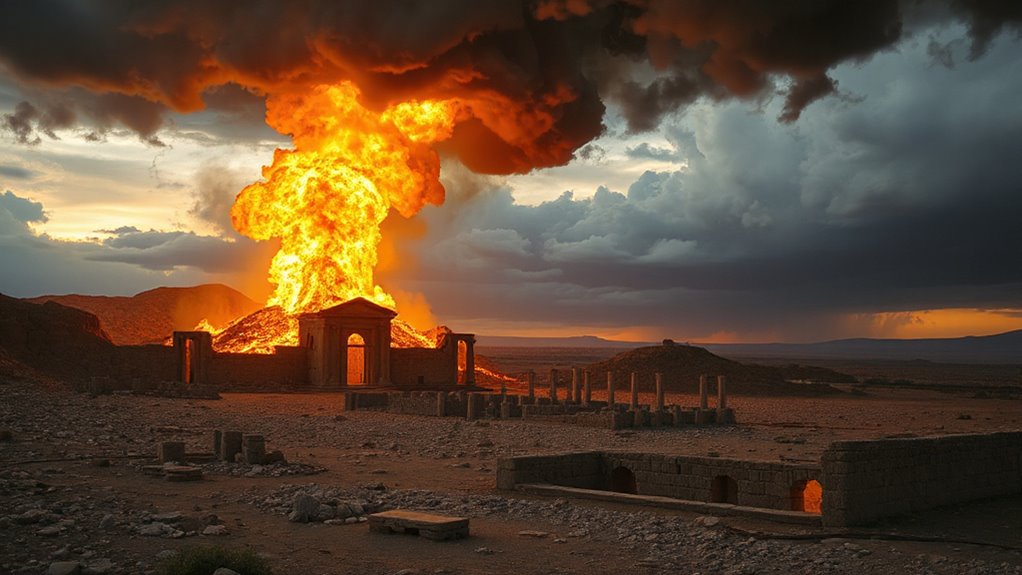
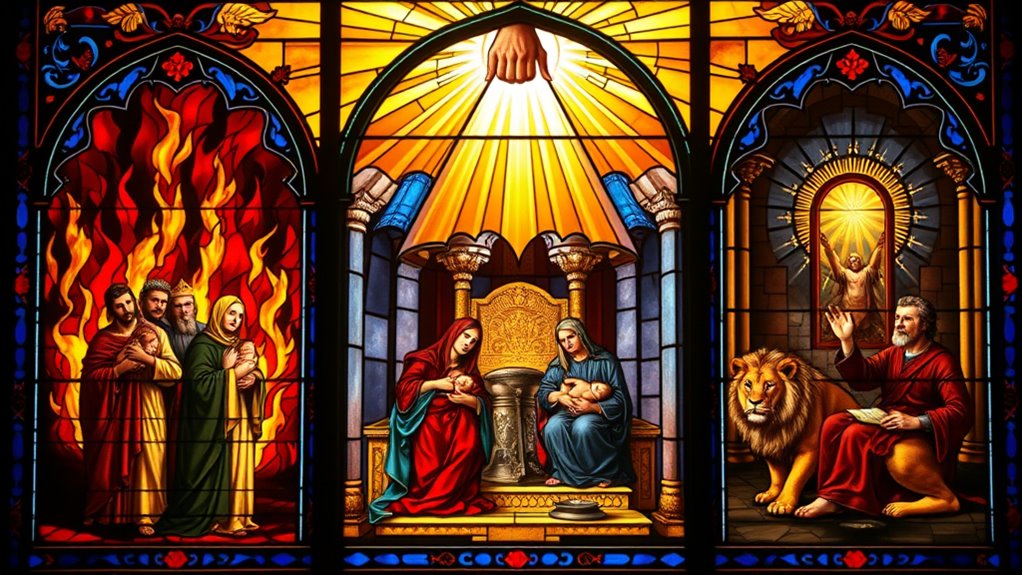
When the LORD rained sulfur and fire on Sodom and Gomorrah in Genesis 19:24–25, Scripture presented one of its clearest examples of fire as direct divine judgment.
The destruction of Sodom and Gomorrah stands as Scripture’s clearest picture of fire as direct divine judgment.
The destruction responded to persistent wickedness, and both Jude 1:7 and 2 Peter 2:6 later treated those cities as warnings for future generations. 2 Peter 2:6 described those cities as turned into ashes, condemning them with an overthrow and establishing them as an example to those who afterward would live ungodly.
Isaiah 66:15–16 extended this pattern into prophetic literature, depicting God arriving with fire to execute judgment against sin.
Matthew 13:41–42 and Matthew 25:41 carried the imagery into eschatological territory, describing fire prepared for lawbreakers and rebellious spiritual forces.
Deuteronomy 4:24, echoed in Hebrews 12:29, identified God himself as a consuming fire.
Across these passages, fire consistently marks where human sin encounters divine holiness, carrying consequences that Scripture presents as serious and certain. Lunar eclipses and other astronomical observations historically supported interpretations of God’s actions in the heavens.
Revelation 20:14–15 brought this trajectory to its ultimate expression, describing the lake of fire as the second death into which all whose names were absent from the Book of Life were cast.
Fire as Purification and Refinement in Scripture
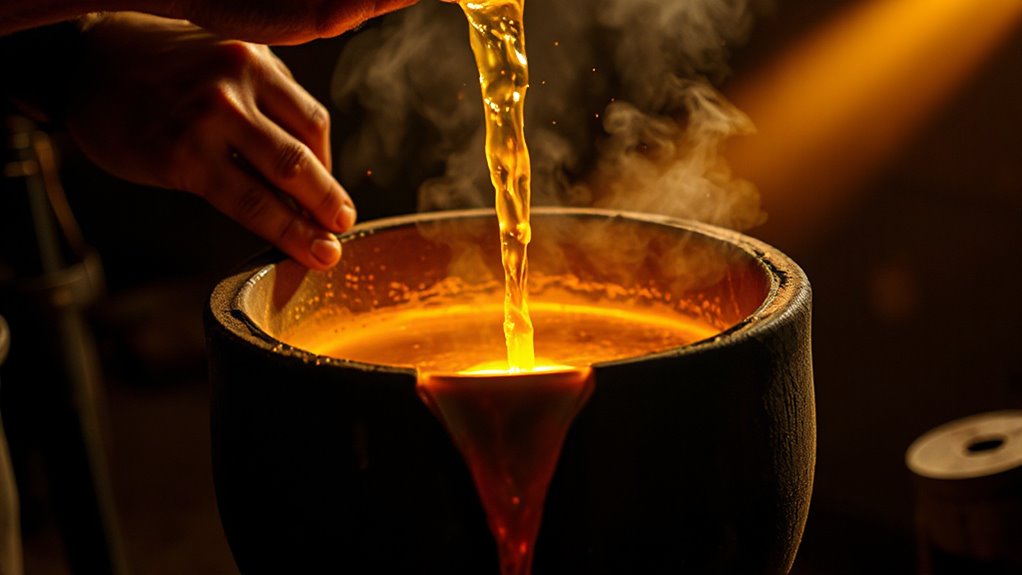
Not every fire in Scripture signals punishment. Some passages present fire as a refining force that removes impurity rather than destroys the person.
Malachi 3:2–3 describes God as a refiner who sits patiently until the sons of Levi are purified, producing offerings in righteousness.
First Peter 1:6–7 compares tested faith to gold refined by fire, calling such faith more precious than the metal itself.
Numbers 31:23 distinguishes objects cleansed by fire from those requiring water, linking heat directly to ritual purification.
Zechariah 13:9 describes a third being refined like silver and gold, ending with covenant language: “They are my people.”
Proverbs 17:3 draws a direct parallel between the crucible for silver, the furnace for gold, and the Lord testing hearts, showing that refinement by heat is a consistent image for divine examination. The Lord tests hearts just as a metalworker applies heat to reveal and remove what is impure.
Malachi 3:2 reinforces this imagery by asking who can endure the day of his coming, presenting the refiner’s fire not as annihilation but as an intense process of purification.
Across these texts, fire functions as a process that exposes what is genuine and prepares people for renewed faithfulness. This refining imagery also connects to biblical portrayals of God’s majestic presence, often described with fiery eyes and purifying fire in prophetic visions.
Why Fire Remains One of the Bible’s Most Powerful Symbols
Fire endures as one of the Bible’s most recognized symbols because it gathers several distinct meanings into a single, concrete image.
It signals God’s presence in scenes like the burning bush and Sinai, where nearness and holiness converge without requiring explanation.
Fire marks where God draws near — no explanation needed, only presence and holiness converging in flame.
It represents divine power acting decisively in history, consuming, illuminating, and protecting depending on the situation.
It warns of judgment against covenant violation and moral failure, making accountability visible and serious.
It guides and guards, as the pillar of fire demonstrates, offering direction through uncertain terrain.
It also marks sacred encounter, linking worship and glory to holy ground. In Leviticus 9:24, fire came out from the presence of the LORD and consumed the burnt offering, signaling God’s acceptance of sacrifice and his active presence among the people.
No single quality explains fire’s staying power; rather, its range across presence, power, judgment, guidance, and holiness makes it consistently useful and difficult to replace. Leviticus 6:12–13 commanded priests to keep the altar fire burning continually, reflecting how fire also served as a visible, ongoing symbol of devotion and God’s constant presence among his people. The use of fire in biblical imagery also echoes longstanding religious traditions tied to specific places like Bethlehem, which became central to Christian memory and pilgrimage.