
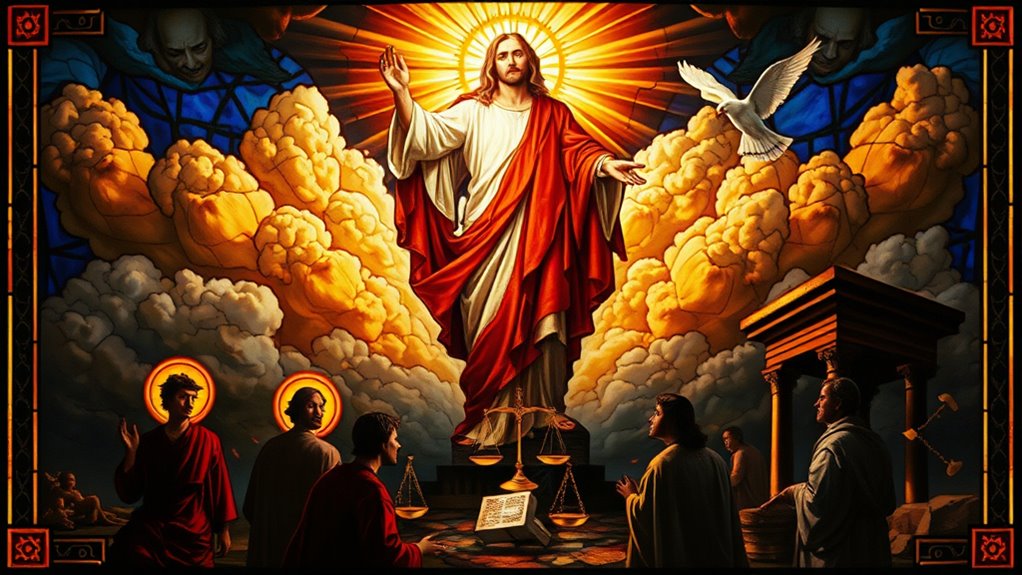

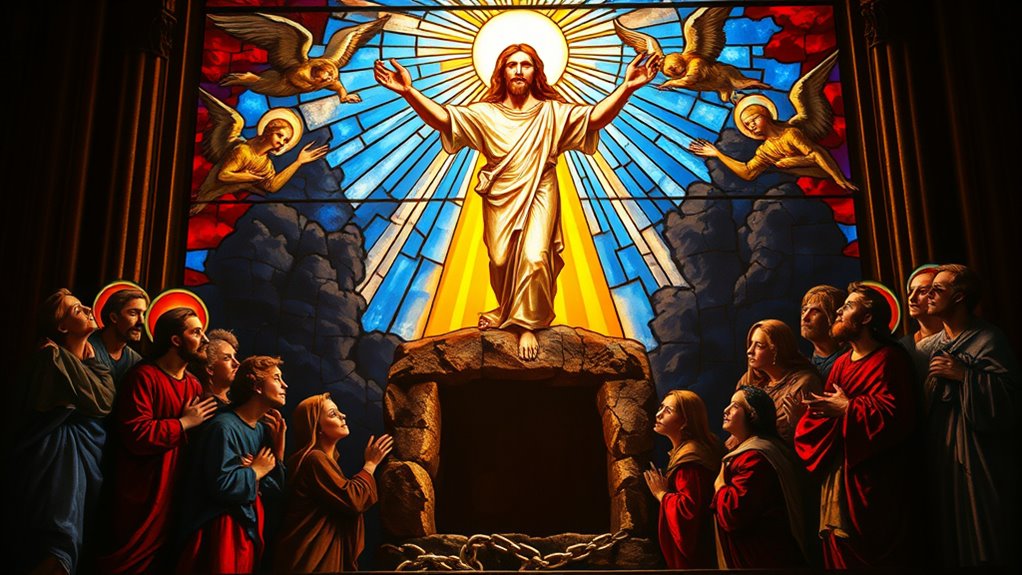
Some argue that discouragement runs too deep for self-help or religious routine to fully resolve. Scholars point to Psalm 42, where an honest soul addresses its own heaviness before turning toward God, as a model of what genuine re-enchantment looks like. This reorientation centers on Christ specifically, described as moral and spiritual renewal rather than mood improvement. Research suggests the distinction matters more than it first appears, and the reasons why become clearer further along.
What Does It Mean for Christ to Re-Enchant a Downcast Heart?
When a heart sinks into discouragement, Christian teaching does not prescribe escape or distraction but rather a renewed perception of God’s presence and promise in the middle of suffering. This renewal, sometimes called re-enchantment, centers specifically on Jesus Christ, described in Christian accounts as “the word made flesh” who brings light and truth.
Psalm 42 models the pattern: a downcast soul speaks honestly to itself, then turns toward hope in God. Re-enchantment, in this framework, is not mood improvement. It is a moral and spiritual reorientation anchored in the living God as medicine for the suffering soul. The image behind this reorientation is striking: a “cast sheep” helpless on its back, unable to rise without its shepherd arriving in time.
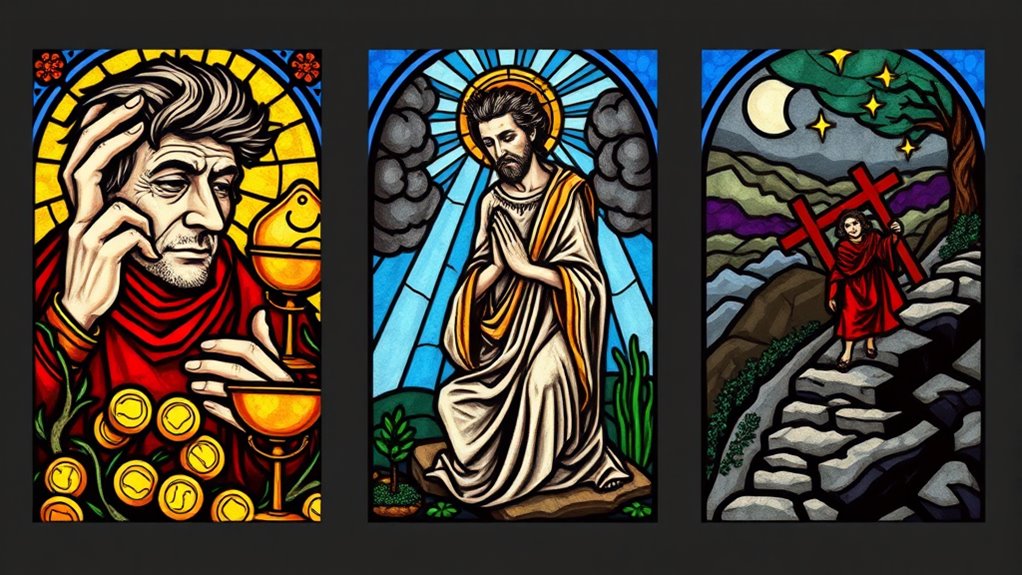
Jesus himself knew this experience of a troubled soul, crying out, “My God, my God, why have you forsaken me?”, yet enduring the cross for the joy set before him. Regular prayer and Scripture help reorient anxious hearts toward trust and peace in God’s presence.
Can You Have Faith Without a Changed Heart?
How a person believes matters just as much as whether a person believes, at least according to the biblical tradition that frames this question. James 2:17 states plainly that faith without works is dead. James 2:26 compares such faith to a body without breath.
Scholars consistently distinguish works as evidence of salvation rather than its cause, pointing to Ephesians 2:8–9 for balance. A verbal claim unsupported by changed behavior is described as counterfeit faith.
Repentance and genuine belief are treated as inseparable. Saving faith, the sources conclude, produces an inwardly renewed and outwardly visible transformation. The Greek term “metanoian” literally signifies a change of one’s mind or purpose, reflecting a fundamental reorientation of thought and direction.
Justification occurs through Jesus’ redemptive work alone, while good works and fruit serve as evidence of redemption visibly produced in a Christian’s life. The Bible also emphasizes that sin leads to spiritual death and that Christ’s life, death, and resurrection provide forgiveness and new life.
How the Cross Reaches Hearts That Religion Never Could
Where religion tends to work from the outside in, the cross works from the inside out. Ephesians 2:8-9 frames salvation as grace received, not performance rewarded. Romans 5:8 connects Christ’s death directly to love for sinners—not to moral improvement.
Religion works from the outside in. The cross works from the inside out—grace received, not performance rewarded.
Three reasons the cross reaches what religion cannot:
- It addresses guilt directly, offering forgiveness rather than shame.
- It reveals costly love, which moves the heart more than rule-keeping ever could.
- It opens relationship, replacing institutional obligation with daily communion with Christ.
Religion can expose human need. Only the cross, Christian teaching holds, answers it. Generous giving and faithful stewardship also flow from that transformed heart, shaping how believers live in community and care for the poor through sacrificial giving.
Does Surrendering to Christ’s Lordship Belong Inside Faith or After It?
A question that has occupied evangelical theologians for generations asks whether surrendering to Christ’s lordship belongs inside the act of faith or follows it as a later development.
One position holds that genuine trust already includes submission, making surrender inseparable from believing.
Another treats surrender as faith’s fruit, emerging gradually through obedience and spiritual disciplines.
The debate centers on whether lordship is a condition of saving faith or its consequence.
Most sources examined lean toward inseparability, arguing that authentic belief is never passive but yields the whole person to Christ’s already-established authority, not as an optional addition but as faith’s natural expression. Romans 14:8-9 grounds this conviction historically, teaching that Christ died and rose again so that He might be Lord over all, whether the living or the dead acknowledge it or not.
Calvin described self-denial as the sum of the Christian life, capturing how thoroughly submission to Christ reshapes the believer’s identity and redirects every competing loyalty away from the self. Leaders and citizens alike are called to exercise servant leadership and pursue justice in ways that reflect accountability to God.
Why Christ’s Return Is the Only Lasting Answer to Despair
Surrendering to Christ’s lordship, as examined in earlier discussion, already assumes that Christ holds authority worth submitting to—an authority He will one day make visible to every person. Scripture identifies death as “the last enemy to be destroyed” (1 Corinthians 15:26), and Christ’s return addresses that enemy directly.
Christ’s authority over death is not merely future—it is already established, awaiting full revelation.
Three reasons Christ’s return answers despair lastingly:
- His resurrection guarantees future resurrection for believers.
- His return promises a world without sorrow or tears.
- His victory rests on what He already accomplished, not on circumstances.
This grounds hope firmly, even while grief remains real today. When Christ returns, the dead in Him will rise first, and then those still living will be caught up to meet Him—because the empty tomb is our guarantee that death has been defeated. Scripture reminds us that the Lord is close to the brokenhearted and saves those who are crushed in spirit, so the same Christ whose return is certain draws near to the despairing soul even now. This confident expectation is rooted in God’s character as a faithful promise-keeper and not in mere human wishes, which is why confident expectation sustains believers through suffering.