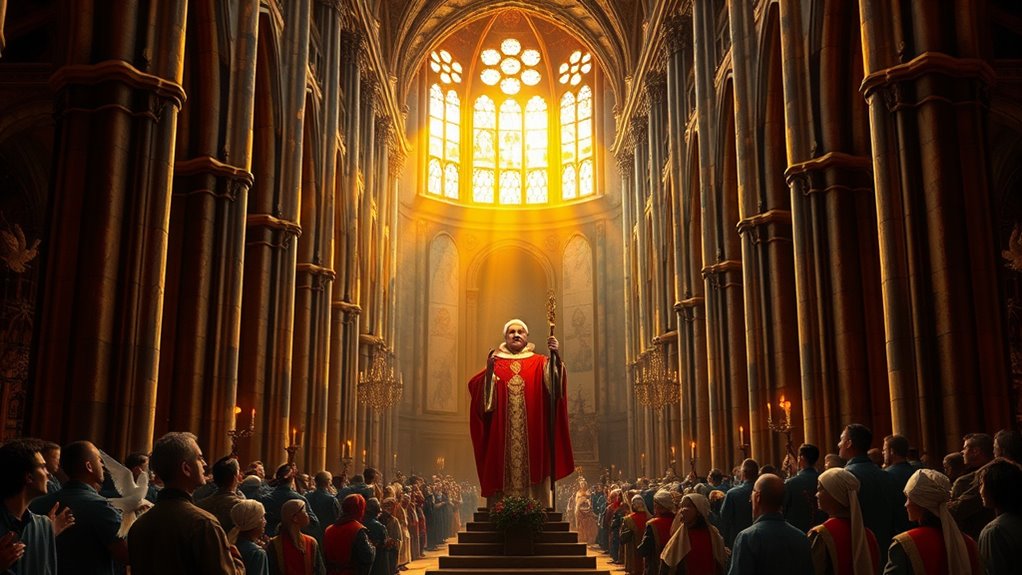
At Brussels’ Cathedral of Saints Michael and Gudula, Cardinal Pietro Parolin, serving as Pope Francis’s legate, addressed Europe’s spiritual crisis during a Mass marking the cathedral’s 800th anniversary. He identified the continent’s deepest challenge not as declining church attendance but as the loss of evangelical boldness to proclaim Christian faith openly. The Cardinal called believers to become “artisans of peace” through courageous witness rather than institutional reform alone, invoking postwar leaders like Robert Schuman who rebuilt Europe through restored trust and spiritual courage amid contemporary division and uncertainty.
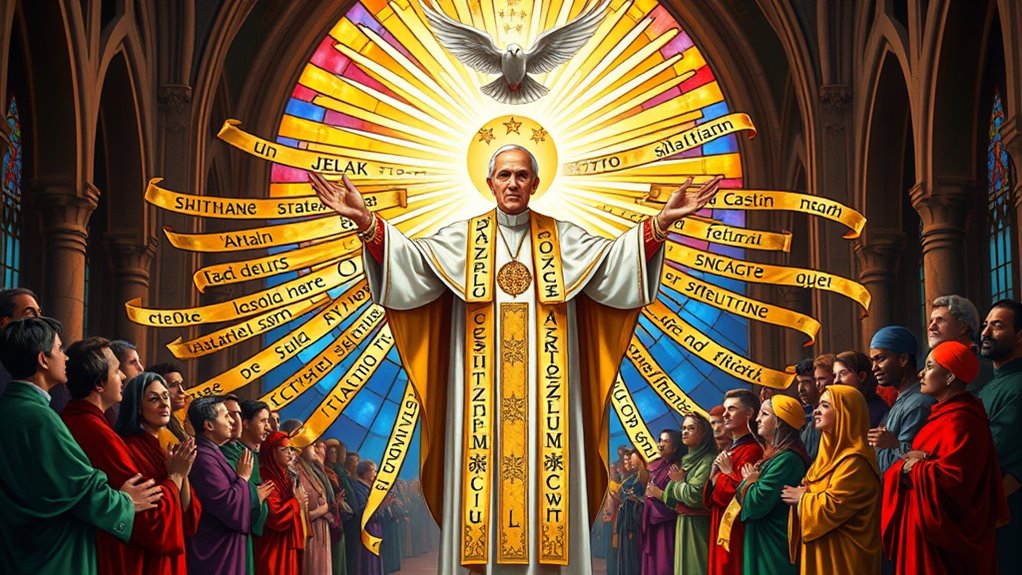
In the heart of Brussels, where limestone columns have witnessed eight centuries of European history, Cardinal Pietro Parolin delivered a message that reached beyond the Cathedral of Saints Michael and Gudula’s ancient walls to address a continent grappling with spiritual disorientation. Speaking at the 800th anniversary celebration, the Vatican Secretary of State identified a crisis deeper than declining church attendance: the loss of evangelical boldness that once defined Christian witness across Europe.
Europe faces a crisis deeper than empty pews: the loss of evangelical boldness that once defined Christian witness.
The Cardinal’s diagnosis addressed what he sees as the continent’s profound fragility, marked by social division, cultural uncertainty, and fear. Brussels itself, hosting the European Union’s institutions, symbolizes both the postwar dream of reconciliation and its current vulnerability. Cardinal Parolin invoked the legacy of Robert Schuman, Konrad Adenauer, and Alcide De Gasperi, whose postwar reconstruction efforts demonstrated that rebuilding requires more than institutional reform—it demands restored trust and spiritual courage.
According to the message, numerical weakness in congregations reflects spiritual disorientation rather than institutional failure. Christian witness, Cardinal Parolin argued, depends on courageous proclamation rather than institutional size. The Church must accompany, discern, and serve humanity through uncertain times, bringing what he called “humble and joyful hope” to surrounding communities. Cardinal Parolin served as the Pope’s legate at the Mass, representing papal authority at this historic milestone.
The appeal coincided with significant anniversaries in Church history: the conclusion of a Jubilee year and the 1700th anniversary of the Council of Nicaea. Pope Leo XIV had recalled ecumenical prayer meetings addressing humanity’s cry for reconciliation amid violence and conflict, suggesting that full communion among believers strengthens witness in contemporary Europe. This ecumenical dimension frames the Church’s role as one of pilgrimage and trust-building. Nearly 1,200 Ukrainian participants joined the Taizé European meeting in Paris, where December 31 was dedicated to a special prayer vigil for peace.
Cardinal Parolin’s vision positions believers as “artisans of peace” who must confront fragility with renewed spiritual courage. Each generation, he noted, receives, safeguards, and passes on entrusted values—a continuity stretching across centuries through the cathedral’s enduring presence.
The message emphasized that Europe’s recovery requires reclaiming Christian boldness, transforming passive observers into active witnesses capable of addressing the continent’s contemporary spiritual crisis with confidence and hope. A renewed emphasis on humble and merciful correction and witness, grounded in self-examination and love, was urged as the way forward.