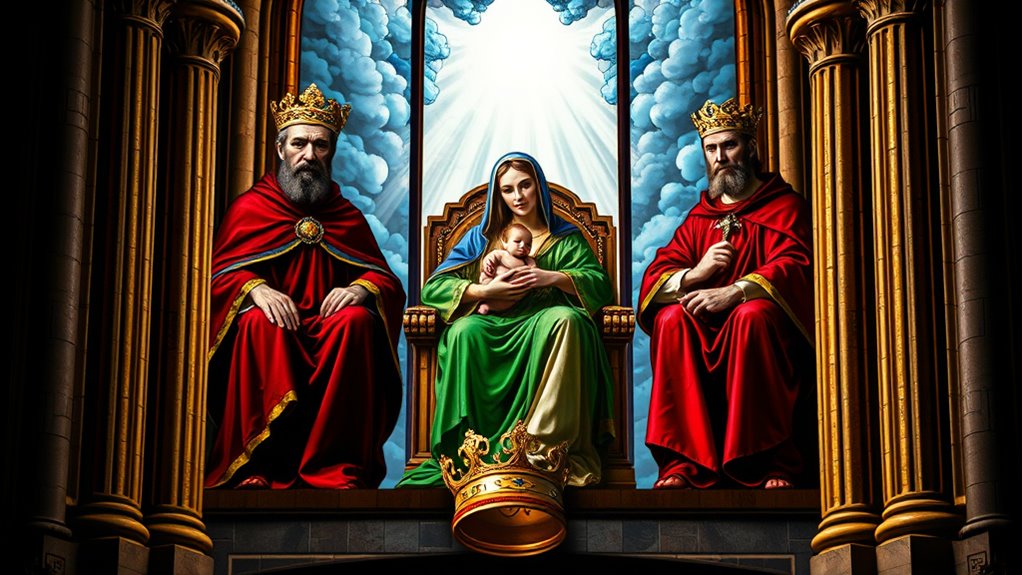
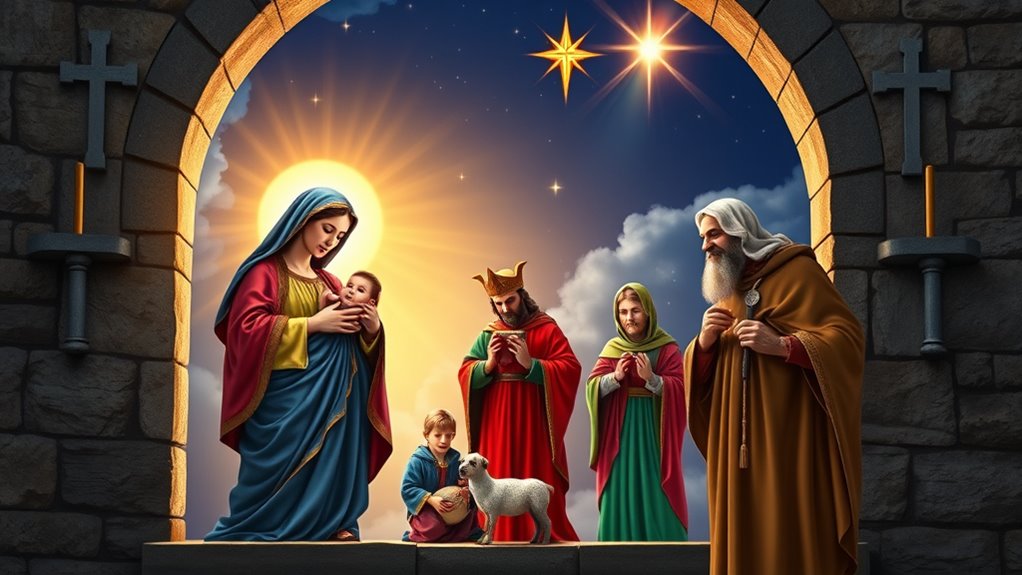
On January 6, 2026, many Catholic and Episcopal families will observe the Feast of Epiphany by blessing their homes with a traditional doorway inscription. Using blessed chalk, they write 20+C+M+B+26 above the main entrance, where the letters reference the Magi—Caspar, Melchior, and Balthazar—or the Latin phrase *Christus mansionem benedicat*, meaning “Christ bless this house.” The ceremony typically includes scriptural readings, prayers, and the Lord’s Prayer, inviting Christ’s presence into the household for the coming year. The ritual transforms ordinary thresholds into sacred space, and the practice carries deeper layers of symbolism and meaning.
How does a Christian household invite Christ’s presence to dwell within its walls for the year ahead? One ancient answer returns each January when families across Catholic and Episcopal traditions mark the Feast of Epiphany by blessing their homes with chalk, prayer, and holy water. The Bible repeatedly affirms the importance of truth and honesty in relationships and worship.
Families across Catholic and Episcopal traditions bless their homes with chalk, prayer, and holy water each Epiphany season.
The feast commemorates the manifestation of Christ to the Magi and to the nations, traditionally dated January 6 in the universal calendar, and in many countries it prompts a sacramental practice that extends the celebration of Christmas into the domestic environment.
The 2026 inscription follows a centuries-old formula: 20 + C + M + B + 26, written with blessed chalk over the main entrance. The initial digits 20 and final digits 26 enclose the letters and crosses in the civil year, while the letters reference both the traditional names of the Magi—Caspar, Melchior, Balthazar—and the Latin phrase *Christus mansionem benedicat*, meaning “Christ bless this house.” The cross signs between numbers and letters symbolize Christ and the salvation brought by the Cross.
When a household gathers at the front door, a designated leader often begins with the liturgical greeting “Peace be to this house.” Roman Catholic resources from the United States Conference of Catholic Bishops, Catholic Culture, and EWTN provide official or widely used texts for lay-led ceremonies.
The USCCB outline includes a scriptural reading, short intercessions, the Lord’s Prayer, and a formal blessing prayer invoking Christ’s light and love. Catholic Culture offers an expanded ceremony involving a manger scene, participants dressed as the Three Kings, and a procession through the home.
Episcopal parishes promote similar chalking of the door, drawing on the Book of Occasional Services and emphasizing that homes and those who dwell within belong to Christ and are called to hospitality. Many Episcopal congregations schedule events for blessing chalk and marking church entrances, with some offering home chalking kits for parishioners to take into their own residences.
The rite concludes with sprinkling holy water at the threshold or through rooms, often followed by a hymn like “We Three Kings.” The threshold represents the sacred border where secular and domestic church meet, acting as a transition point for divine presence. Theologically, the blessing highlights the doctrine that the Word became flesh and made his dwelling among humanity, now sacramentally present in ordinary homes dedicated to Christ’s lordship throughout the new year.