

Julian of Norwich was a medieval English mystic and anchoress, born around 1342, who lived in a small stone cell attached to St. Julian’s Church in Norwich. In 1373, during a serious illness, she received sixteen visions of Christ’s suffering that shaped her landmark work, *Revelations of Divine Love*, widely considered the first surviving book written in English by a woman. Her central message — that God’s love is unconditional and all will ultimately be well — continues to resonate across centuries, and her story holds much more to uncover.
Who Was Julian of Norwich?
Mother Julian of Norwich was a medieval English Catholic anchoress and mystic, most likely born around 1342 or 1343, whose life unfolded against the turbulent backdrop of the Black Death, the Peasants’ Revolt, and anti-Lollard persecution.
She lived in Norwich, Norfolk, a significant commercial and religious center in medieval England. A number of scholars discuss her writings in relation to medieval theology and spiritual practice.
Historical records about her remain sparse, and her birth name, family background, and early life are unknown. Her name likely derives from St. Julian’s Church in Norwich.
She is also referred to as Juliana of Norwich, Dame Julian, and the Lady Julian. She died sometime after 1416. Norwich was second in importance to London during the 13th and 14th centuries, serving as a centre for regional agriculture and trade.
She is thought to be the first woman to write a surviving book in English, a distinction that underscores the remarkable significance of her work across literary and religious history.
Life Inside Julian of Norwich’s Anchoress Cell
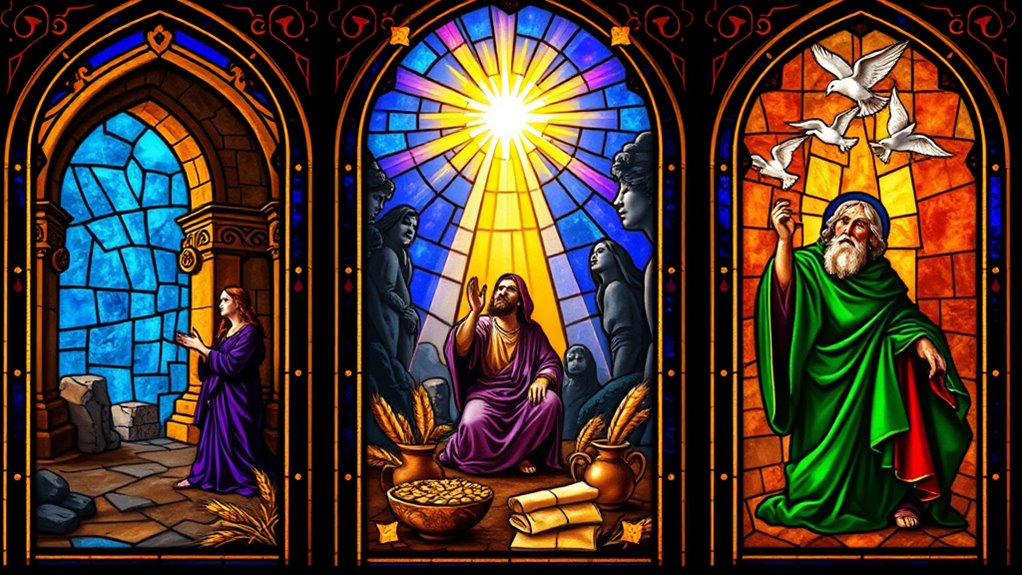
Understanding who Julian was requires understanding where she lived, and for most of her adult life, that place was a small stone cell attached to St. Julian’s Church in Norwich. Her anchorhold was compact and purposeful, designed for permanence rather than retreat.
Daily life inside followed a steady pattern:
- Prayer and contemplation occupied most hours
- Simple tasks, such as needlework, filled practical time
- Meals and rest were managed within the enclosure
- Counsel and guidance were offered through an exterior window
Her cell was withdrawn from society yet quietly connected to it. Before Julian ever crossed its threshold, a Requiem Mass was performed over her, and the doorway was sealed with bricks, marking her formal death to the world. She lived in a way that echoes other women in Scripture who combined prayer and ministry within constrained domestic or enclosed settings.
The Visions That Changed Julian of Norwich’s Life
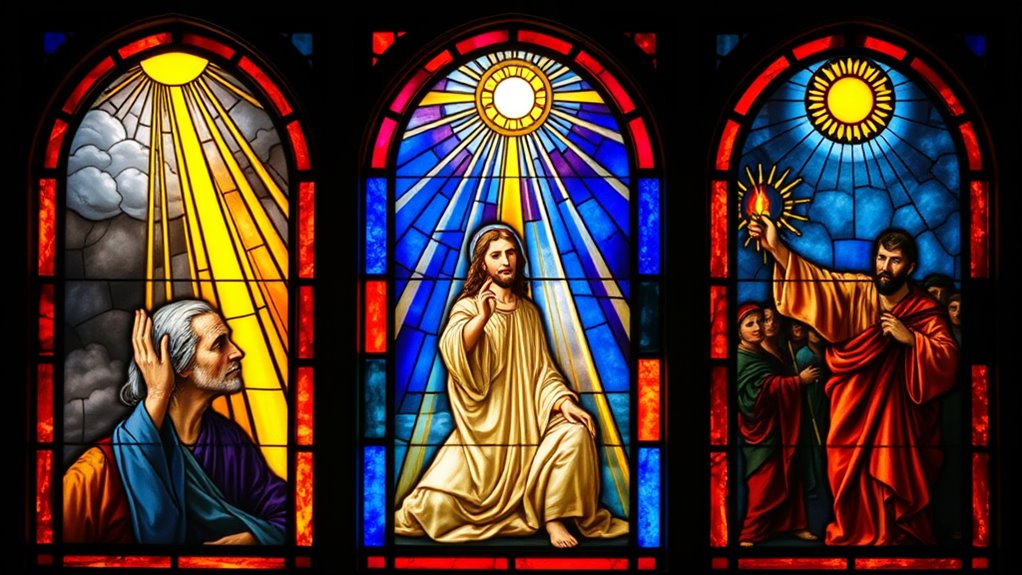
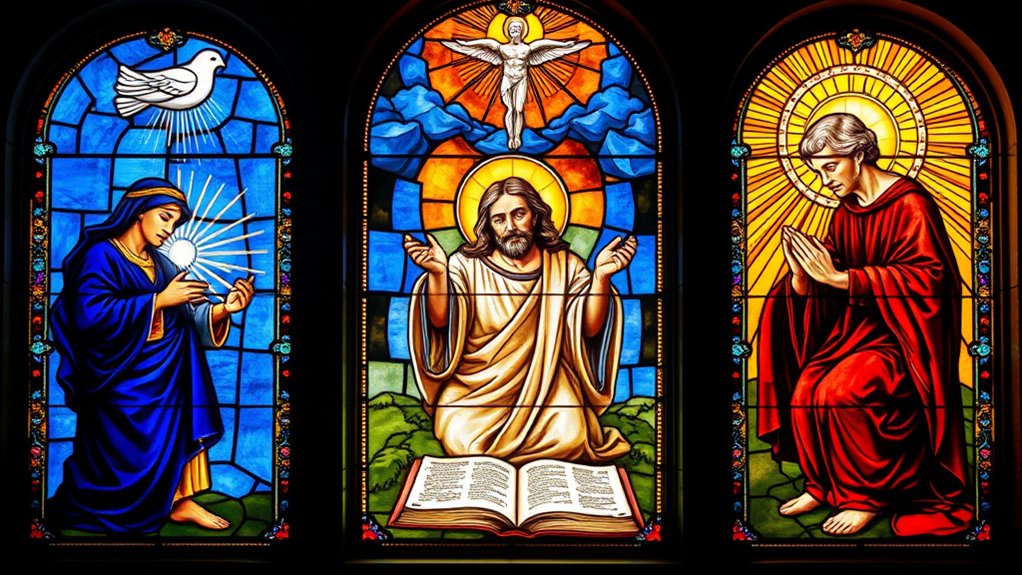
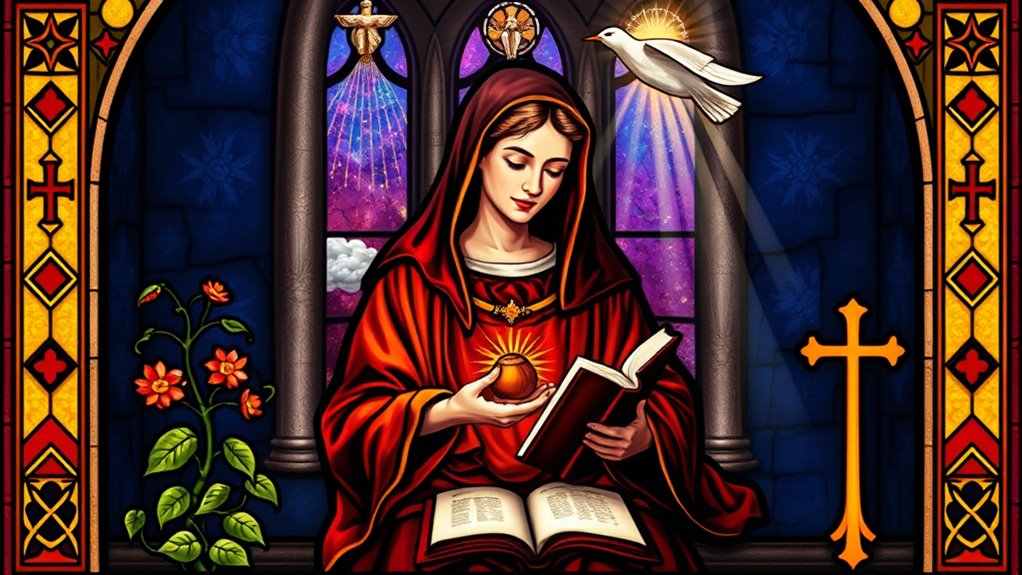
On the night of May 13, 1373, in Norwich, England, a thirty-year-old woman named Julian lay gravely ill, her breathing deteriorating as priests gathered at her bedside to administer last rites. Focused on a crucifix before her, she experienced sixteen distinct visions, or “showings,” across two nights. The first fifteen arrived within hours; the sixteenth came the following night. Each vision centered on Christ’s suffering, featuring vivid imagery of bleeding wounds and profound loss. A hazelnut held in her palm symbolized all creation. Through everything, one message persisted: God’s love was unconditional, and all things would ultimately be well. Following her recovery, Julian devoted the remainder of her life to contemplating and interpreting her visions, eventually producing two distinct written compositions known as the Revelations of Divine Love. She later became an anchoress at Norwich, living in a cell attached to St Julian’s Church, where she gained a reputation for wisdom and received visitors seeking spiritual counsel. Her life and writings emphasized the importance of communal worship and spiritual guidance within a faith community.
Julian of Norwich’s Theology: Love Over Fear
Her framework distinguished between four spiritual postures:
- Love as God’s primary self-disclosure, not punishment or wrath
- Doubtful fear, treated as spiritual sickness requiring transformation
- Reverent fear, described as gentle, sweet, and inseparable from love
- Trustful assurance, resistant to despair and grounded in divine mercy
Julian did not eliminate fear entirely. She redirected it, replacing anxiety with quiet confidence in God’s enduring goodness. Reverent fear and love are brothers rooted together by the Creator’s goodness, each incomplete and absent without the other.
Writing from within a world marked by plague, revolt, and war, Julian insisted that seeking is as good as seeing, reminding her readers that faithful searching itself constitutes a holy and pleasing act before God. The emphasis on marriage and mutual care in Christian teaching also resonates with her insistence on love as central to human flourishing, particularly within the context of societal trials and suffering sexual intimacy.
Why Does Julian of Norwich Still Matter Today?
Across seven centuries, Julian of Norwich has continued to find readers—not as a historical curiosity, but as a voice that speaks with unusual directness to questions that have not gone away. Her writing addresses suffering, doubt, and recovery in language that feels personal rather than formal.
As the earliest surviving English work known to have been written by a woman, *Revelations of Divine Love* carries both literary and historical weight. Catholic, Anglican, and ecumenical communities observe her feast day on May 13.
Scholars increasingly connect her ideas to healing, ecology, and social imagination, extending her relevance well beyond medieval devotion. She wrote from a cell adjoining a church, where people sought her out for comfort, reassurance, and guidance during a period marked by war, famine, and recurring plague.
Her work has been recognized through award-winning books and publications that continue to introduce her mystical writings to new audiences across the modern world. Many readers also find her emphasis on rest and trust resonates with reflections on sleep as a gift.