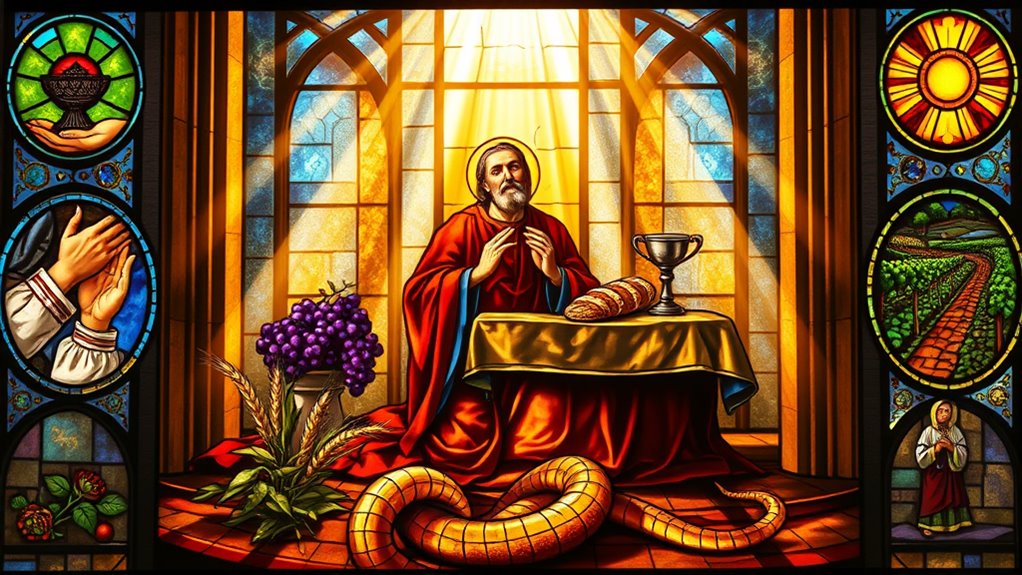






Many believers report answered prayers, citing unexpected healings, financial provision, and restored relationships as evidence. Scripture ties answered prayer to faith, alignment with God’s will, and persistence, referencing passages like John 15:7 and 1 John 5:14–15. Skeptics point to studies like the STEP trial, which found no consistent benefit from intercessory prayer, and cite coincidence and selective memory as alternative explanations. The debate remains genuinely unresolved, and the reasons why are worth exploring further.
What Does the Bible Actually Say About Answered Prayer?
The Bible addresses the question of answered prayer with more directness than many readers might expect. Psalm 66:19 states that God “surely listened” and heard prayer. Jeremiah 29:12 records a direct promise: “I will hear you.” Isaiah 65:24 suggests God answers before the request is even finished. Jesus reinforced this pattern in Matthew 7:7-8, linking asking with receiving and seeking with finding.
However, Scripture also attaches conditions. John 15:7 connects answered prayer to abiding in Christ. First John 5:14-15 ties confidence in prayer to alignment with God’s will, framing answered prayer as relational rather than automatic. Prayer is also presented throughout Scripture as a form of communion with God that shapes the believer’s life and perspective.
Psalm 145:18-19 further affirms that God is near to all who call on Him in truth, fulfilling the desires of those who fear Him and hearing their cry.
James 1:6-7 warns that those who ask must do so in faith without doubting, as the doubter should not expect to receive anything from the Lord.
Answered Prayer Stories: What Believers Say Actually Happened
Scripture offers a framework, but it is the accumulated accounts of ordinary believers that give that framework a human face.
Across faith communities, testimonies cluster into recognizable patterns: unexpected healing during illness, financial provision arriving at the last moment, restored relationships after long conflict, and quiet clarity during difficult decisions. Many of these stories are told alongside practices like prayer, lament, and communal support that echo how Scripture comforts the grieving and suffering, showing God’s presence with the grieving.
Believers frequently describe timing as the most striking detail — not a large sum, but the right amount on the right day.
Dramatic stories, such as recovery from grave illness, circulate widely, though most testimonies are quieter and deeply personal.
One pastor documented a fertility journey spanning drugs, surgery, and three failed IVF rounds, only for an unexpected pregnancy to be confirmed in 2020 and medically unexplained by fertility doctors.
Together, these accounts form what many consider lived evidence. Critics note that most of this evidence remains anecdotal and personal rather than subject to scientific verification.
Why Skeptics Don’t Accept Answered Prayer as Real Evidence
Honest engagement with prayer testimonies requires asking why, despite their emotional weight, such accounts fail to persuade many thoughtful critics. Skeptics generally identify several overlapping concerns.
First, answered prayer rarely has a pre-defined success condition, making later verification difficult. Second, alternative explanations—coincidence, natural recovery, placebo effects, selective memory—remain available for most reported outcomes. Third, large controlled studies, including the STEP trial on cardiac bypass patients, found no consistent benefit from intercessory prayer. Fourth, personal testimony, however sincere, is vulnerable to memory distortion and lacks independent corroboration. Together, these concerns lead skeptics to treat prayer claims as expressions of belief rather than verifiable evidence.
Critics also point out that the Skeptic’s Prayer provides no clear guidance on how long one must wait before concluding the experiment has failed, leaving the duration of waiting undefined and the test effectively unfalsifiable.
Biblical teaching further complicates the skeptic’s framework, as passages such as 1 John 5:14-15 qualify prayer efficacy by requiring that requests be made according to God’s will, meaning unanswered prayers may reflect unmet conditions rather than disproof of the promise itself. Many believers also find comfort and explanation in scriptural promises about God’s presence during loneliness, such as Psalm 23, which can shape how they interpret answered or unanswered prayers.
What Christians Believe Makes the Difference in Whether God Answers
Christian teaching on prayer rarely stops at the question of whether God answers—it presses further into why some prayers seem to receive a response while others appear to go unheard. Most Christian sources point to five recurring factors: relationship with God, faith, obedience, alignment with God’s will, and persistence. The Bible’s consistent emphasis on compassion and care for the sick also frames prayer as part of a broader ministry of healing and compassion.
John 9:31 suggests God responds to those doing his will. Mark 11:24 connects belief to receiving. First John 5:14–15 frames confidence around asking according to divine purpose. Across these sources, the consistent conclusion is that answered prayer depends less on wording or emotional intensity and more on the condition of the person praying. James 4:2 points out that people simply fail to receive because they do not ask, making the act of asking itself the most basic and necessary step toward obtaining what is needed. Jesus himself modeled this practice by teaching his disciples to pray, showing that intercession was demonstrated from the very beginning of Christian tradition as both an expectation and a discipline to be learned.
Why the Answered Prayer Debate Has No Easy Resolution
At the center of the prayer debate lies a problem that is more theological than emotional: the word “answered” does not carry a single, agreed-upon meaning.
The prayer debate is less about sincerity than semantics — no one agrees on what *answered* actually means.
Christians distinguish between yes, no, not yet, and redirection as legitimate outcomes. This alone fractures any clean resolution.
Deeper doctrinal differences compound the difficulty:
- Divine sovereignty and human agency pull interpretations in opposite directions
- The same silence can mean refusal, delay, or protection depending on prior belief
- Testimony, while abundant, remains anecdotal and unverifiable by shared standards
The debate persists not from lack of sincerity, but from lack of a method both sides accept. Scripture itself identifies specific conditions such as unrepented sin, unforgiveness, and disordered motives as factors that obstruct prayer’s effectiveness, adding layers of moral complexity that resist simple resolution. Persistent, faith-driven asking aligned with God’s will is repeatedly presented in Scripture as a foundational condition for receiving answered prayer, reflecting patterns found across passages such as James 4:2, Matthew 7:7, and 1 John 5:14-15. Many readers find comfort and practical guidance in passages about prayer and peace, including Philippians 4:6-7.