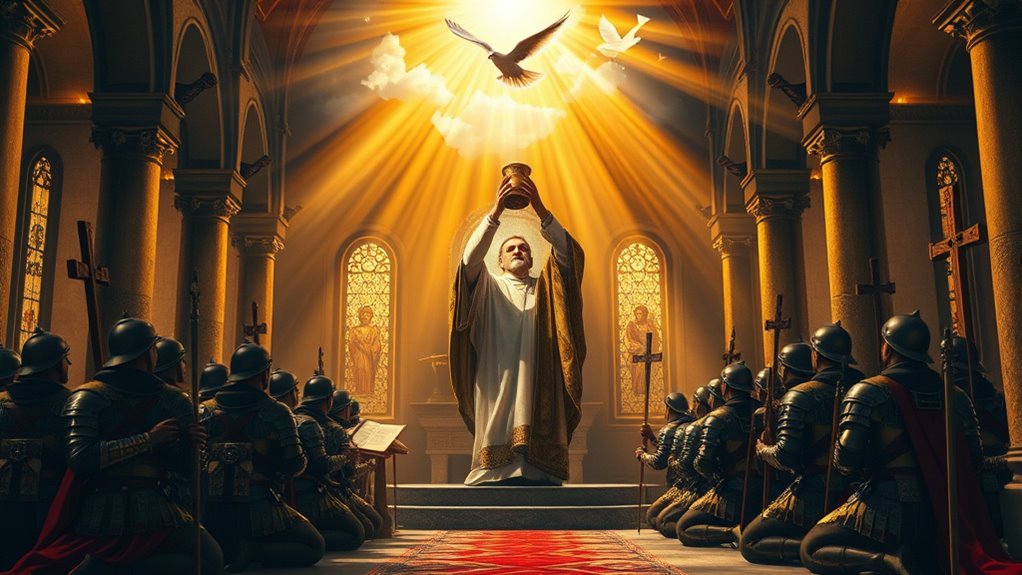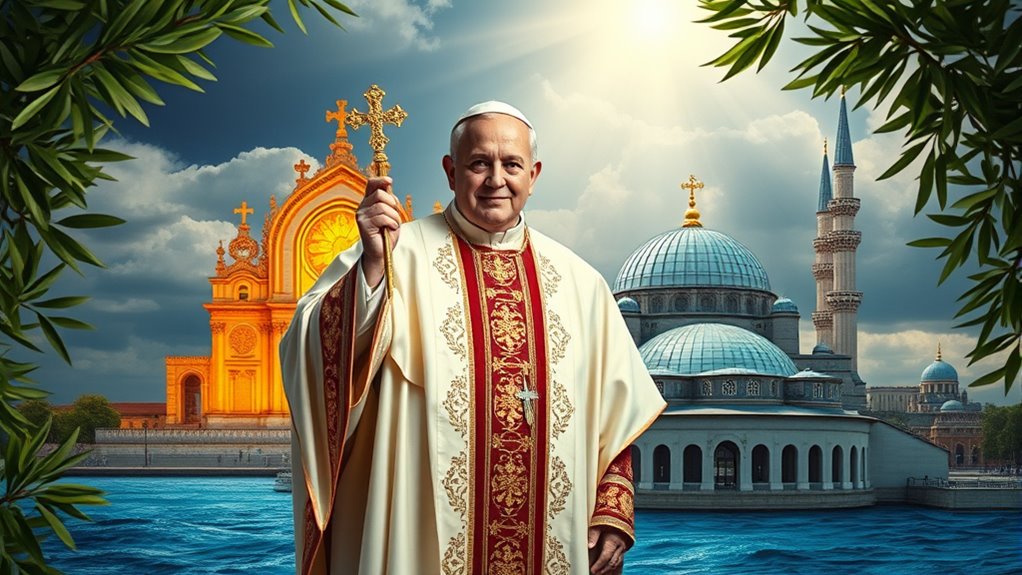

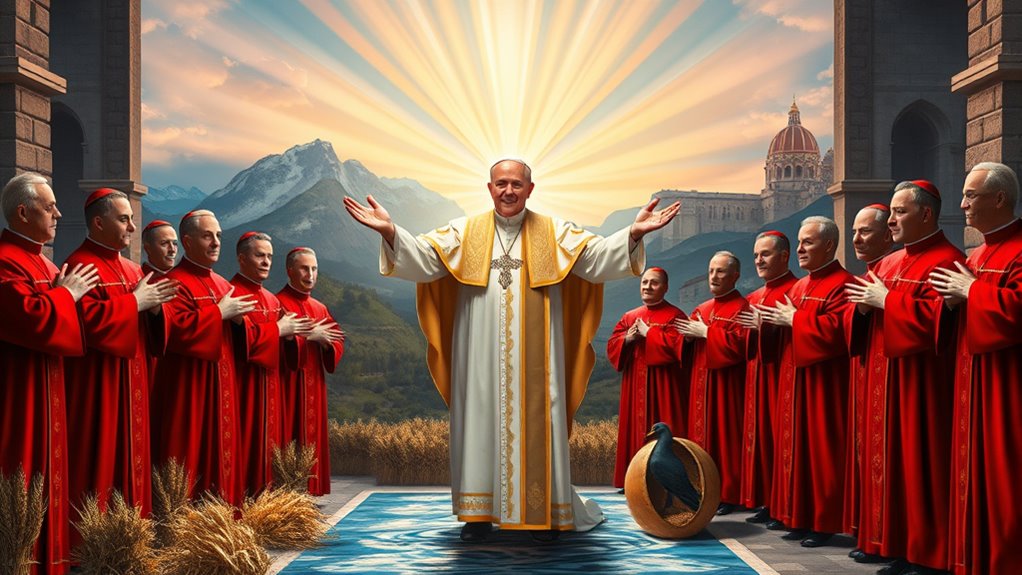
Pope Leo XIV, the first American pope elected in May 2025, broke with centuries of Vatican protocol by assembling the College of Cardinals not to receive homage but to signal a new model of shared governance. In his first full address on May 10, he emphasized peace, mercy, and justice while positioning himself as a servant rather than absolute authority. This departure from centralized papal tradition reflects his focus on building bridges and addressing modern challenges like artificial intelligence‘s impact on labor, drawing inspiration from Pope Leo XIII’s worker rights advocacy. His approach suggests broader reforms ahead.
How does a pope from Chicago, shaped by years serving Peru’s poor and leading a mendicant order founded on begging rather than wealth, intend to guide the Catholic Church through what he calls a new industrial revolution? He has also emphasized stewardship of material resources as a central moral concern. Pope Leo XIV, born Robert Francis Prevost, has signaled his answer by choosing a name that honors worker rights and social justice.
Elected May 8 or 9, 2025, as the first American pope in history, Leo XIV took his name from Pope Leo XIII, who issued Rerum Novarum in 1891. That encyclical, often called the Magna Carta of worker rights, defended just wages, rest periods, unions, and private property while critiquing both socialism and unchecked capitalism. The new pope’s choice suggests he sees similar challenges today as artificial intelligence reshapes labor and society.
Leo XIV brings unusual credentials to the papacy. He is the first Augustinian pope, a member of a mendicant order that survives on begging or work rather than property ownership. He spent nearly two decades in Peru, serving as a missionary and later as Bishop of Chiclayo, and led the worldwide Augustinian order for twelve years across two six-year terms.
Since 2023, he served as Prefect of the Dicastery for Bishops, overseeing episcopal appointments globally.
In his May 10 address to the College of Cardinals, delivered his first full day as pope, Leo XIV described the Church as an ark of salvation sustained by the holiness of its members. He called for peace, mercy, and justice in a hurting world, emphasizing the need to build bridges.
He paid homage to the Second Vatican Council and referenced Pope Leo I’s Tome to the Council of Chalcedon, which opposed heresies and defended orthodoxy. Leo I, who reigned from 440, was known for his simplicity and clarity in addressing doctrinal matters while opposing Nestorianism and Monophysitism.
His episcopal motto, “In Illo uno unum,” comes from a St. Augustine sermon on Psalm 127, reflecting his devotion to the Church Father whose order he joined decades ago. Born to Louis Marius Prevost and Mildred Martnez, Leo XIV grew up in a French-Italian and Spanish household in Chicago. Leo XIV was created cardinal on September 30, 2023, and promoted to the Order of Bishops on February 6, 2025.
His pontificate positions itself at the service of human dignity, justice, and labor rights in a changing world.