At the 2026 Chrism Mass on Holy Thursday, April 2, Pope Leo XIV urged priests to carry Christ’s healing peace into places of suffering and death rather than retreat from them. Speaking at St. Peter’s Basilica on the first anniversary of his papacy, he cited Bishop Óscar Romero as a model of courage and referenced Philippians 2 to define priestly power as humble service. The homily’s deeper call to missionaries and ministers reveals much more.
What Pope Leo XIV Preached at the 2026 Chrism Mass
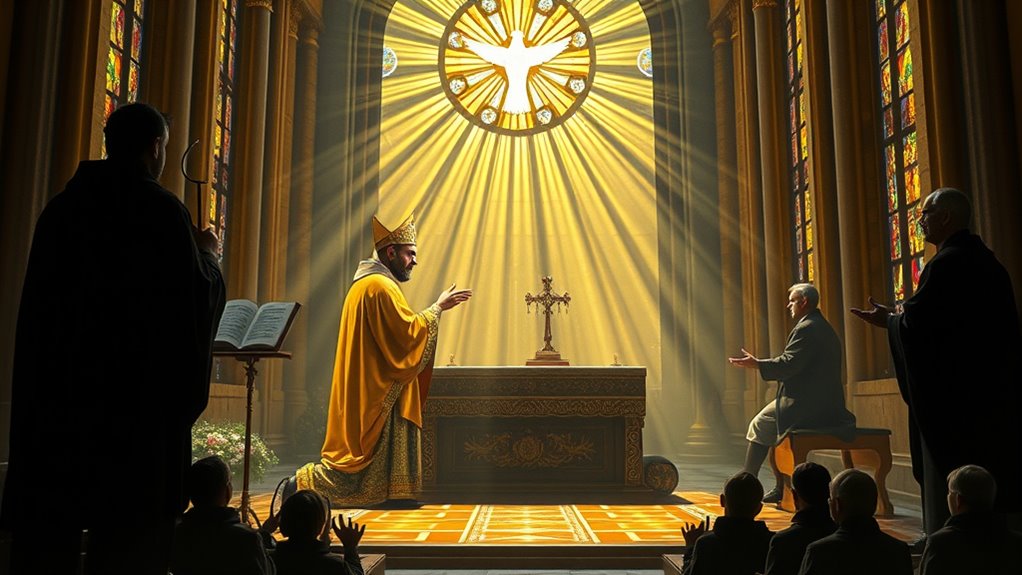
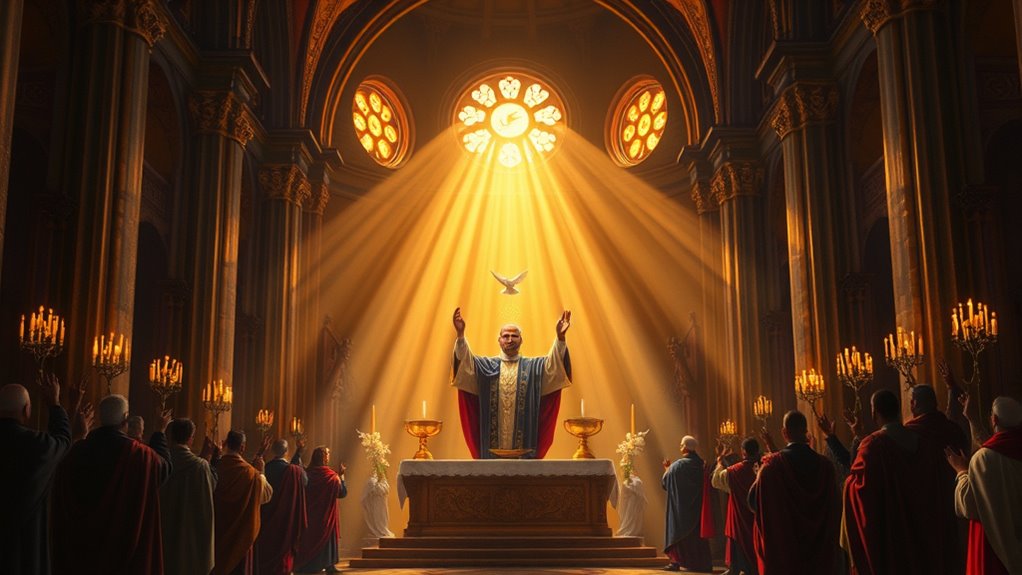
On Holy Thursday, April 2, 2026, Pope Leo XIV presided over the Chrism Mass at St. Peter’s Basilica, marking his first year as Bishop of Rome.
Pope Leo XIV celebrated his first anniversary as Bishop of Rome presiding over the Chrism Mass at St. Peter’s Basilica.
The liturgy, which opens the Sacred Triduum, included the blessing of holy oils used in the sacraments and the renewal of priestly vows.
In his homily, the Pope reflected on the Church’s missionary calling, drawing from Scripture’s image of anointing the poor, freeing captives, and restoring sight to the blind.
He encouraged priests to carry Christ’s healing peace into places where suffering and death hold sway. Priests were reminded that servant leadership calls them to serve with humility and compassion in those settings.
Hundreds of bishops and priests joined the celebration, renewing their ordination promises before the faithful gathered in the basilica.
Why the Pope Told Priests to Walk Toward Death, Not Away From It
Walking toward death rather than away from it was the central challenge Pope Leo XIV placed before priests in his 2026 Chrism Mass homily.
Drawing on Jesus’ example of passing through hostile crowds rather than fleeing them, the Pope urged priests to enter bitter and frightening situations rather than avoid them.
He described this movement as apostolic, binding priests to the poor, prisoners, and oppressed.
Embracing the cross, he said, was not optional but essential to the mission.
Trust in Christ’s Passion, Death, and Resurrection, he added, would sustain priests through whatever darkness they were sent into. He also reminded priests that they are bearers of God’s mercy, bringing its miracle to others in their active service to brothers and sisters in today’s world.
The Pope drew on the example of Bishop Óscar Romero, who recorded in his notebook during Spiritual Exercises just one month before his death that he trusted God’s grace alone to face whatever unforeseen circumstances lay ahead.
Humility as lowliness of heart compels ministers to serve rather than seek status, even in the face of death.
How Pope Leo XIV Defined Christ’s Peace in a Broken World
At the heart of Pope Leo XIV‘s Chrism Mass homily lay a carefully drawn portrait of Christ’s peace — one that differed sharply from the kind the world typically offers.
He described it as entirely nonviolent, rooted not in imposed silence but in transformation. This peace, he explained, flows from God understood as Love — one who creates, remains faithful, forgives, and redeems.
Unlike worldly peace, which often masks unresolved conflict, Christ’s peace bears the marks of sacrifice and justice. The Pope traced it back to the Incarnation itself, when angels first announced peace on earth at Jesus’ birth. This vision of peace echoes the Church’s broader mission, reflected in Lumen gentium, to continually reach out across generations and draw all peoples into unity.
During his address, the Pope repeated the word “peace” 13 times, underscoring how central this theme was to his message and his vision for a world he described as ravaged by wars, hatred, and indifference.
The homily also highlighted worship as involving heartfelt praise and obedience expressed through both inner attitudes and outward actions.
What Philippians 2 Revealed About Priestly Power at the Chrism Mass
Having outlined what Christ’s peace looks like in a wounded world, Pope Leo XIV turned the Chrism Mass homily toward a more pointed question: what kind of power does a priest actually hold? Drawing on Philippians 2, he pointed to Christ’s self-emptying as the defining model. True priestly power, he suggested, flows not from status but from humility and service.
Every knee bends at Jesus’ name precisely because he descended first. Priests, the Pope indicated, share that paradox: their authority is revealed most clearly when they subordinate personal ambition to the common good of those they serve. The Greek word morphe, meaning essential nature, used to describe Christ as existing in the form of God, affirms that his self-emptying was not a loss of divinity but a voluntary addition of humanity in service to others.
This vision of servant leadership finds its scriptural anchor in the contrast between Christ and Adam, who grasped for divine equality rather than surrendering it. The Adam and Christ typology embedded in the hymn underscores that true authority comes through obedient self-giving, not through seizure of power or status. This understanding reflects the biblical teaching that faith is shown in belief, obedience, and perseverance in trust.
Why Holy Thursday Is the Moment Priests Recommit to Their Calling
Each year on Holy Thursday, Catholic bishops and priests gather for the Chrism Mass to renew the promises they made at ordination, marking the occasion as one of the most significant moments in the Church’s liturgical calendar. This communal renewal echoes the Bible’s emphasis on assembling together for worship and mutual encouragement corporate worship.
The observance commemorates the Last Supper, when Christ instituted both the Eucharist and the ministerial priesthood. Because Passover began at sundown, the liturgy is held in the evening.
Priests are reminded that their identity is rooted not in functions performed but in Christ’s love. The annual renewal calls each priest to recommit daily to the “yes” first spoken at ordination. Presbyters are also called to an intimate sacramental brotherhood and special bonds of apostolic charity, ministry, and fraternity with one another.
This renewed commitment is itself a missionary act, as the priesthood is ordered toward a people anointed by the Spirit and sent to serve, heal, and gather even in the darkest corners of the world, where priests are called to spread the fragrance of Christ where the stench of death reigns.