


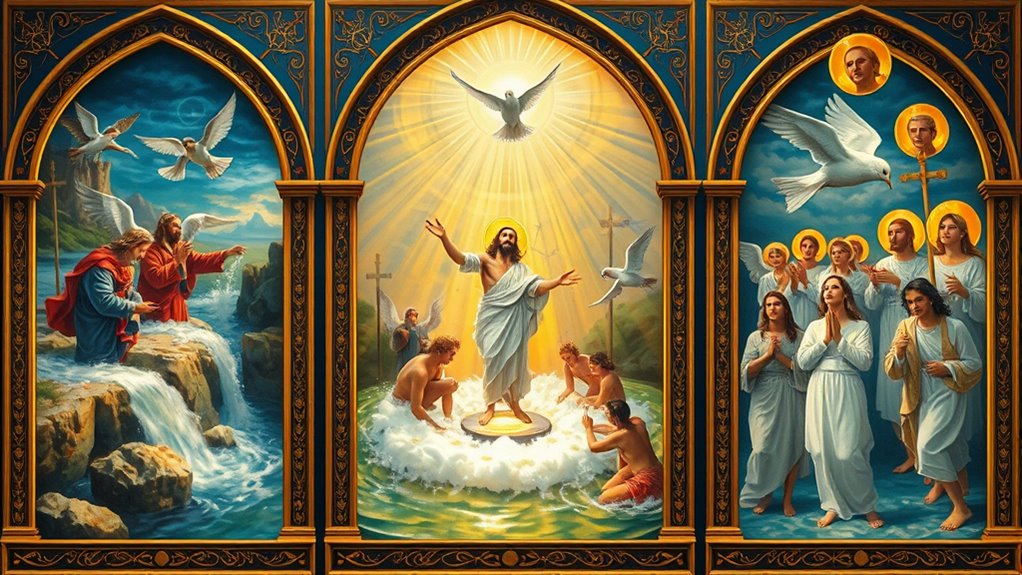
According to the Bible, baptism represents a believer’s symbolic participation in Christ’s death, burial, and resurrection through immersion in water. Romans 6:3-7 describes this act as dying to sin and rising to new life, while Acts 2:38 connects it with repentance and forgiveness. Jesus commanded baptism in Matthew 28:18-20, making it an act of obedience rather than a requirement for salvation, which comes through faith alone according to Ephesians 2:8-9. Early Christians practiced immediate baptism as a public testimony of their transformation and entrance into Christ’s community. The sections below explore these foundations in greater depth.
Key Takeaways
- Baptism symbolizes dying and rising with Christ, representing spiritual cleansing, burial of the old self, and resurrection to new life.
- Jesus commanded baptism in Matthew 28:18-20, making it an act of obedience for believers following repentance and faith.
- Baptism is not required for salvation, which comes through faith alone, but serves as public testimony of inner transformation.
- The practice involves immersion in water, signifying purification and marking believers’ entrance into the community of faith.
- Baptism functions as a covenantal sign uniting believers with Christ and His universal Church across all social divisions.
The Biblical Meaning and Symbolism of Baptism

Baptism carries layers of meaning in Christian theology, each rooted in specific biblical texts and centuries of interpretation. The practice of dividing scripture into chapters and verses helps readers locate passages like Romans 6:3-7 within the Bible’s 1,189 chapters. Romans 6:3-7 describes the act as symbolic participation in Christ’s death, burial, and resurrection—immersion representing burial, emergence signifying new life.
Baptism symbolizes dying and rising with Christ—immersion as burial, emergence as resurrection into new life.
Water also conveys purification, echoing Old Testament washings like Naaman’s cleansing in 2 Kings 5, and pointing to forgiveness through Christ’s atonement. Acts 2:38 links baptism with repentance and the forgiveness of sins.
Paul presents it as a covenantal sign, similar to circumcision under Abraham, marking believers as members of God’s solemn pledge community. Galatians 3:27-28 emphasizes unity within the Church, transcending national and social divisions. This unity extends beyond local congregations, expressing fellowship with saints worldwide as part of the universal body of Christ.
The Greek words “bapto” and “baptizo” mean to plunge or soak, reflecting the practice of immersion that symbolizes being buried and raised with Christ. Together, these images portray baptism as a public declaration of faith, spiritual cleansing, and incorporation into Christ’s body.
Baptism as an Act of Obedience and Public Declaration of Faith

Beyond its rich symbolic significance, baptism also functions as a concrete response to Christ’s direct instruction. Beginners are often encouraged to start with the Gospels to understand Jesus’ identity and teachings. Jesus commanded his followers to baptize new disciples in the name of the Father, Son, and Holy Spirit in Matthew 28:18-20.
This act follows personal faith and repentance, marking a deliberate choice to submit to Christ’s lordship. While not required for salvation, which comes through faith alone according to Ephesians 2:8-9, baptism represents the first step of obedient Christian living.
It serves as an outward testimony of inward transformation, publicly announcing one’s allegiance to Jesus. Baptism is linked to the activity of washing away sins, as Acts 22:16 demonstrates the cleansing and sanctifying work of God in the believer’s life.
Early believers practiced immediate baptism after conversion, as Acts 2:41 records three thousand being baptized following their profession of faith, visibly identifying with Christ’s community. Baptism signifies the believer’s participation in Christ’s death and resurrection, marking entrance into the community of believers and reflecting spiritual renewal and forgiveness.