
The Bible presents wine as a divine gift meant to bring joy and gladness, featured in worship offerings and covenant blessings, yet consistently warns against drunkenness and overindulgence. Scripture permits moderate drinking while emphasizing self-control through the Holy Spirit, as excessive consumption impairs judgment and spiritual discipline. Believers are called to reflect on how their choices affect weaker individuals, sometimes requiring voluntary abstinence to avoid causing others to stumble. Understanding these balanced principles reveals how Scripture guides responsible freedom and faithful stewardship.
Key Takeaways
- Wine is presented as a divine gift that brings joy and symbolizes God’s blessings and prosperity.
- Scripture consistently warns against drunkenness, which impairs judgment and displaces the Holy Spirit’s influence.
- Believers have freedom to drink moderately but must exercise Spirit-led self-control to avoid excess.
- Christians should consider how their drinking affects weaker believers and may need to abstain voluntarily.
- Biblical visions of God’s kingdom include abundant wine, balancing celebration with calls for responsible enjoyment.
Biblical Foundations: Wine as Gift and Warning
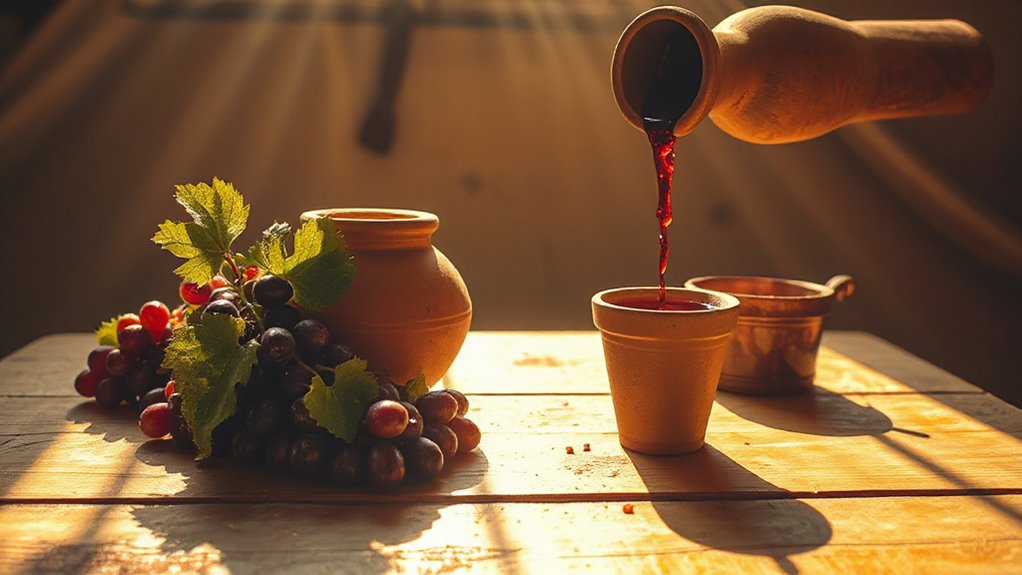
Throughout the biblical narrative, wine appears as a substance of dual character, honored as a divine gift yet accompanied by serious warnings about its misuse.
Scripture presents wine as a creation meant to gladden the heart and bring joy to human life, as stated in Psalm 104:15 and Ecclesiastes 9:7. Some readers reconcile these passages with scientific findings such as radiometric dating.
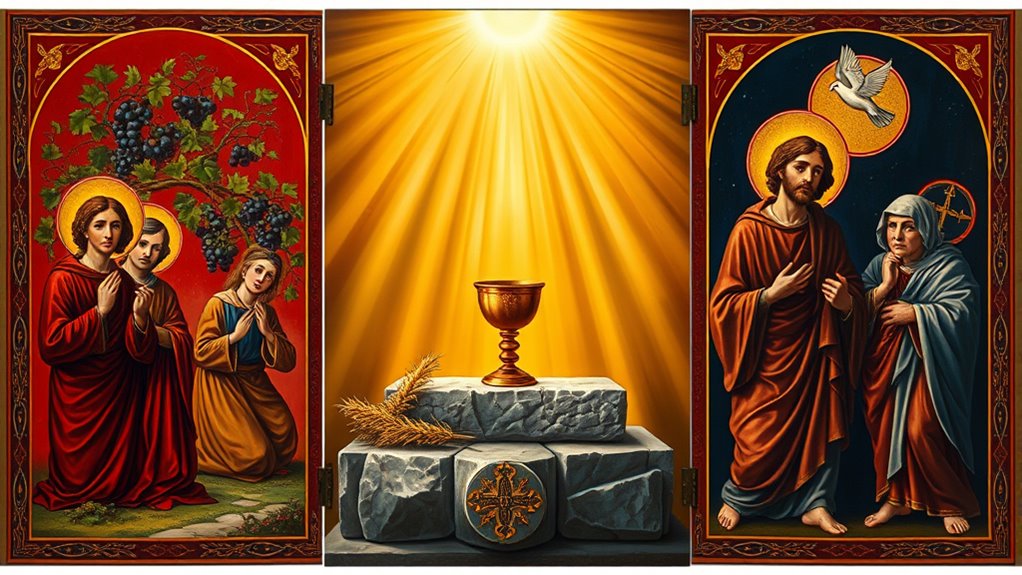
Wine stands as God’s gift to bring gladness to the human heart and joy to daily life.
God’s provision includes wine among the blessings of agricultural abundance, symbolizing prosperity and covenant faithfulness according to Deuteronomy 7:13 and Joel 2:24.
The Old Testament incorporates wine into sacred worship through drink offerings described in Exodus 29:40 and Numbers 28:7. Deuteronomy 14:22-26 describes wine being used in religious rejoicing before God, where worshipers could exchange their tithe for wine and celebrate in the Lord’s presence.
Wine also served medicinal purposes, offering comfort to those suffering, as noted in Proverbs 31:6 and endorsed by Paul in 1 Timothy 5:23.
Yet alongside these affirmations, Scripture consistently warns against drunkenness and excess.
Prophetic visions of God’s future Kingdom include imagery of abundant wine at the feast celebrating God’s ultimate victory, as described in Isaiah 25:6-8 and Amos 9:13.
Practical Wisdom: Finding Balance Between Freedom and Self-Control

How can believers navigate the tension between Christian freedom and the call to self-discipline when it comes to alcohol? Recognizing that spiritual disciplines can be sustained with small daily investments like 12 minutes helps make consistent practice realistic. The Bible permits moderate drinking while firmly condemning drunkenness, placing responsibility on individuals to exercise Spirit-led self-control.
Ephesians 5:18 contrasts being filled with wine against being filled with the Holy Spirit, emphasizing that spiritual influence should never be displaced by substances.
Romans 14:21 and 1 Corinthians 10:23 remind Christians to contemplate how their choices affect weaker believers, sometimes requiring voluntary abstinence.
Those with addiction tendencies face a moral and spiritual challenge requiring repentance and self-discipline rather than reliance on alcohol for relaxation or comfort.
Practically, maintaining sobriety preserves judgment, protects witness, and enables faithful service.
Proverbs 31:4-5 warns that leaders should avoid drunkenness to maintain justice and uphold their responsibilities to those they serve.
Paul’s example in 1 Corinthians 9:27 demonstrates the importance of keeping the body under control to maintain personal integrity and effective ministry.
Self-denial, including forgoing alcohol when necessary, aligns with Christ’s call to daily take up the cross.