

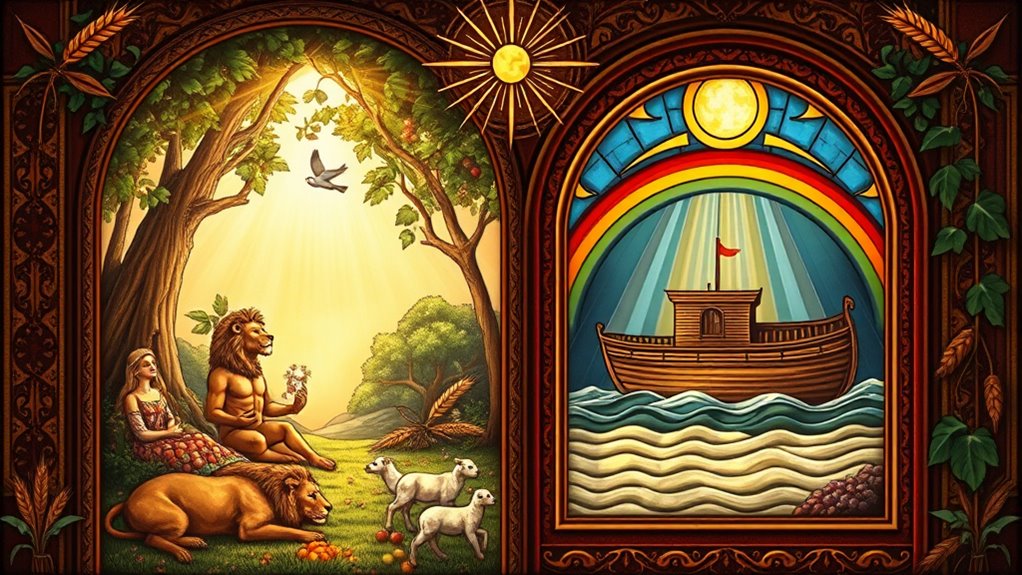
The Bible permits eating animals but does not require it, and its guidance shifted gradually across both covenants. Genesis 1:29 establishes an original plant-based diet. Genesis 9:3 later permits meat after the Flood, while Leviticus 11 adds distinctions between clean and unclean animals. The New Testament, particularly Mark 7 and Acts 10, further reassesses earlier restrictions. Romans 14 frames dietary choices as matters of personal conscience. Those curious about the full progression will find the details worth exploring.
Key Takeaways
- Genesis 1:29 originally gave humans a plant-based diet; Genesis 9:3 later permitted eating animals after the Flood.
- God immediately restricted the new permission by forbidding blood consumption in Genesis 9:4.
- Leviticus 11 further refined permissions by distinguishing between clean and unclean animals permissible for consumption.
- The New Testament, particularly Mark 7 and Acts 10, gradually shifted focus away from specific dietary restrictions.
- The Bible permits eating meat but never commands it, leaving dietary choices to personal conscience.
What Does the Bible Say About Eating Animals?
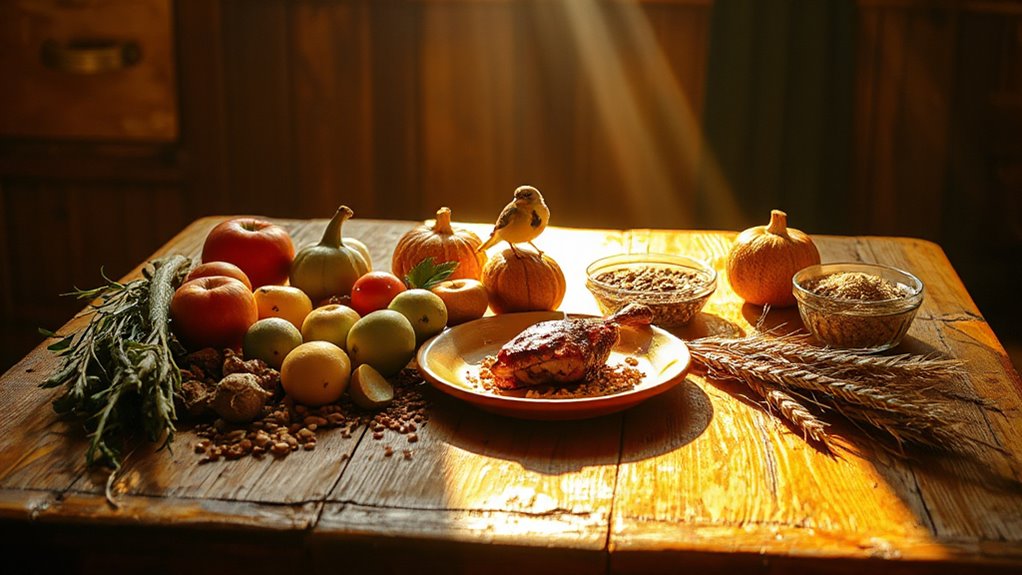
When reading the Bible on the subject of eating animals, one finds not a single testament but a progression of permissions and boundaries spread across several books.
Genesis 1:29 establishes an early plant-based diet, with no explicit mention of animals as food. That arrangement shifts in Genesis 9:3, where God permits Noah and his descendants to eat “every moving thing that lives.”
Leviticus 11 later narrows this permission, identifying which animals are acceptable and which are not.
Leviticus 11 refines what was permitted, drawing clear lines between animals deemed clean and those forbidden.
The New Testament, particularly Mark 7:18-19, is often read as loosening earlier food distinctions.
Across these texts, the Bible neither condemns nor fully idealizes eating animals. Instead, it presents a careful, evolving framework that ties diet to obedience, reverence, and community conscience. Proverbs 12:10 reminds readers that the righteous person cares for animals, contrasting such concern with the cruelty of the wicked.
Jesus taught that God’s attention extends even to sparrows, with Matthew 10:29-31 noting that not one falls unnoticed without the Father’s awareness.
Why the Bible’s Rules on Meat Changed Over Time
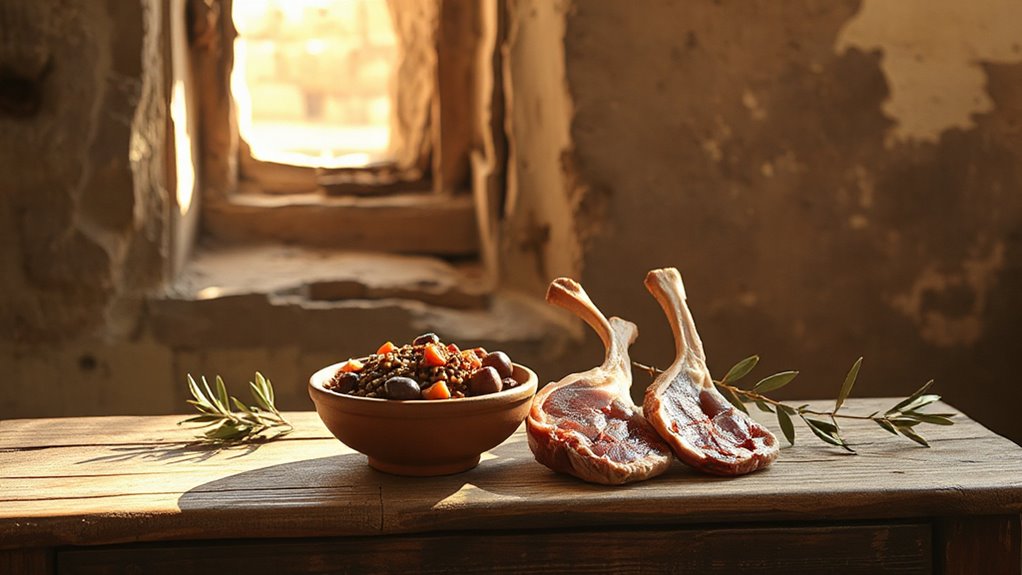
The rules surrounding meat in the Bible did not appear all at once.
Genesis 1:29–30 describes an original diet built entirely on plants and fruit.
After the Flood, Genesis 9:3 extended permission to eat animals, though Genesis 9:4 immediately restricted that permission by forbidding blood consumption.
Many readers interpret this shift as a practical concession following the disaster rather than an endorsement of meat as an ideal.
Later, Leviticus 11 and Deuteronomy 14 added detailed distinctions between clean and unclean animals, tying food rules to Israel’s covenant identity. Notably, Genesis 7:2 reveals that the clean and unclean distinction already existed before the Flood, with seven pairs of clean animals preserved compared to only one pair of unclean ones.
In the New Testament, passages such as Mark 7 and Acts 10 prompted further reassessment of those boundaries. After Jesus fulfilled the law, the remaining food restrictions shifted focus away from what is eaten toward where and with whom one eats.
Each stage reflects a pattern of gradual adjustment rather than a single, unchanging position. The biblical pattern of shifting dietary rules also reflects broader theological themes about God’s transcendent nature and how divine guidance is communicated to humanity.
Does the Bible Require You to Eat Meat?

A common assumption holds that the Bible commands believers to eat meat, but the text itself does not support that reading. Deuteronomy 12:20 frames meat as something a person may eat if they crave it, which signals permission rather than obligation. The Old Testament and New Testament together total 31,102 verses, but passages on diet focus on freedom rather than mandate.
The Bible permits meat eating — it does not command it.
Paul’s letters reinforce that point. Romans 14 treats dietary choices as matters of personal conscience, and 1 Corinthians 8:13 shows Paul himself willing to avoid meat entirely to protect a fellow believer.
No biblical passage connects spiritual growth to meat consumption. Scripture presents meat eating as one lawful option among others, leaving room for vegetarians and meat eaters alike within faithful practice.
Any claim that the Bible requires everyone to eat meat finds no clear support in the passages most commonly cited. In Genesis 1:29-30, God’s original provision for both humans and animals was green plants and fruit, suggesting that meat eating entered the picture only after the Fall rather than as a divine requirement from the beginning.
After the Great Flood, Genesis 9:3 introduced a formal allowance for meat consumption, with God telling Noah that every moving thing that lives shall be food for him, representing a significant shift from the original Edenic diet.