

The Bible offers no direct promise that pets enter heaven after death. No verse names a specific animal rejoining its owner, and no doctrinal passage addresses the question outright. However, Isaiah 11:6–9 pictures animals living peacefully in God’s renewed world, and Romans 8:21 describes all creation sharing in future liberation. Scripture’s silence leaves room for hope without certainty, and exploring what it does say about animals and eternity reveals something quietly meaningful.
Key Takeaways
- The Bible contains no direct teaching, promise, or doctrine specifically addressing whether pets enter heaven after death.
- Isaiah 11:6–9 and Revelation 5:13 depict animals in God’s renewed creation, offering indirect hope but no guarantee for individual pets.
- Romans 8:21 describes all creation being freed from corruption, suggesting animals hold a place in God’s redemptive plan.
- Psalm 36:6 and Matthew 6:26 confirm God cares for animals, providing comfort to grieving pet owners without overpromising reunion.
- Most Christian theologians classify pets in heaven as hopeful speculation rather than established doctrine, given Scripture’s silence on the topic.
What the Bible Says About Pets in Heaven
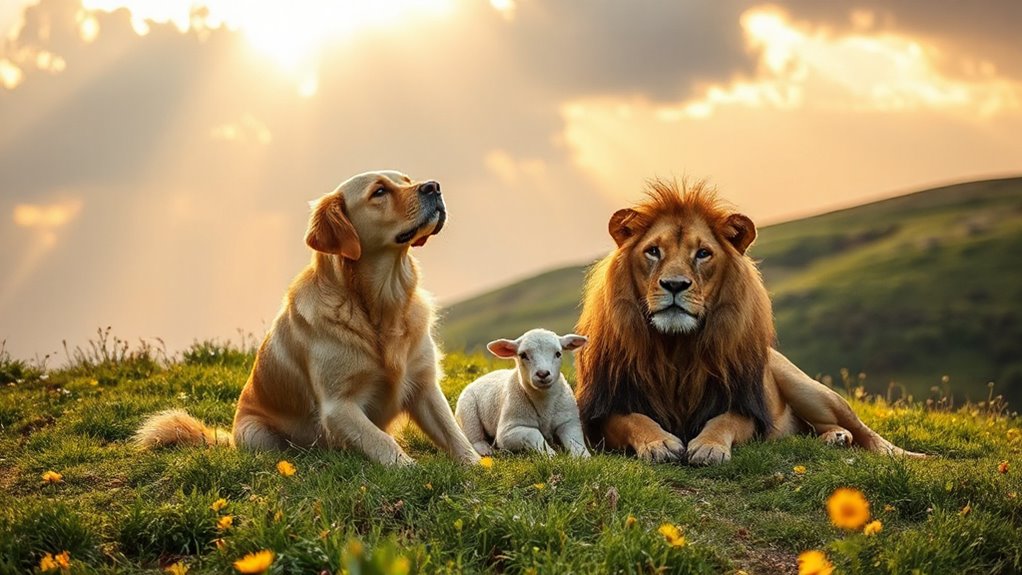
On the question of pets and heaven, the Bible offers no direct answer. No verse states that dogs, cats, or other pets enter heaven after death.
The Bible offers no direct answer on pets and heaven. No verse promises they enter after death.
Scripture records no deceased pet arriving in a heavenly place, and no doctrinal passage addresses the subject directly.
That silence is where most discussions begin.
Still, related passages offer quiet reasons for hope.
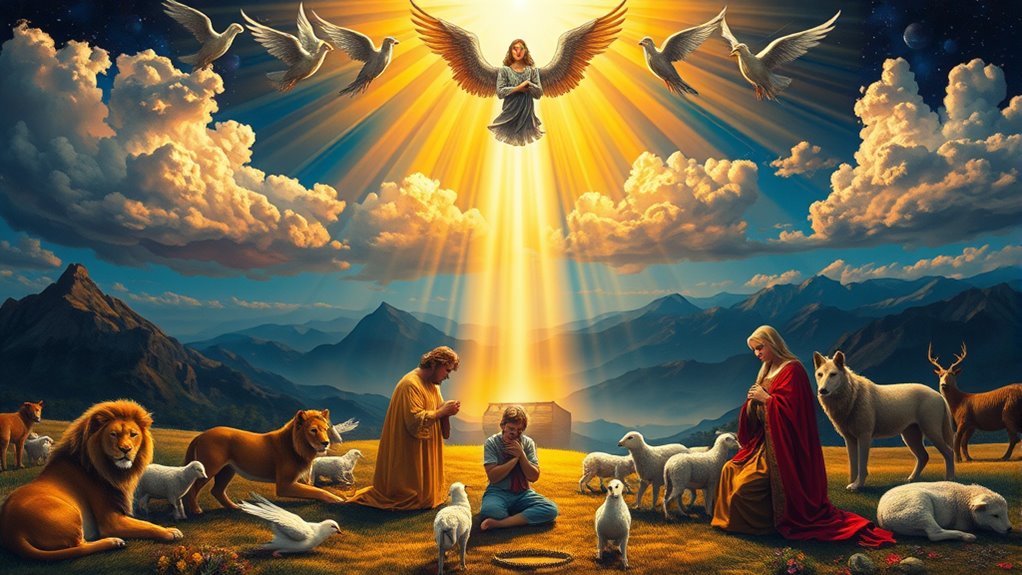
Isaiah 11:6–9 pictures wolves, lambs, leopards, and lions living in peace during God’s restored kingdom.
Revelation 5:13 presents every creature in heaven and on earth offering praise.
These verses describe a renewed creation where animals hold a visible place.
Theologians generally read them as broad promises about God’s future world, not specific guarantees about individual pets.
Romans 8:21 describes creation itself being set free from bondage to corruption and sharing in the freedom of the glory of God’s children.
Both humans and animals are connected to the breath of life, as Genesis links this phrase to living creatures across multiple passages.
Many Christians also consider the difference between human and animal destiny in light of doctrines about soul and salvation, which shape interpretations about who enters heaven.
Why Christians Aren’t Certain: and Why That’s Okay

Although the Bible addresses countless matters of faith and practice, the question of whether pets enter heaven is not among them.
No single verse settles the matter, which is why many Christian writers classify it as speculation rather than doctrine.
Theological traditions disagree further: some hold that animals lack the kind of soul required for heaven, while others allow that God’s renewed creation might include them.
Even theologians open to animals in the age to come tend to stop short of guaranteeing specific pets.
Many Christian leaders consider this uncertainty appropriate, noting that mystery is sometimes the honest response when Scripture stays silent.
Pastoral reflections frequently emphasize that hope remains possible without requiring a firm answer, and that God’s goodness is not diminished by unanswered questions. Isaiah 11:6-9 describes animals at peace in the new creation, though many scholars regard these passages as symbolic rather than a literal promise.
Romans 8:19–22 speaks of the whole creation groaning and awaiting liberation, a passage many readers interpret as encompassing the animal world within God’s redemptive purposes. The global Catholic population of about 1.406 billion as of June 2023 shows the wide diversity of Christian thought on such matters.
Bible Verses That Offer Grieving Pet Owners Real Hope

Sitting with unanswered questions about animal afterlife is one thing; finding real comfort during grief is another. Several biblical passages offer grieving pet owners genuine, grounded hope without overpromising specific details.
Psalm 36:6 states directly that God preserves both people and animals, making it a natural comfort text.
Matthew 6:26 reinforces this, showing that God feeds even birds, suggesting no creature falls outside divine concern.
Romans 8:19–22 frames all creation as groaning toward liberation from decay, situating a pet’s death within a larger redemptive story. Observations of creation’s renewal in Scripture point toward a future restoration of all things grounded in God’s purposes.
Revelation 21:4–5 promises no more death or mourning and declares that God makes all things new.
These passages do not draw a precise map of heaven, but they consistently point toward a God whose care extends well beyond humanity. Genesis 9:9–10 further confirms this expansive care, recording that God established His covenant not only with Noah and his descendants but also with every living creature.
Isaiah 65:25 strengthens this hope further, describing animals living peacefully on the new heavens and earth that God promises to create.