


The Bible presents war in Israel as a recurring national reality shaped by divine law, moral limits, and God’s direct involvement. Deuteronomy 20 sets ethical boundaries, requiring peace negotiations before attacks and protecting fruit trees during sieges. God is described in Joshua 10:42 as actively fighting for Israel. Hebrew prophets like Ezekiel and Zechariah also address future wars tied to restoration themes. The full biblical picture carries far more depth than a single passage can capture.
Key Takeaways
- The Bible portrays war as a recurring feature of Israel’s national story, from early Amalek conflicts to David’s organized military campaigns.
- Deuteronomy 20 sets ethical limits on warfare, requiring peace negotiations before attacks and protecting fruit trees during sieges.
- God is presented as an active participant in Israel’s wars, with Joshua 10:42 stating the Lord fought directly for Israel.
- Hebrew prophets like Ezekiel, Joel, and Zechariah describe future wars involving Israel as part of end-time judgment and restoration themes.
- Modern Christians interpret biblical war prophecies differently, ranging from literal end-times event-matching to symbolic representations of God defeating evil.
War in the Bible: What the Old Testament Actually Says
War appears throughout the Old Bible as a recurring and deeply embedded feature of Israel’s national story. From early conflicts with Amalek and the Canaanite groups to David’s organized military campaigns, warfare shaped much of Israel’s history. These accounts often include theophanies where divine presence guided or judged Israel in battle.
Yet the Old Testament does not present war as unrestricted violence. Deuteronomy 20 provides a clear war law, requiring peace negotiations before any city is attacked and protecting fruit trees from destruction during sieges.
The Old Testament sets boundaries on war — Deuteronomy 20 demands peace talks before any siege begins.
These ethical limits reflect a measured approach to conflict, where rules governed conduct rather than leaving armies free to act without restraint. Later periods introduce diplomacy and messenger-based negotiation as alternatives to battle.
The picture that emerges is one of war as morally charged, historically situated, and subject to genuine regulation. During the period of the judges, Israel fought mostly defensive wars against raiding groups such as the Canaanites, Midianites, and Philistines.
Deuteronomy 20 also makes clear that only men were killed in conquered cities under its standard provisions, with women and children explicitly spared from slaughter under the warfare rules governing most engagements.
What Role Did God Play in Israel’s Biblical Wars?

Throughout the Old covenant, God appears not as a distant observer of Israel’s conflicts but as an active participant who shapes their outcome.
Joshua 10:42 and Deuteronomy 20:4 state plainly that the Lord fought for Israel, establishing divine victory as the foundation of war theology rather than military strength alone.
Before major battles, Israel sought God’s guidance on timing, movement, and strategy.
Accounts in Joshua 5–6 and 2 Samuel 5 present obedience to divine instruction as the deciding factor.
Gideon’s reduced army and Jonathan’s solo raid reinforce this pattern further.
Covenant identity shaped how Israel understood conflict: success meant faithfulness, not superior force.
Enemies were sometimes defeated through terror or confusion God sent directly, keeping human effort secondary throughout.
The Exodus deliverance stands as the foundational model of this theology, where God’s divine warrior role was so explicit that Moses immediately commemorated it in a hymn declaring the Lord a man of wars who shattered enemies with his right hand.
Priests also participated in battle preparations by sounding sacred trumpets, signaling the army’s dependence on God’s presence and authority rather than purely human command at the start of each engagement.
The unity of divine action and human obedience reflects the broader biblical claim that Yahweh and his agents operate in concert to achieve Israel’s purposes, highlighting the doctrine of God’s sovereignty in war.
What the Prophets Said About Future Wars in Israel
The Hebrew prophets addressed war not only as a present reality but as a subject with a longer horizon. Isaiah, Jeremiah, Ezekiel, Joel, and Zechariah each described prophetic conflict involving surrounding nations and, eventually, Israel itself.
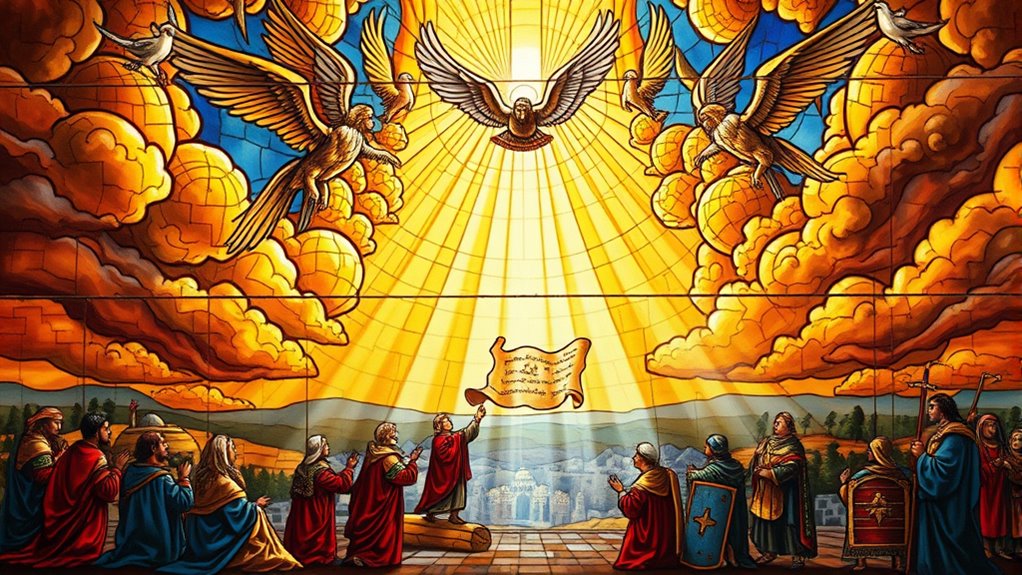
Ezekiel 38–39 details a future coalition invasion led by Gog of Magog, framed as occurring in the “latter days.” Joel 3:1–2 and Zechariah 14:2 describe international judgment through nations gathered against Jerusalem.
These passages consistently move beyond conflict alone. Restoration themes appear in Jeremiah 48:47 and 49:6, where punishment gives way to eventual recovery.
The prophets presented war as serving a broader purpose: divine vindication before the nations. Across these books, future wars in Israel are portrayed as part of a larger redemptive sequence. Ezekiel further described the land of Israel being restored to remarkable fertility, becoming like the Garden of Eden, as part of the same prophetic framework surrounding these end-time conflicts.
Zechariah 14:2 describes the city of Jerusalem being captured, with houses looted and half the city going into exile, yet the passage does not end in total destruction, as the rest remain. Jeremiah 30:3 similarly affirms that God will restore His people to the land given to their fathers, underscoring that judgment and redemption remain inseparable throughout the prophetic witness. The prophets’ perspectives are preserved within the broader biblical canon, which in Catholic tradition includes deuterocanonical books alongside the Old and New Testaments.
How Do Christians Interpret Biblical War Prophecies Today?

Prophetic texts like Ezekiel 38–39 and Zechariah 14 have never stayed quietly on the page. Today, Christians interpret these passages through several distinct lenses.
Dispensationalist and premillennial readers often connect modern headlines directly to predicted end-times events, treating Israel’s statehood as a key prophetic milestone.
Other theologians caution against this approach, arguing that apocalyptic symbolism requires careful attention to prophetic genre before mapping ancient texts onto current conflicts. A related point is that the original audiences likely heard these prophecies in Aramaic, which shaped how symbolic language was understood.
Symbolic interpreters often understand war language as representing God’s defeat of evil rather than specific military battles.
Many scholars stress that responsible reading distinguishes between biblical meaning and speculative event-matching.
Despite these differences, a quieter strand of interpretation remains focused on themes of peace, justice, and God’s ultimate authority rather than on calculating timelines. Dispensationalism itself is a relatively recent development, with John Nelson Darby introducing its framework of distinct dispensations in the 1800s before Cyrus Scofield popularized it through his 1909 reference Bible.
Ezekiel 38 names specific nations aligned against Israel in the last days, including Persia, Cush, and Put, which many Jewish and Christian commentators identify with modern countries such as Iran, Sudan or Ethiopia, and Libya.