






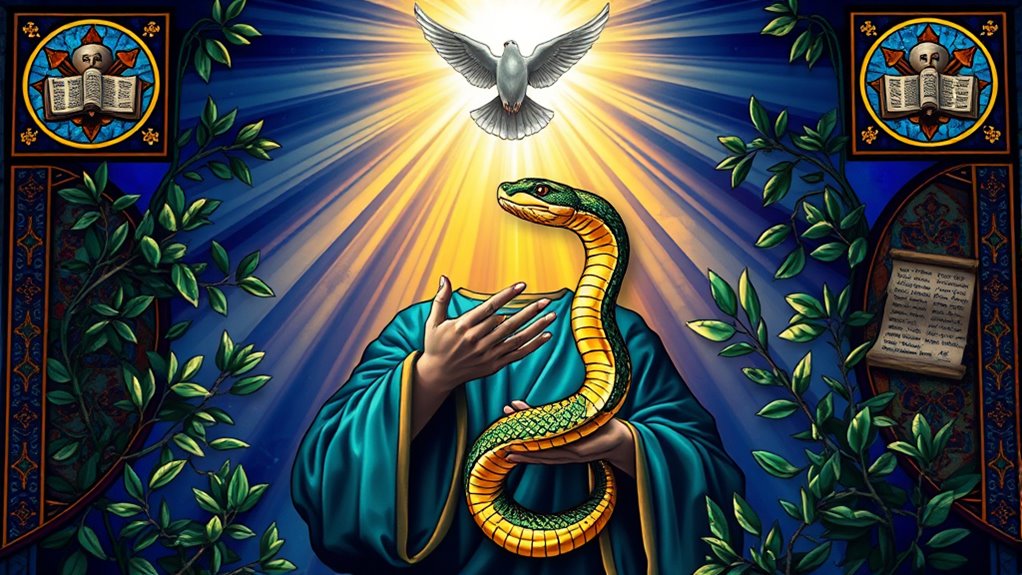
The Bible portrays snakes in several distinct ways. In Genesis 3, a crafty serpent introduces deception and leads humanity toward forbidden knowledge, resulting in expulsion from Eden. Numbers 21 shows God using serpents as judgment, then commanding Moses to mount a bronze serpent on a pole for healing. Jesus later references both images. Matthew 10:16 even urges disciples toward snake-like shrewdness. Each portrayal carries deeper meaning worth exploring further.
Key Takeaways
- The serpent in Genesis 3 is portrayed as crafty and deceptive, leading humanity toward forbidden knowledge and resulting in expulsion from Eden.
- Genesis 3:15 establishes lasting conflict between the serpent and humanity, influencing later biblical and Christian interpretations connecting the serpent to Satan.
- Numbers 21 records God sending venomous serpents as judgment, then instructing Moses to create a bronze serpent for healing through obedient faith.
- John 3:14 uses the lifted bronze serpent as a direct parallel to Jesus being lifted up, giving the image redemptive significance.
- Matthew 10:16 reframes serpent symbolism positively, instructing disciples to be shrewd as snakes while remaining morally innocent.
The Serpent in Eden and What Snake Symbolism Means in the Bible

When the book of Genesis introduces the serpent in chapter three, it does so with a single but telling detail: the creature is described as “more crafty” than any other animal God had made. That detail shapes everything that follows.
The serpent questions God’s command, redirects Eve’s attention toward forbidden knowledge, and sets in motion the events that end with expulsion from Eden. Within biblical thought, the serpent becomes a lasting symbol of deception, distorted speech, and resistance to divine limits. Observant readers note that biblical descriptions often reflect their ancient Near Eastern cultural context.
Genesis 3:15 extends the serpent’s role further, establishing a conflict between the creature and the woman’s offspring that carries into later biblical interpretation. Some scholars note the original text does not explicitly identify the serpent as Satan, though later Christian tradition made that connection firmly.
The Hebrew term nāḥāš carries associations beyond a simple animal, linking the word to divination and the practice of whispering omens.
Across religious traditions, the serpent has long been understood as a symbol of duality of good and evil, a pattern historians of religion have traced through mythologies spanning cultures and centuries.
How the Bible Uses Snakes as Instruments of Judgment and Healing

The book of Numbers, chapter 21, records one of the Bible’s most striking scenes involving snakes: venomous serpents sent among the Israelites as a direct consequence of their complaints against God and Moses in the wilderness.
Many died before a remedy arrived.
God then instructed Moses to mount a bronze serpent on a pole, and anyone bitten who looked at it lived.
The healing depended on obedience, not the object itself.
That same object later became a problem.
Second Kings 18:4 records that King Hezekiah destroyed it, by then called Nehushtan, because people had begun worshipping it.
The episode illustrates a pattern the Bible returns to repeatedly: judgment, repentance, and restoration appearing together, while warning that even a God-given sign can become spiritually dangerous when separated from its original purpose.
Jesus later referenced this same event in John 3:14, drawing a direct parallel by saying “lifted up by Moses” foreshadowed the necessity of the Son of Man being lifted up.
The people confessed to Moses, saying “we have sinned”, acknowledging they had spoken against both God and Moses before asking him to pray for the removal of the serpents.
This narrative is preserved in the Septuagint and other early Christian texts, reflecting its long-standing place in the biblical tradition.
Why the Bible Also Uses Snake Imagery to Mean Wisdom

Alongside its darker associations, snake imagery in the Bible carries a second, distinct meaning tied to wisdom, discernment, and alert moral perception.
Matthew 10:16 offers the clearest example, where Jesus instructs his disciples to be “shrewd as snakes and innocent as doves.”
The pairing is deliberate.
Serpent-like shrewdness describes careful judgment under pressure, not moral compromise.
The verse addresses disciples sent into hostile settings, where wise speech and careful timing matter.
Genesis 3 provides contrast, showing cunning detached from obedience as a corrupted form of wisdom.
Proverbs 30:18–19 adds texture by treating the snake’s movement as a picture of observation and adaptability.
Taken together, these passages suggest that biblical wisdom involves noticing complexity, acting with discipline, and maintaining integrity throughout. The concept aligns with New Testament teachings about the distinct roles within the Godhead, where Jesus is both fully divine and distinct in personhood as the Son of God, informing how believers are to embody wisdom and mission.
The serpent in Genesis 3 is described as more crafty than any other creature of the field, which sets its intelligence apart from the start.
In Genesis 3, the serpent’s first recorded act is to question God’s command, asking the woman whether God had truly forbidden eating from every tree of the garden.