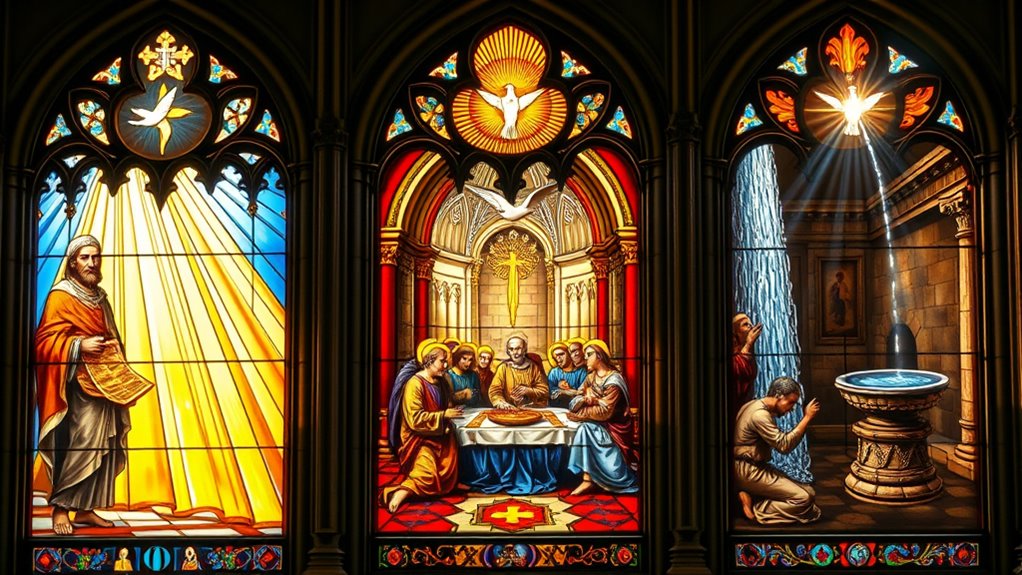


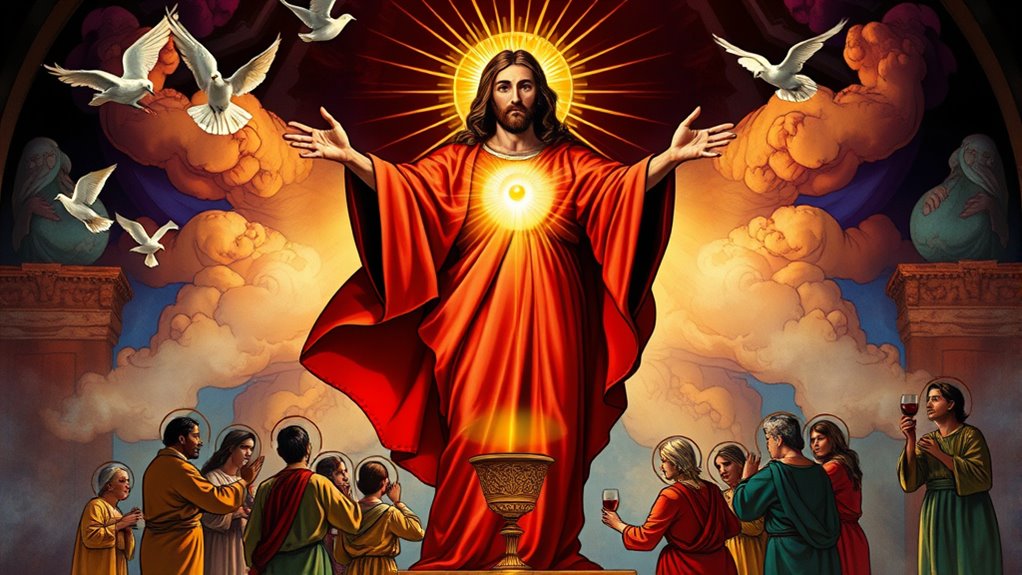


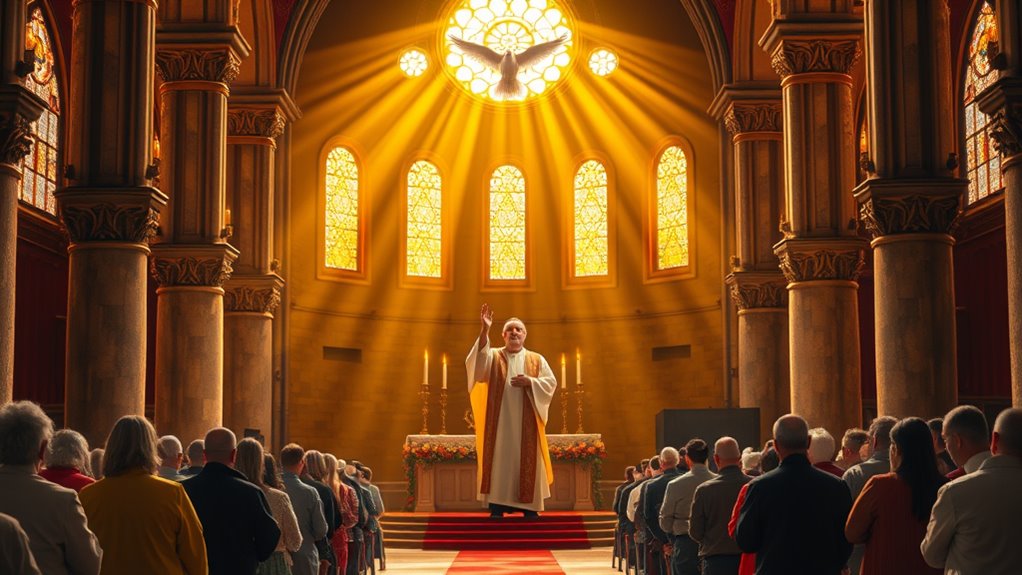
The Bible describes speaking in tongues as the supernatural ability to speak in real, previously unlearned languages, first demonstrated in Acts 2 when believers proclaimed God’s wonders to diverse nations in their native tongues. Scripture presents tongues primarily as a sign of the Holy Spirit’s presence and a validation of the gospel’s expansion. Paul’s letters to the Corinthians establish guidelines requiring interpretation, limiting public use to two or three speakers per gathering, and emphasizing order over ecstatic experience. The practice serves both as evidence of divine power and, when properly interpreted, as a means of building up the church community, with deeper understanding revealing how these gifts function within worship and faith.
Key Takeaways
- Speaking in tongues refers to speaking in real, previously unlearned languages, not unintelligible sounds or ecstatic utterances.
- Tongues serve as a miraculous sign of the Holy Spirit’s presence and validate new stages of gospel expansion.
- In church gatherings, only two or three should speak in tongues, each requiring interpretation for community edification.
- Tongues primarily function for public worship and praise rather than private devotion or teaching instruction.
- The gift emphasizes God’s power and presence, remains under the speaker’s control, and should promote church unity.
The Biblical Definition and Purpose of Speaking in Tongues

In the New Testament, the term “speaking in tongues” translates the Greek word *glōssai*, which means “languages,” indicating that the phenomenon described by early Christian writers involved real, identifiable speech rather than unintelligible sounds.
This supernatural ability enabled believers to speak languages they had not previously learned, a capacity attributed directly to the Holy Spirit. The first clear example appears in Acts 2, where people from various nations heard the apostles declaring God’s wonders in their own native tongues. The early church’s use of Scripture, including books from the Septuagint, influenced how such signs were understood and recorded.
Beyond serving as a sign of the Spirit’s presence, tongues fulfilled several purposes: they validated new stages of gospel expansion, functioned as a sign to unbelievers, and, when accompanied by interpretation, helped edify the gathered church community. Scripture emphasizes that the gift of tongues was appointed by God at salvation, not acquired through human effort or desire. The primary association of tongues in Scripture appears to be with miraculous praise and worship rather than with teaching or instruction.
How Tongues Should Function in the Church Today

Understanding what tongues are and why they were given leads naturally to the question of how churches should handle them in practice. First Corinthians 14 limits public tongues to two or three speakers per gathering, each taking turns rather than speaking simultaneously. Each message requires interpretation so the congregation can understand and be edified. Paul emphasized that tongues remain under the speaker’s control, not an ecstatic state beyond regulation. Many Pentecostal and charismatic congregations distinguish between quiet personal prayer in tongues and amplified public messages meant for corporate instruction. Pastoral leaders typically screen those who regularly give public tongues to maintain theological soundness and order. The governing principle remains simple: let everything be done for building up the church through intelligible, controlled speech. Tongues function for both personal and corporate edification, serving different purposes depending on the context. The Bible emphasizes love and spiritual fruits over miraculous gifts in the life of believers. Beginners may benefit from reading the Gospels first to build a foundation in Scripture and community practice, which helps interpret how gifts like tongues fit into worship and growth in faith; see Gospel reading.