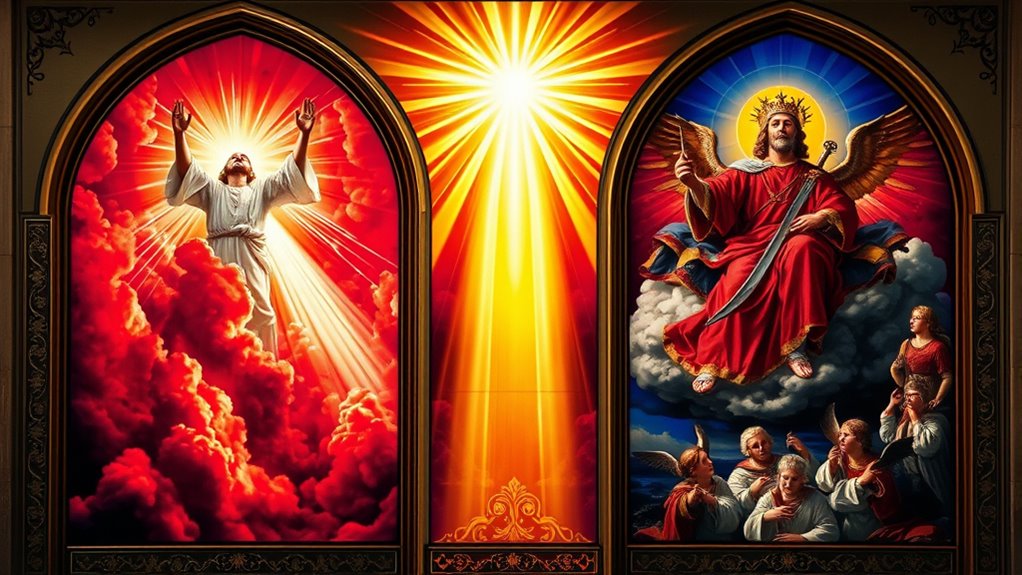
The Bible teaches that the rapture is a future event when believers will be “caught up” to meet Christ in the air, as described in 1 Thessalonians 4:17 using the Greek word *harpazo*, meaning to seize or snatch away. This instantaneous gathering involves both the resurrection of deceased believers and the transformation of living ones, occurring “in the twinkling of an eye” according to 1 Corinthians 15:51–52. Many scholars distinguish this event from Christ’s visible Second Coming to earth, viewing it as a separate phase that precedes the tribulation period. The sections below explore the scriptural foundation and key distinctions in greater detail.
Key Takeaways
- The rapture refers to believers being “caught up” to meet Christ in the air, based on 1 Thessalonians 4:17.
- Believers will experience instantaneous bodily transformation “in the twinkling of an eye” at the last trumpet.
- The timing remains unknown, requiring constant spiritual readiness as it will occur unexpectedly like a thief.
- The rapture differs from Christ’s Second Coming; it precedes tribulation while the Second Coming follows it.
- It includes resurrection of dead believers and transformation of living ones for eternal fellowship with Christ.
The Scriptural Foundation: What the Bible Actually Says About Being “Caught Up”
The term “rapture” does not appear in most English Bible translations, yet the concept it describes stems directly from scriptural passages that speak of believers being “caught up” to meet Christ. Historical dating systems like the Anno Domini era grew out of attempts to place Jesus in chronological history.
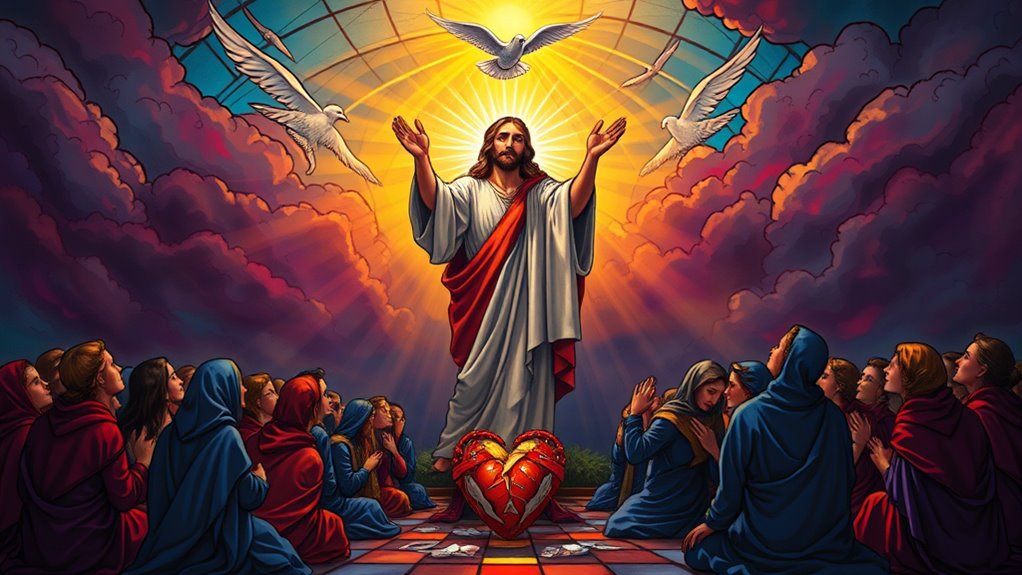
The Greek word *harpazo*, meaning to seize or snatch away, appears in 1 Thessalonians 4:17, where Paul writes that believers will be “caught up… in the clouds to meet the Lord in the air.”
This event involves both resurrection of deceased believers and transformation of living ones into glorified bodies.
Paul describes it as a “mystery” in 1 Corinthians 15:51–52, noting the change happens “in a moment, in the twinkling of an eye” at the sound of the last trumpet, marking an instantaneous bodily transformation enabling eternal fellowship with Christ.
The word “rapture” itself comes from the Latin meaning “carrying off” or “snatching away,” reflecting the same concept found in the original Greek text.
Scripture emphasizes that the exact timing of this event remains unknown, underscoring the importance of constant spiritual readiness for Christ’s return.
Distinguishing the Rapture From Christ’s Second Coming: Understanding Two Different Events
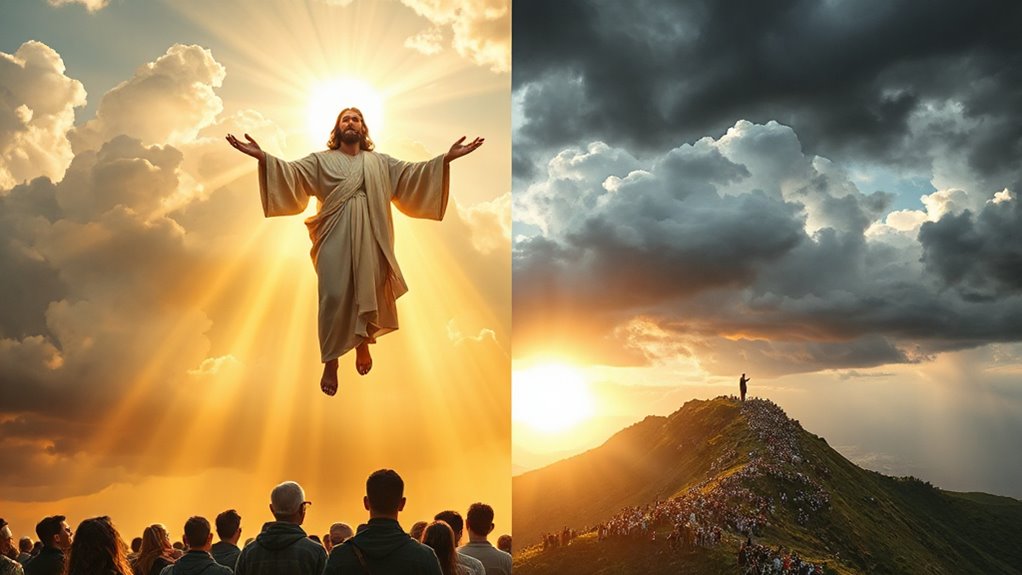
Understanding that believers will be “caught up” to meet Christ leads naturally to questions about how this event relates to other biblical prophecies concerning His return. The tradition of marking specific holy sites such as the Church of the Nativity underscores how historical locations shape Christian belief. Scripture presents these as two distinct occurrences.
The gathering of believers to Christ and His visible return to earth are biblically distinct prophetic events.
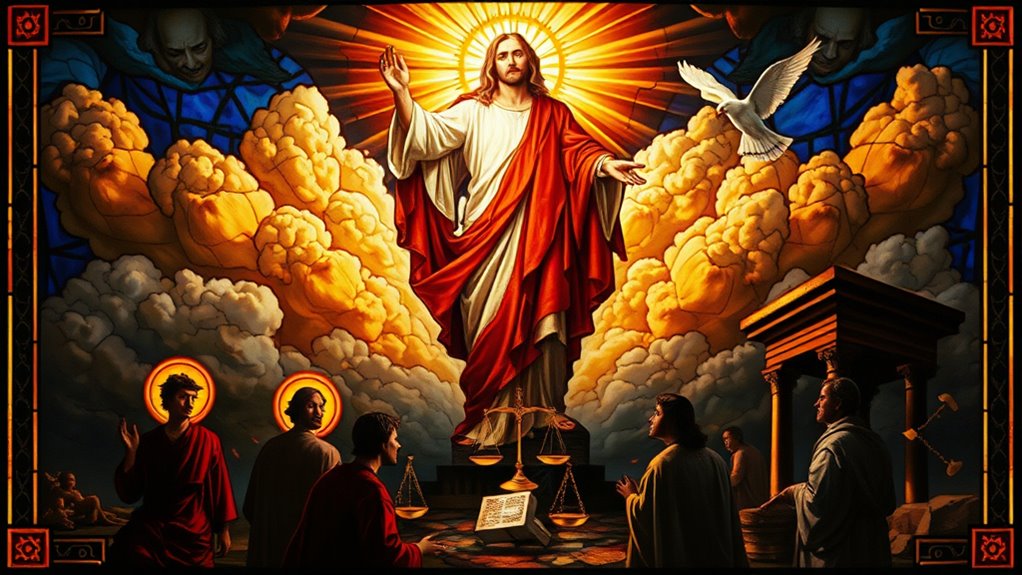
The Rapture describes Jesus coming *for* believers, meeting them in the air (1 Thessalonians 4:16-17), whereas the Second Coming depicts Him descending *with* His saints to establish His earthly kingdom (Zechariah 14:4; Revelation 19:14).
The Rapture appears as a sudden, secret event invisible to the world (1 Thessalonians 5:2), while the Second Coming will be visible to all (Revelation 1:7).
Additionally, the Rapture precedes the tribulation period (1 Thessalonians 5:9), serving as rescue from coming wrath, whereas the Second Coming follows tribulation, bringing judgment upon evil (Revelation 19:15). The Second Coming is preceded by specific signs and events such as the Antichrist’s actions and prophetic fulfillments (2 Thessalonians 2:4; Matthew 24:15-30).
These represent phases of one Second Coming rather than two separate advents, similar to how Jesus’ first coming unfolded in stages from conception through birth, ministry, and resurrection appearances.