
The Bible does not describe angels with one fixed appearance. Their form shifts depending on context and role. Some angels appear as ordinary men, as in Genesis 18, where they share a meal with Abraham. Others appear far more striking — Daniel describes a figure with a face like lightning and eyes like flaming torches. Cherubim and seraphim carry even stranger features. The full picture grows considerably more detailed ahead.
Key Takeaways
- Angels have no single fixed appearance in the Bible; descriptions vary based on context, role, and literary passage type.
- Angels sometimes appear as ordinary men, as seen in Genesis 18, where they shared a meal with Abraham.
- Daniel describes an angelic figure with a face like lightning, eyes like flaming torches, and a body like beryl.
- Cherubim have four faces, four wings, hooved feet, and bodies covered in eyes, serving as guardians of sacred space.
- Seraphim in Isaiah 6 possess six wings and stand before God’s throne amid fiery, awe-inspiring imagery.
What Do Angels Actually Look Like in the Bible?
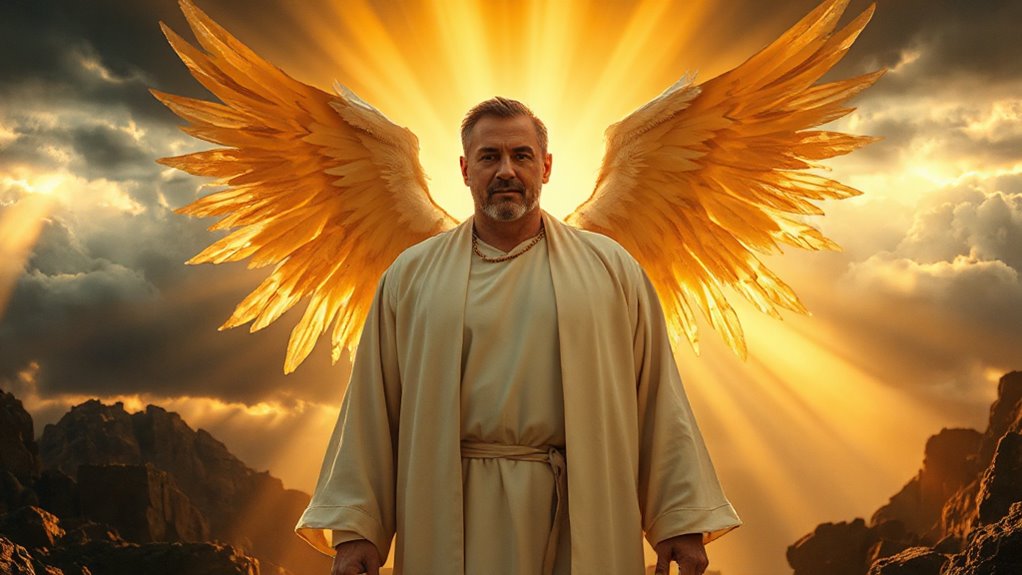
Throughout Scripture, angels do not share a single, fixed appearance. Biblical descriptions vary widely depending on context, role, and the type of literary passage involved.
Some angels appear as ordinary men, recognizable enough to share a meal, as seen when Abraham hosted three visitors in Genesis 18. Others carry intensely supernatural features. Many encounters likely occurred in a multilingual context where witnesses spoke Aramaic, Hebrew, and Greek.
Daniel describes an angelic figure with a body like beryl, a face like lightning, and eyes like flaming torches. Ezekiel’s cherubim display four faces, four wings, and hooves like calves. Isaiah’s seraphim possess six wings and stand in reverent attendance before God’s throne.
Rather than presenting one standardized template, Scripture seems to connect angelic appearance to function, setting, and the visionary language surrounding each encounter. The word “angel” itself derives from the Greek ἄγγελος, meaning messenger, reflecting that function has always been central to how these beings are understood. Notably, when angels do take on human appearance in Scripture, they consistently appear as men, with no female angelic forms ever described in the biblical text.
Do Angels Look Human, or Do They Look Terrifying?
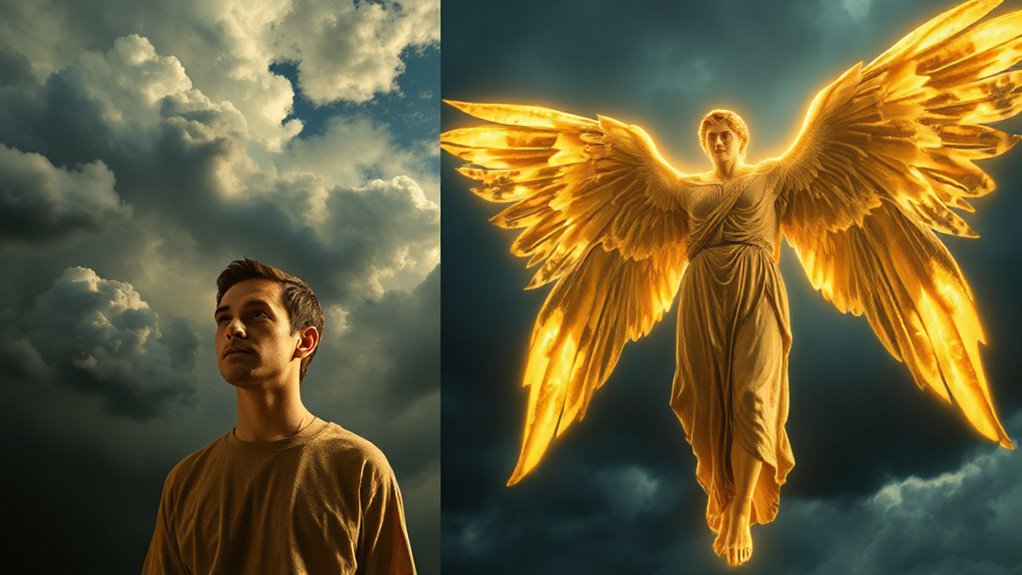
Among the most common questions about angels is whether they appear as recognizable human figures or as something far more unsettling. Scripture actually supports both possibilities.
In Genesis 18, two angels appeared as ordinary men who shared a meal with Abraham. Joshua 5:13–14 similarly presents an angel in unremarkable human form. These encounters suggest angels could pass as people without drawing alarm. Many theophanies use anthropomorphic imagery to make the divine relatable without revealing God’s full essence.
Some angels walked among people entirely unnoticed — sharing meals, holding conversations, raising no alarm whatsoever.
However, other appearances provoked immediate fear. The repeated angelic greeting, “Do not be afraid,” implies witnesses were consistently frightened rather than comforted.
Ezekiel’s vision describes beings with four faces, four wings, and bronze-like feet — imagery that reads as overwhelming rather than gentle. Both patterns exist within Scripture, suggesting angelic appearances varied considerably depending on purpose and context. The word “angel” itself traces back through Greek and Hebrew roots to a term meaning messenger, reflecting that their defined role was always action and communication on God’s behalf rather than appearance alone.
One account describes an angel who killed 185,000 Assyrian soldiers in a single night, a far cry from the gentle, winged figures that dominate popular greeting-card imagery.
What Do Cherubim and Seraphim Actually Look Like?
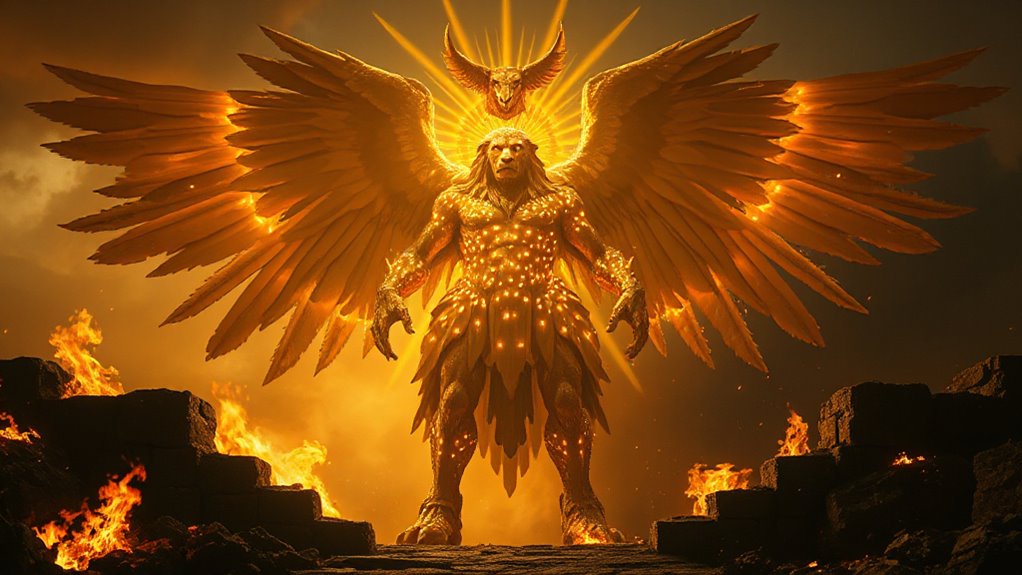
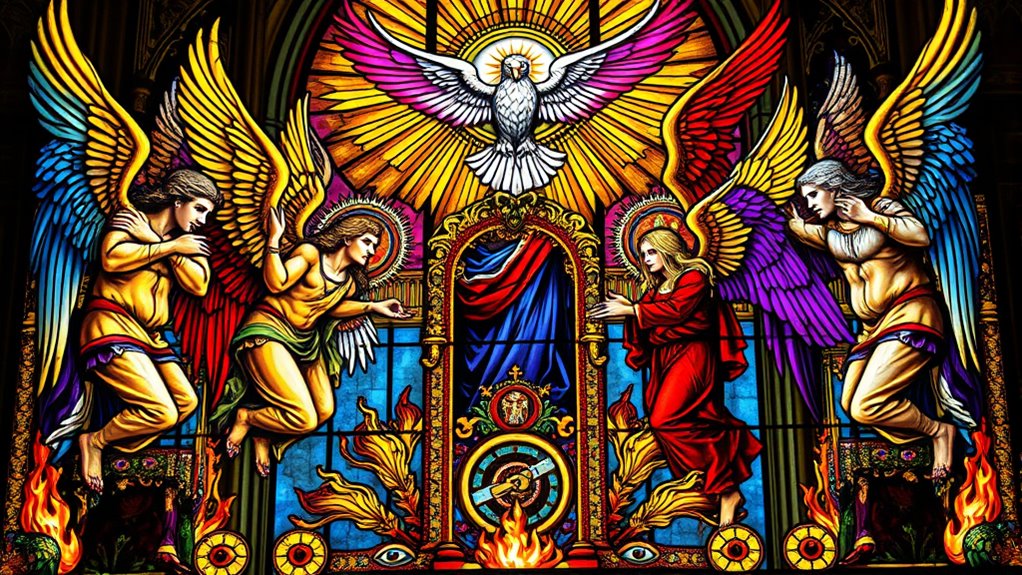
When the Bible moves beyond messengers arriving at doorsteps and into the throne room of God, the descriptions shift considerably. Cherubim, detailed in Ezekiel 1 and 10, carry four faces — human, lion, ox, and eagle — along with four wings, hooved feet, and bodies covered entirely in eyes. They read less like gentle attendants and more like fearsome guardians of sacred space. Seraphim appear in Isaiah 6 with six wings: two covering the face, two covering the feet, and two used for flight. They cry out about God’s holiness while surrounded by fiery imagery. Neither figure resembles the soft, chubby winged infants common in popular art. The Bible emphasizes function, symbolism, and glory over any tidy physical description. Cherubim first appear in Genesis 3:24, stationed east of the garden with a flaming sword to guard the way to the tree of life. The four living creatures described by John in Revelation 4 are widely understood to be the same beings Ezekiel encountered, sharing the same fourfold face identity of lion, calf, man, and flying eagle, though John records six wings where Ezekiel records four. Catholics include additional canonical books that shaped early Christian understanding of angelic beings in the Septuagint tradition, such as deuterocanonical books.