Joe Wilson, a Scottish teenager who died in 2011 at age seventeen from an undiagnosed heart condition, is being called a millennial saint because his personal writings revealed a profound spiritual life hidden behind an ordinary exterior. His notebooks, filled with reflections on prayer and the Eucharist since age fourteen, displayed unusual maturity and devotion. In November 2025, Scotland’s Catholic bishops formally opened his canonization cause, granting him the title “Servant of God.” His example demonstrates that holiness emerges from consistent daily practice rather than dramatic gestures, a message that continues resonating with those seeking authentic faith.
In a small town near Glasgow, Scotland, a seventeen-year-old boy died suddenly on December 20, 2011, leaving behind school notebooks filled with spiritual reflections that would eventually lead Catholic bishops to open his cause for sainthood. Joe Wilson, born December 12, 1994, in Carfin, died from Wolff-Parkinson-White syndrome, a congenital heart condition that had gone undiagnosed. His death devastated the community, but what his father discovered afterward would spark a movement toward canonization.
A Scottish teenager’s hidden spiritual journals discovered after his sudden death revealed a depth of faith that would launch his path to sainthood.
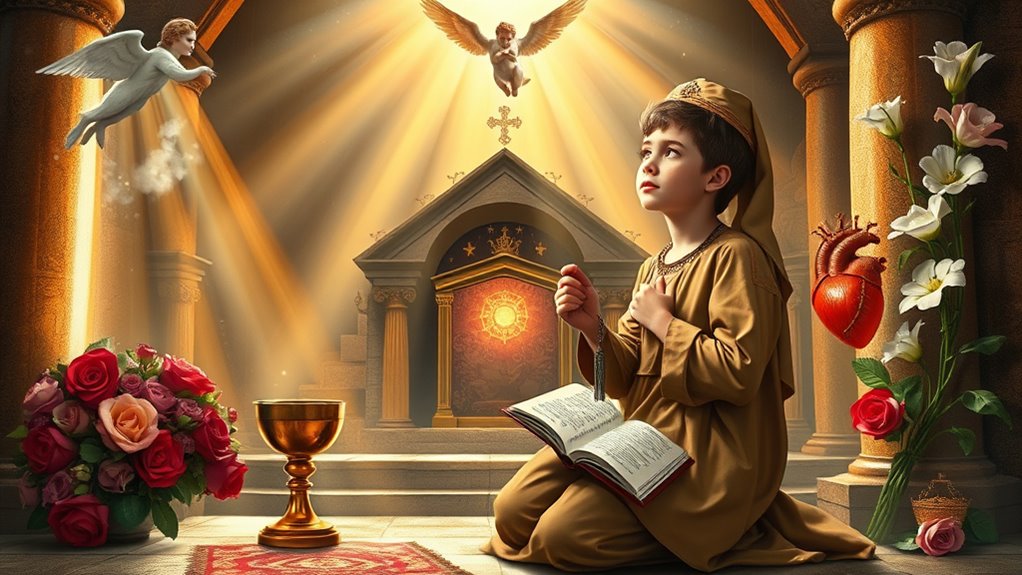
Tucked inside Joe’s school notebooks were diary entries he had written since age 14, containing reflections on prayer, the Eucharist, and his relationship with God. The writing showed unusual maturity for a teenager. “I will always be close to God, because He is the most important thing in my life,” he wrote. When a religion teacher later asked Joe’s classmates to name a modern saint, they spontaneously identified him.
Joe attended daily Mass, prayed the Holy Rosary regularly, and spent hours at Carfin Grotto, known as the “Lourdes of Scotland,” praying for others’ intentions. The Marian shrine near his home became central to his spiritual life. He drew inspiration from Saint Thérèse of the Child Jesus, whose teaching on sanctity in small, everyday things shaped his approach to faith. His personal writings reflected Thérèse’s spirituality in both content and practice. Joe also attended Pope Benedict’s visit to Bellahouston Park in Glasgow, which influenced his spiritual growth. His example of humble devotion has been compared to broader biblical teachings on heaven and hope found throughout Scripture, emphasizing that earthly suffering is met with divine promise in the life to come eternal life.
After Joe’s death, Taylor High staff helped compile his writings into a book titled “Joe’s Words.” Hundreds of people climbed Ben Nevis to raise funds for charities including the British Heart Foundation in his memory. His example prompted friends and family to maintain their faith through suffering. In one diary entry, Joe wrote that the suffering on Earth will be rewarded in Heaven, expressing a trust that shaped how others understood his life.
In November 2025, the Catholic bishops of Scotland approved opening Joe’s canonization cause, giving him the formal title “Servant of God.” If the process succeeds, Joe would become the first Scottish millennial saint and join Carlo Acutis as only the second millennial recognized by the Church. The recognition reflects a life dedicated to quiet holiness expressed through consistent religious practice rather than dramatic gestures.