


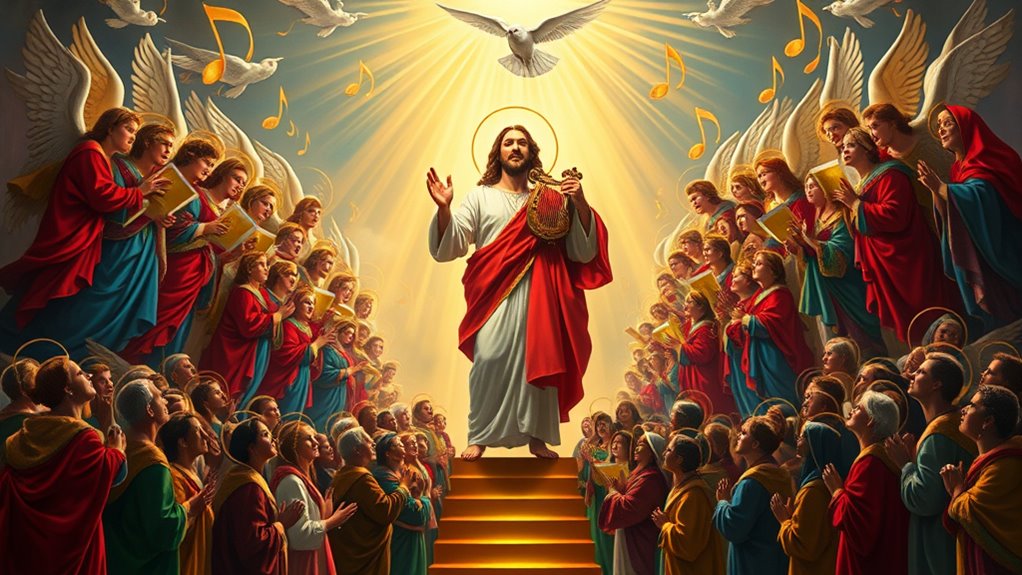
Pope Francis teaches that music transcends artistic expression by serving as a spiritual bridge connecting human hearts directly with God. He describes it as an “imaginary stairway” linking earthly life to heaven, communicating divine love rather than offering mere entertainment. Music deepens prayer, expresses faith mysteries beyond words, and integrates mind, body, and soul into unified worship. Drawing from Saint Augustine’s insight that “singing is proper to one who loves,” Francis emphasizes music’s accessibility across all cultures and social classes, demonstrated through charitable concerts like the Vatican’s Concert with the Poor, which welcomed over 3,000 vulnerable individuals. The fuller picture reveals how this vision shapes contemporary liturgical practice.
How does music reach beyond the limits of language to touch something deeper in the human spirit? According to Pope Leo’s teachings, music functions not merely as artistic expression but as a spiritual bridge connecting human hearts directly to the divine. This practice aligns prayer as communication with God with musical expression, deepening the bond between worship and music. This perspective positions music as what he terms an “imaginary stairway,” linking earthly existence with heaven and revealing humanity’s identity as beloved children of God beyond daily troubles and suffering.
Music transcends mere artistry to become a spiritual bridge, an imaginary stairway connecting human hearts directly to the divine.
The Pope describes music as a divine language, ultimately embodied in Jesus Christ as the “song of God’s love.” Rather than serving as simple entertainment, music communicates God’s message and prepares spiritual hearts for Christ’s arrival by fostering openness and attention to others, particularly those in need. This elevation from material distractions to divine harmony transforms how believers engage with their faith and community.
Within liturgical contexts, music serves essential communal functions during religious celebrations. During Christmas, hymns and melodies express mysteries that words alone cannot capture. The Pope emphasizes that singing integrates mind, body, feelings, and soul into spiritual communication, creating unified praise among the faithful during their synodal journey of faith and hope.
Liturgical music, including chant and hymnody, allows souls to express what language cannot adequately convey. The concept of polyphony holds particular significance in this framework. Multiple voices and melodies intertwine, symbolizing unity among diversity within Christian life. These compositions draw from sacred texts, clothing messages in melody through counterpoint where themes echo, occasionally creating dissonance before resolving harmoniously. As Saint Augustine taught, “singing is proper to one who loves”, revealing how music expresses the deepest feelings that emerge from the human heart.
This musical structure mirrors faith’s journey under the Holy Spirit’s guidance, blending individual contributions into cohesive worship. Crucially, Pope Leo rejects viewing music as luxury reserved for the privileged. He stresses music’s accessibility across social and economic divides, describing it as a universal gift touching hearts across all cultures and classes.
Charitable concerts benefiting the poor demonstrate this inclusive vision, using music to encourage solidarity, spiritual upliftment, and recognition of human dignity regardless of wealth or status. At the sixth “Concert with the Poor” held at Vatican’s Paul VI Hall, over 3,000 vulnerable and marginalized people from various nationalities experienced this vision firsthand through performances by internationally renowned artists and sacred musical ensembles.