Russell Shaw directed media relations and ghostwrote major pastoral letters for the U.S. Catholic Conference from 1969 to 1987, wielding substantial influence while deliberately avoiding self-promotion. He authored over twenty books and thousands of articles in major publications without seeking celebrity status, treating writing as service rather than personal advancement. Shaw critiqued clericalism and championed lay responsibility while maintaining respect for Church authority, and his “nothing to hide” communication philosophy emphasized transparency over institutional defensiveness. His career demonstrated that effective leadership need not require public recognition, a countercultural approach that continues to shape conversations about ministry and stewardship.
Leading a national institution often tempts individuals toward visibility and acclaim, but Russell Shaw spent nearly two decades shaping the public voice of the U.S. Catholic Conference and the bishops’ conference while keeping himself deliberately in the background. From 1969 to 1987, he served as associate secretary for communication and secretary for public affairs, directing media relations and providing strategic counsel that influenced national Catholic conversations. Yet colleagues remembered him as reserved in manner, a leader who avoided self-promotion despite wielding considerable influence across American Catholic life.
Russell Shaw shaped the public voice of American Catholicism for nearly two decades while deliberately keeping himself in the background.
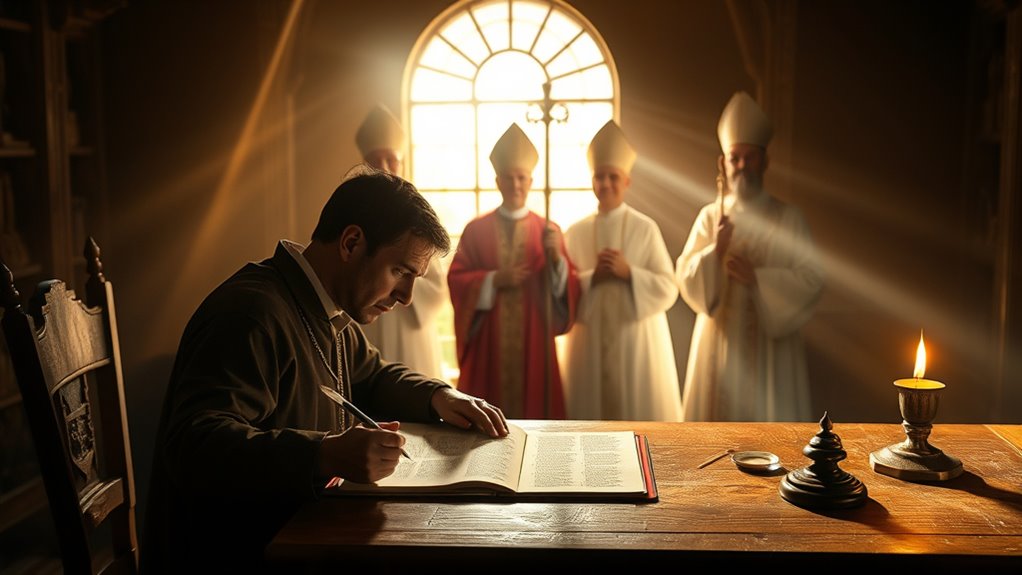
Shaw’s humility showed most clearly in his work as principal ghostwriter for three major U.S. bishops’ pastoral letters. Rather than claiming authorship or building a personal platform, he allowed episcopal voices and teaching to remain at the forefront, treating his craft as service rather than opportunity for recognition. This approach extended throughout his career, as he authored more than twenty books on moral theology, clericalism, and Church life while remaining better known as a resource to others than as a celebrity commentator.
His critique of clericalism revealed how humility could coexist with forthright analysis. Shaw identified clericalism as a structural spiritual illness harming ecclesial life and advocated for greater responsibility and visibility for laypeople in Church mission. Yet he maintained explicit respect for bishops and priests, avoiding personal attacks or polemical tactics.
Colleagues noted he combined frank assessment of Church problems with consistent Christian charity, treating criticism as a form of service rather than self-assertion. His behavior remained consistent “out of the house or in the house,” demonstrating the same gentleness and thoughtfulness in private life that marked his professional conduct.
Shaw’s commitment to transparency reinforced this service-focused approach. He promoted a “nothing to hide” philosophy regarding episcopal communications, insisting that Church credibility in modern democracies depended on honest, open communication rather than control or spin. He treated journalism and communications as ministries of truth in service to Christ, subordinating professional reputation to accuracy and integrity. His thousands of published articles appeared in major periodicals including The Wall Street Journal, L’Osservatore Romano, America, and The National Catholic Reporter, yet he never leveraged this prolific output for personal celebrity.
After leaving institutional roles in the late 1990s, Shaw returned to frontline journalism, writing on Catholic education, civic responsibility, and suffering without seeking to build a personal brand. He was remembered as a giant of the Church who remained understated, modeling leadership exercised without public grandstanding or clerical prestige-seeking. He also practiced generosity and stewardship in ways that reflected broader biblical teachings about money and the responsible use of wealth.