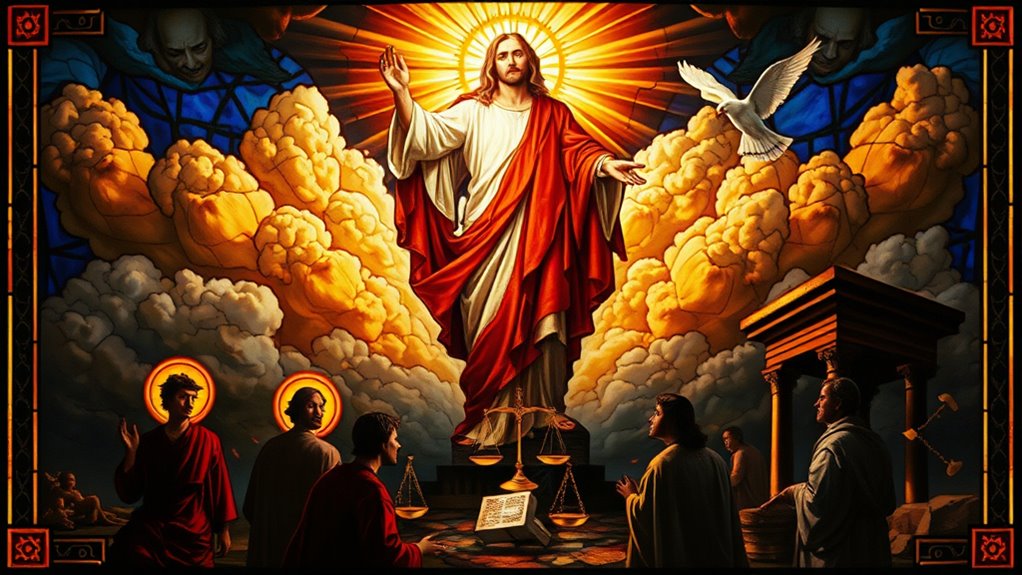


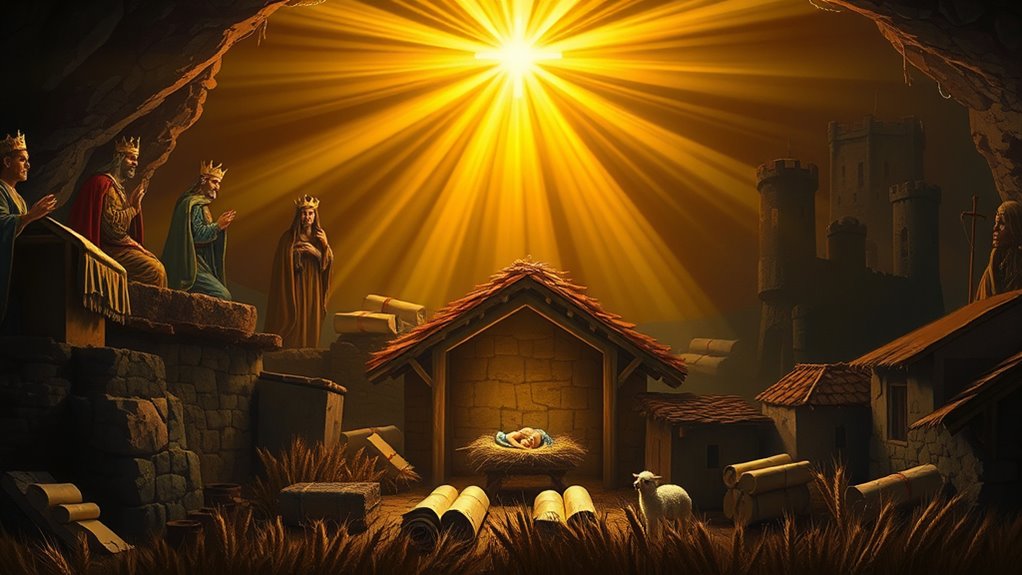
Jesus’ birth in Bethlehem, prophesied in Micah 5:2, challenged worldly power by locating the Messiah in a humble village rather than Jerusalem or Rome. The Gospels emphasize shepherds as witnesses and a stable setting, inverting expectations of royal grandeur. This choice threatened Herod’s authority, as Matthew records, because it claimed divine kingship through lowliness rather than military might. The location’s name, “house of bread,” symbolized spiritual nourishment over political dominance, establishing a kingdom built on humility that would ultimately reshape history’s understanding of legitimate authority.
The birth of the Messiah in Bethlehem stands as one of Christianity’s most widely recognized traditions, rooted in prophetic texts from Hebrew Scripture and affirmed in two Gospel accounts. Many Christians also observe spiritual fasting as a way to reflect on these prophetic fulfillments and their implications. Micah 5:2 explicitly predicts a ruler from Bethlehem Ephrathah, a prophecy cited by Jewish scribes and chief priests in Matthew’s Gospel when explaining to Herod where the Messiah would be born. Early Christian writers including Justin Martyr and Origen treated this identification as continuity with prophecy, establishing a tradition that would endure for two millennia.
Bethlehem’s prophetic significance united ancient Scripture with Gospel witness, anchoring messianic expectation in David’s ancestral village rather than centers of power.
Both Matthew and Luke name Bethlehem in Judea as the birthplace, though their narratives emphasize different elements. Luke’s account centers on a census requiring Joseph to travel to David’s city, placing Jesus among shepherds in humble circumstances. Matthew frames the birth as a royal challenge, with a Davidic heir born in Herod’s domain, threatening worldly kingship. The convergence on Bethlehem despite these different emphases supplies complementary theological claims about the Messiah’s identity and mission.
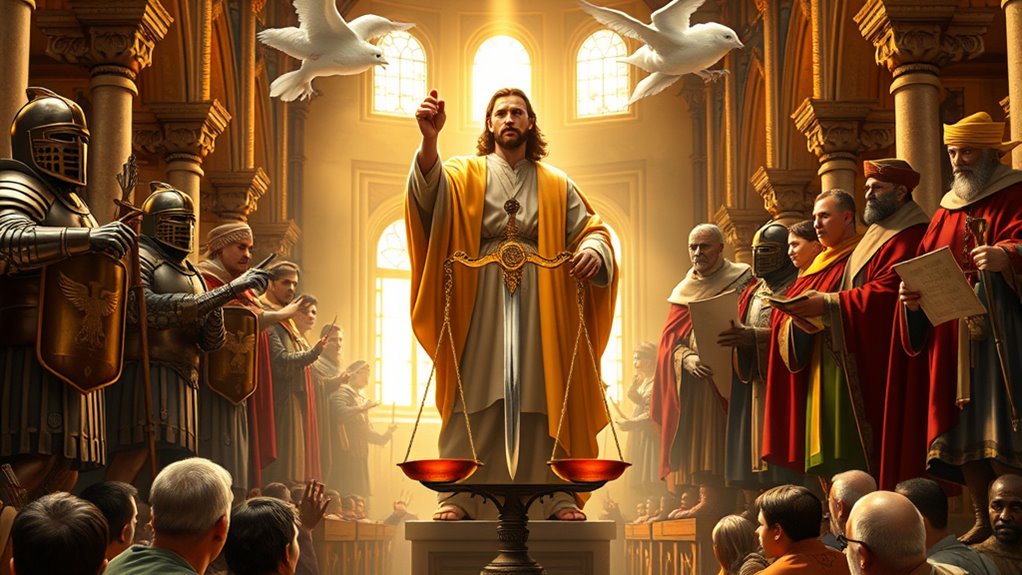
The political implications were unmistakable. Bethlehem’s status as David’s hometown made a Davidic birth narrative a direct challenge to Herodian and Roman notions of legitimate rule. Matthew contextualizes this tension through Herod’s violent reaction, illustrating how a child born in obscurity could unsettle established power. The Davidic lineage motif in Matthew’s genealogy reinforces this connection, tying messianic expectations to David’s town rather than centers of political authority. Bethlehem’s ancient name meaning “house of bread” emphasized the sustenance imagery that would later resonate with Jesus’ teaching and ministry.
Archaeological evidence indicates Bethlehem was inhabited in the first century, with a cave tradition associated with the birth site attested by at least the second through fourth centuries. The Church of the Nativity, built in 339 and rebuilt in the sixth century, stands over a grotto long venerated by pilgrims. Material-cultural parallels from the period, including rock-cut homes with lower-level stables or caves, make the cave-as-manger scenario plausible for first-century domestic arrangements. Archaeology has confirmed numerous biblical accounts, such as the discovery of Sargon’s palace, which validated a previously doubted biblical reference and demonstrated the reliability of scriptural geography.
This convergence of prophecy, Gospel testimony, and enduring tradition illustrates how Bethlehem functioned as more than a geographical detail. It represented the inversion of worldly power through divine purpose, placing the Messiah not in imperial Rome or even Jerusalem, but in a small Judean village.