
According to Christian doctrine, God and Jesus are not the same Person, though both are fully divine within the Trinity. The Trinity teaches that one God exists as three distinct, co-equal, and co-eternal Persons: the Father, the Son (Jesus), and the Holy Spirit. Each Person possesses the same divine essence while maintaining separate identities. This theological framework, developed through centuries of reflection, allows Christians to worship Jesus while preserving monotheistic beliefs, and exploring this doctrine reveals deeper insights into these fundamental relationships.

How can Jesus be both God and a distinct person from God the Father, a question that has shaped Christian theology for nearly two millennia? Scholars note that doctrines like the Trinity were formulated over centuries through theological reflection and debate, informed by studies of textual criticism. The answer lies in understanding the doctrine of the Trinity, which defines one God existing in three co-equal, co-eternal Persons: the Father, the Son, and the Holy Spirit.
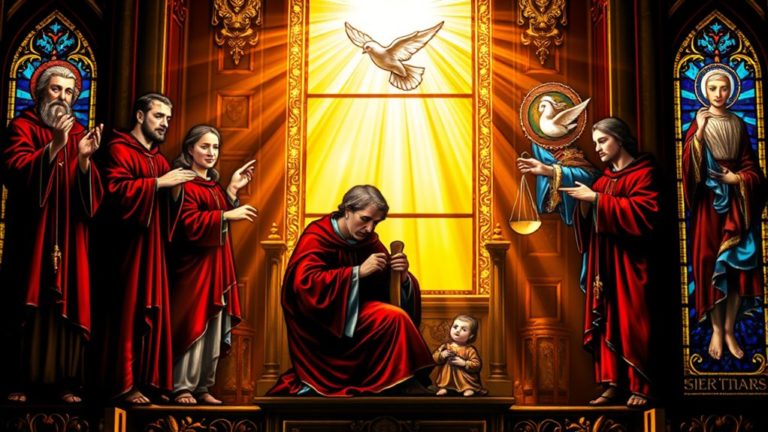
According to orthodox Christian teaching, Jesus and God the Father are distinct Persons within the Trinity, sharing one essence but separate in personhood. The Father is God, the Son is God, and the Holy Spirit is God, yet none are the same Person as each other. This theological framework emerged from early Christian attempts to reconcile worship of Jesus with monotheistic beliefs.
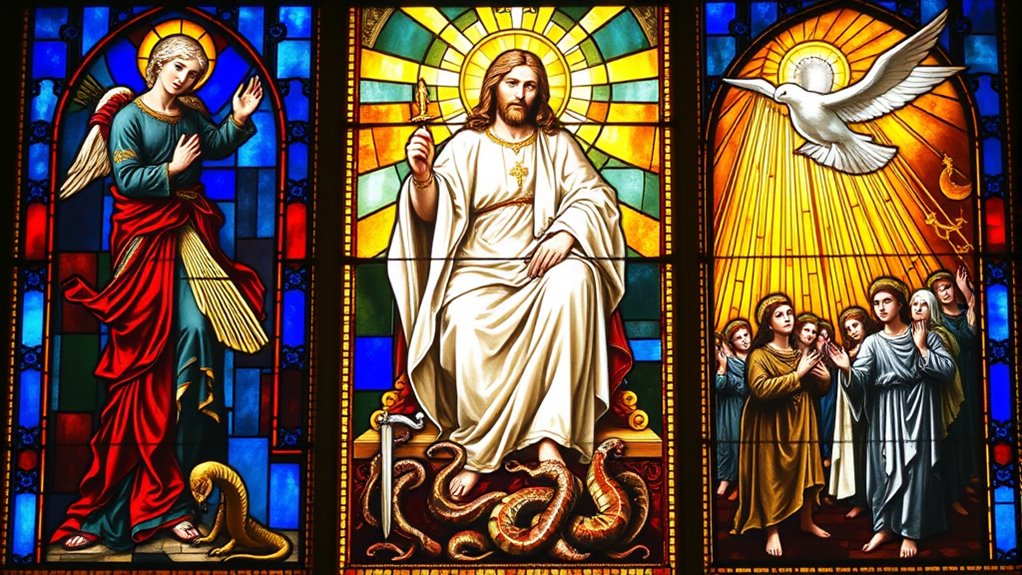
The Trinity reveals one divine essence shared among three distinct Persons, reconciling Christ’s divinity with monotheistic faith.
The Gospel of John illustrates this distinction clearly, stating that the Word was with God, implying two Persons—one called “God” and one called “the Word.” John 1:1-2 describes the Word as both “with God” and “was God,” reinforcing unity and distinction in Jesus’ divine nature. The Word (Jesus) was involved in creation, indicating His divine status from the beginning.
Early Christians believed Christ was a pre-existent divine being who became human and was exalted to equality with God at resurrection.
Jesus possesses two complete natures: divine and human, fully distinct yet united in one Person. The Chalcedonian Creed summarizes that Jesus is one Person with two natures, not divided into two persons. Colossians 2:9 affirms that Jesus is fully God, not a partial manifestation, with all divine attributes present in bodily form. During the Incarnation, the divine nature remained unchanging and undiminished while taking on complete humanity.
The New Testament maintains clear differentiation between Jesus as the Son of God and God the Father. Scriptures show God placed all things under Christ’s authority, but God Himself is not placed under Christ. Jesus identifies God the Father as the only true God, maintaining distinction from Himself while commanding worship through divine authority.
This doctrine of the Incarnation explains how Jesus retained divine nature while taking on human nature for redemption. The Trinity doctrine successfully resolved tensions between worshiping Jesus and maintaining monotheism, rejecting ancient heresies like modalism that claimed God exists as one Person revealing Himself in different modes.
Frequently Asked Questions
What Do Different Christian Denominations Believe About the Trinity?
Christian denominations hold varying views on the Trinity. Trinitarian churches, including Catholics, Orthodox, and most Protestants, believe God exists as three co-equal, co-eternal persons: Father, Son, and Holy Spirit.
Nontrinitarian groups like Jehovah’s Witnesses and Latter-day Saints reject this doctrine, viewing Jesus as subordinate to God or as separate divine beings.
These differences reflect ongoing theological debates about God’s nature and scriptural interpretation.
How Do Muslims and Jews View the Relationship Between God and Jesus?
Muslims and Jews both reject the Christian belief that God and Jesus are the same person, though their views differ in important ways.
Muslims honor Jesus as a prophet and the Messiah while firmly denying his divinity, viewing such claims as shirk, the gravest sin in Islam.
Jews generally do not recognize Jesus as the Messiah or a prophet, seeing him simply as a historical figure who doesn’t meet messianic expectations.
What Biblical Verses Support Jesus Being Divine Versus Being Separate From God?
Biblical verses present evidence supporting both perspectives on Jesus’ divine nature. Passages like John 10:30, where Jesus declares “The Father and I are one,” and John 8:58, using the divine name “I am,” suggest divinity.
Conversely, verses like John 17:3, where Jesus distinguishes himself from “the only true God,” and Mark 13:32, showing Jesus lacks certain knowledge the Father possesses, indicate separation.
Did Early Christians Always Believe Jesus Was God or Did This Develop Later?
Early Christians believed Jesus was divine from the movement’s beginning, not as a later development. Paul’s letters from around AD 50 and the Gospel of John before AD 100 explicitly describe Jesus as God.
Scholar Larry Hurtado notes that devotion to Jesus as divine emerged within early Jewish Christianity shortly after his ministry.
The Council of Nicaea in AD 325 formalized existing beliefs rather than creating new doctrine about Jesus’ divinity.
How Can Three Persons Be One God Without Being Three Separate Gods?
Three persons constitute one God through shared divine essence rather than separate beings. Each person—Father, Son, and Holy Spirit—possesses the complete divine nature, making them fully God while remaining distinct in their personal relationships.
This differs from three separate gods because the persons share one unified essence, power, and glory. The distinction lies in their eternal relationships, not in having different divine natures or essences.