American Catholics have grown from 35,000 in 1790 to nearly a quarter of the U.S. population by the mid-20th century, achieving remarkable political integration with a Catholic president in 1960 and two-thirds of Supreme Court justices by Obama’s second term. Yet this success has created tensions between Rome, which condemned “Americanism” and fears erosion of church teachings, and American Catholics increasingly divided over abortion, LGBTQ+ rights, and women’s ordination. Clergy abuse scandals costing over $1 billion in settlements have further fractured trust, while growing Latine membership reshapes community dynamics in ways that reveal deeper questions about faith, authority, and national identity.
While American Catholics today represent nearly one in five citizens, their journey from a marginalized minority to the nation’s largest denomination has been marked by both remarkable integration and persistent tension with Rome. The Catholic population surged from just 35,000 in 1790 to 1.6 million by 1850, fueled by waves of immigration that brought 4.3 million Irish and 1.65 million German Catholics between 1820 and 1920.
By the early 1950s, Catholics comprised 23% of the population, their growth driven by large families and continued migration.
Political acceptance came gradually. Catholic participation in the Civil War, including many who owned slaves in alignment with church views at the time, helped ease suspicions. During World War I, one-third of American soldiers were Catholic, exceeding their population share.
John F. Kennedy’s 1960 election symbolized full integration, though anti-Catholic prejudice persisted in debates over education and public policy. By Obama’s second term, Catholics held remarkable influence, occupying the second through fifth positions in presidential succession and comprising two-thirds of the Supreme Court. The Catholic Church became the second-largest provider of social services after the federal government, extending its influence beyond politics into American civic life.
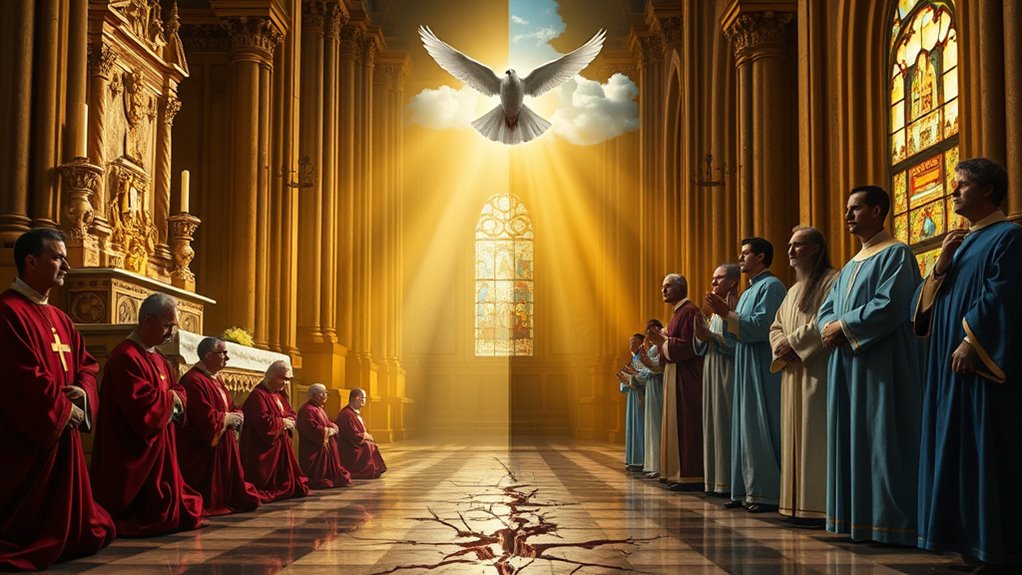
Yet this integration has come with friction. Pope Leo XIII condemned “Americanism” in the late 19th century, fearing that democratic governance and private judgment would erode Catholic principles. The Vatican has continued to worry that American Catholics prioritize political loyalties over church teaching, particularly on abortion, contraception, and LGBTQ+ rights.
The church influences legislation on these issues, creating ongoing tensions over the separation of church and state.
Recent decades have brought new challenges. Scholars note that debates hinge on hermeneutical principles applied to key biblical passages. Pew research shows Catholic population share declining from 24% in 2007 to 19% in 2025. Since 1960, Latine Christians have driven 71% of Catholic growth through migration, reshaping the community’s character.
Meanwhile, clergy sexual abuse scandals and bishop cover-ups have damaged trust, with the worldwide church paying over $1 billion in abuse-related settlements by 2004. The 2020 McCarrick Report revealed ineffective institutional responses to abuse allegations, further eroding confidence in church leadership. Internal debates over women’s ordination and contraception continue to divide the faithful.
Despite declining clergy and eroding ethnic communities, Catholicism remains America’s largest denomination, steering the delicate balance between Roman authority and American independence.