


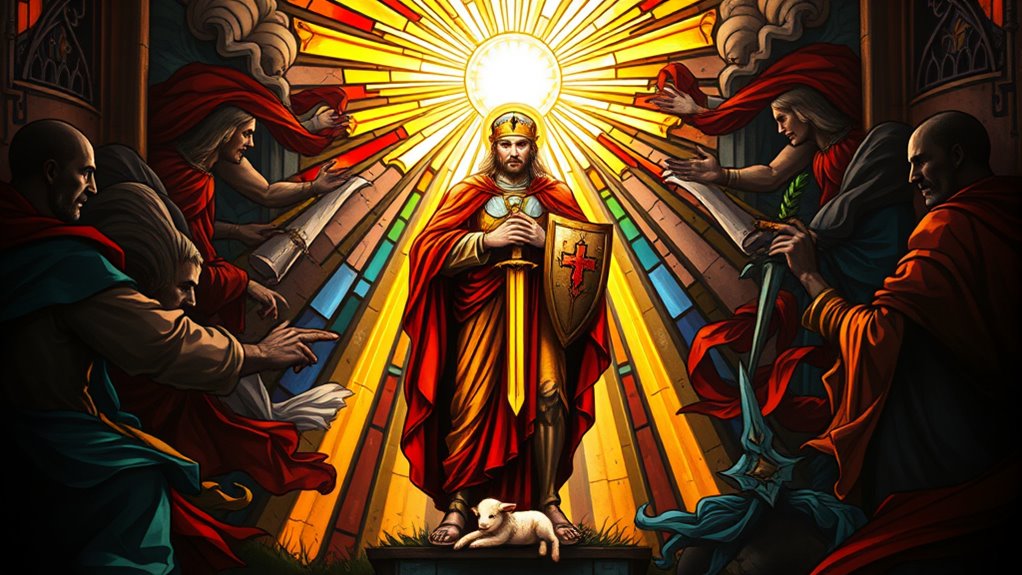

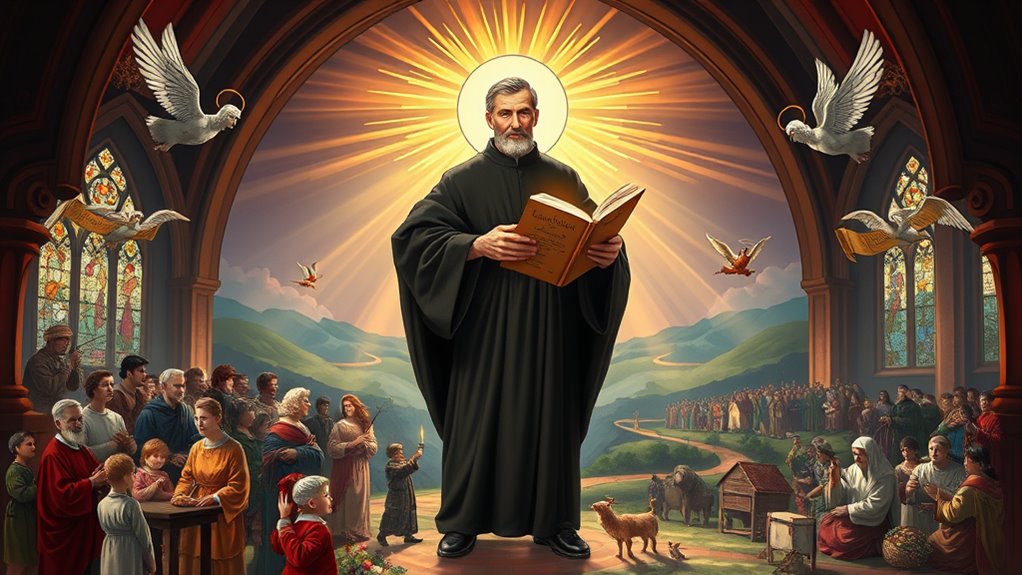
Saint Peter Canisius, the 16th-century Jesuit who traveled 20,000 miles across Central Europe establishing colleges and writing catechisms for diverse audiences, offers practical wisdom for modern Christmas hosts. His approach of tailoring communication to meet people where they are—creating materials for adults, students, and children alike—demonstrates that successful gatherings require thoughtful preparation considering guests’ varied backgrounds and needs. His work establishing 18 colleges and fostering community through inclusive accommodation shows that meaningful connection stems from intentional effort rather than lavishness, a principle that transforms ordinary holiday parties into genuine experiences of hospitality and belonging.
What does a sixteenth-century Dutch Jesuit have to do with modern holiday gatherings? Peter Canisius, born in Nijmegen in 1521, spent his life traveling roughly 20,000 miles on foot and horseback across Central Europe, founding colleges and writing catechisms. His approach to spreading Catholic teaching during the Protestant Reformation offers an unexpected model for seasonal hospitality. This echoes the Christian emphasis on marriage as a covenant which underscores the importance of intentional, communal relationships.
Canisius joined the Society of Jesus in 1543 and became the first Jesuit provincial of Germany, earning the title “Second Apostle of Germany.” Over 30 years, he established 18 colleges and several seminaries, transforming a small band of priests into a powerful Counter-Reformation movement. He wrote 37 books, including three versions of his catechism that went through 200 printings before his death in 1597 and 400 editions within 150 years.
Over three decades, Canisius built an educational empire that shaped Catholic identity across generations through relentless travel, writing, and institution-building.
What distinguished Canisius was his commitment to meeting people where they were. He crafted sermons for large crowds but maintained special focus on popular religious instruction, especially teaching children. During his pastoral work, he visited Austrian parishes that lacked priests, bringing sacraments and instruction to underserved communities. He wrote over 8,000 pages of letters to people of every rank, from cardinals to commoners, demonstrating that effective communication required adaptation to audience. His catechisms appeared in versions for adults, high school students, and children, each tailored to different comprehension levels.
This principle of inclusive accommodation translates naturally to Christmas gatherings. A successful party considers diverse guests, much as Canisius considered diverse audiences. Planning might include activities for various ages, dietary options for different needs, and conversation topics accessible to newcomers and longtime friends alike. The saint’s educational institutions trained young men with limited resources, suggesting that hospitality need not depend on lavish spending but on thoughtful preparation. He built alliances with Holy Roman emperor and German magnates, demonstrating that bringing people together across differences creates lasting impact.
Canisius experienced a mystical vision in 1584 directing him to settle in Fribourg, Switzerland, where he spent his final 20 years building community through preaching, teaching, and writing. He suffered a stroke in 1591 but recovered and continued working for six more years. His persistence in service, even amid difficulty, offers a quiet reminder that meaningful gatherings require effort and intention, qualities that transform ordinary celebrations into opportunities for genuine connection.