


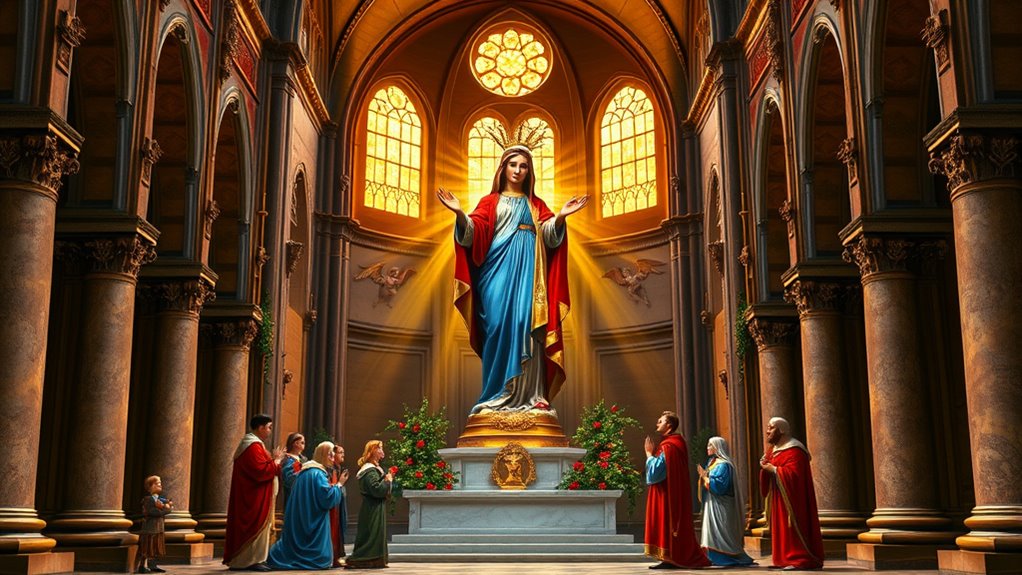
The Vatican positioned a wooden image of Our Lady of Hope from southern Italy near the Altar of the Confession in St. Peter’s Basilica to serve as a focal point during Pope Leo XIV’s Christmas liturgies, marking the conclusion of the Jubilee of Hope. The figure, arriving December 22, 2025, from Saint Mark the Evangelist parish in San Marco of Castellabate, reinforces Mary as a symbol of hope and provides a prayer anchor for attendees throughout the Christmas season, connecting regional devotion to the jubilee’s universal message of accompanying hope.
A wooden image of Our Lady of Hope, carried northward from southern Italy, will arrive at the Vatican on Monday, December 22, 2025, to take its place near the Altar of the Confession in St. Peter’s Basilica. Its presence also invites reflection on stewardship as a Christian response to God’s gifts. The image, beloved by devotees in its home region, has been selected to accompany Pope Leo XIV’s Christmas liturgies as the Jubilee of Hope draws to its conclusion.
Its placement guarantees visibility during key celebrations, positioning the Marian figure where pilgrims and faithful can easily see it throughout the Christmas season.
The arrival aligns deliberately with the liturgical calendar. Vatican officials have timed the image’s presence to span the sequence of Christmas events, allowing it to serve as a visual anchor during this pivotal moment in the jubilee year.
After the celebrations conclude, the wooden figure will return to southern Italy, completing its temporary role in the universal Church’s observance.
The Jubilee of Hope, which has emphasized Mary as a guide and generator of hope throughout the year, finds its culmination under the gaze of this particular image. Papal catechesis during the jubilee has repeatedly invoked the Blessed Virgin as life, sweetness, and hope, themes that resonate with the devotional title carried by the southern Italian figure.
The image’s presence reinforces the spiritual connection between regional devotion and the broader message Pope Leo XIV has delivered in audiences and homilies.
Positioning near the Altar of the Confession places the image at the heart of St. Peter’s liturgical activity, where it will oversee the Pope’s Christmas Mass and related ceremonies. The statue will remain in this prominent location until January 6 before returning home.
This location, close to the main altar, ensures that the figure occupies a central spot in the visual and spiritual landscape of the basilica during one of the Church’s most significant seasons.
The choice to spotlight Our Lady of Hope reflects both practical and symbolic considerations. It ties Italian Marian devotion to the Vatican’s emphasis on hope as a journey companion, offering attendees a focal point for prayer and reflection as the jubilee year concludes and a new liturgical cycle begins. The image originates from Saint Mark the Evangelist parish in San Marco of Castellabate, a community nestled between the Cilento and Vallo di Diano National Park.