Christmas festivities returned to Bethlehem’s Manger Square in 2025 after two years of silence, with a giant Christmas tree and lights replacing the wartime nativity scene that had shown Jesus amid rubble and barbed wire. The celebrations followed a ceasefire brokered between Israel and Hamas in October 2025, bringing renewed hope to a city where unemployment had surged from 14% to 65% and at least 142 Christian families had departed since October 2023. The restored traditions reflect both resilience and the fragile circumstances that continue to shape Bethlehem’s future.
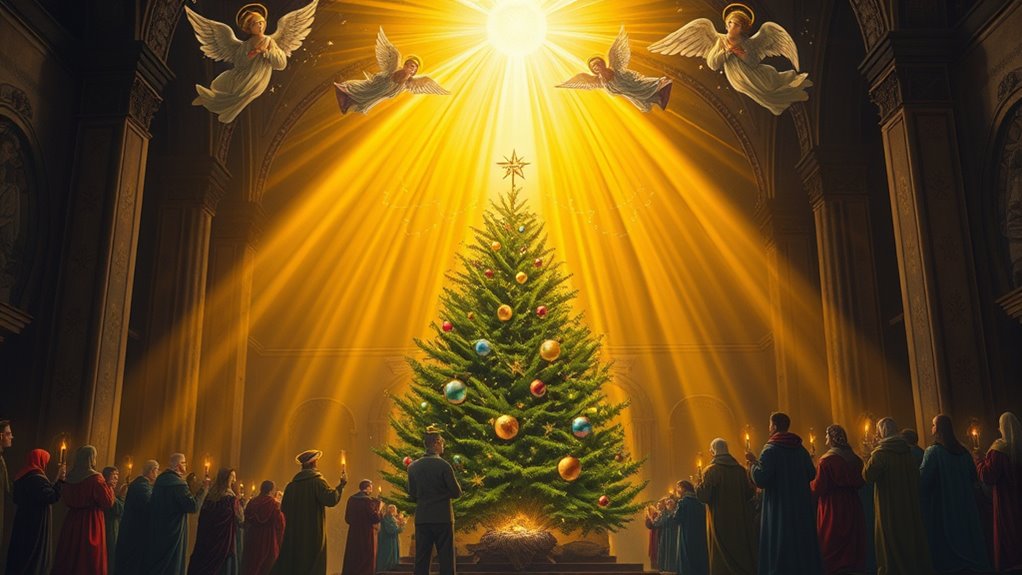
After two years of silence, Christmas celebrations returned to Bethlehem’s Manger Square in 2025, drawing thousands to the ancient city where tradition holds Jesus was born. A giant Christmas tree replaced the wartime nativity scene that had depicted the infant Jesus surrounded by rubble and barbed wire, signaling a shift from mourning to measured hope.
From rubble and barbed wire to a towering tree: Bethlehem trades symbols of suffering for measured hope in 2025.
The festivities resumed following a ceasefire brokered between Israel and Hamas in October 2025, ending the conflict that had muted tourism and strained daily life. Local church leaders invoked biblical teachings on moderate drinking when advising celebrants to drink responsibly.
Crowds gathered for religious ceremonies at the Church of the Nativity on Christmas Eve, with Roman Catholic and Protestant services held December 25 at St. Catherine’s and Shepherds’ Fields. Greek, Coptic, and Syrian Orthodox communities celebrate January 6, while Armenian Orthodox mark the day January 19.
Local officials framed the events as a sign of resilience amid continuing economic hardship and demographic change.
The war’s impact on Bethlehem was severe. Unemployment surged from 14 percent to 65 percent during the conflict, forcing families to pivot to online sales of Palestinian handicrafts as souvenir shops shuttered. About 4,000 residents have left Bethlehem seeking employment elsewhere.
Since October 7, 2023, at least 142 Christian families left the Bethlehem area, accelerating a decades-long trend. Christians comprised 86 percent of the population in 1950 but dropped to roughly 10 percent by the 2017 Palestinian census, which counted 23,000 Christians among 215,514 residents. The 1967 census had recorded 46.1 percent Christians, already a sharp decline. Reports of systematic harassment and violence by extremist groups have contributed to the ongoing exodus.
The celebrations offered a moment of normalcy, particularly for young children experiencing their first real Christmas festivities after years of disruption.
Processions passed through Manger Square outside the Basilica of the Nativity as they have for centuries, maintaining rituals that connect present residents to ancient traditions.
Yet the contrast with Nazareth was notable, where broad and confident festivities reflected a growing Christian presence.
In Bethlehem, the return of celebration carried weight beyond seasonal joy, representing a fragile attempt to reclaim identity and economic stability in a city where emigration continues daily and uncertainty remains the prevailing condition.