





Millennials now attend church just 1.8 times monthly, down from their parents’ twice-monthly pattern in 2000, despite a quarter-century of pastoral outreach efforts. This decline stems from witnessing their parents’ own disengagement during childhood, clergy scandals and political polarization that eroded trust, and the rise of digital communities offering alternative sources of meaning and belonging. Many identify as “spiritual but not religious” rather than committed church members. While recent data shows a slight rebound from the 1.6 monthly visits recorded in 2019, the generational shift remains pronounced, though the full story of potential reconnection continues to unfold.
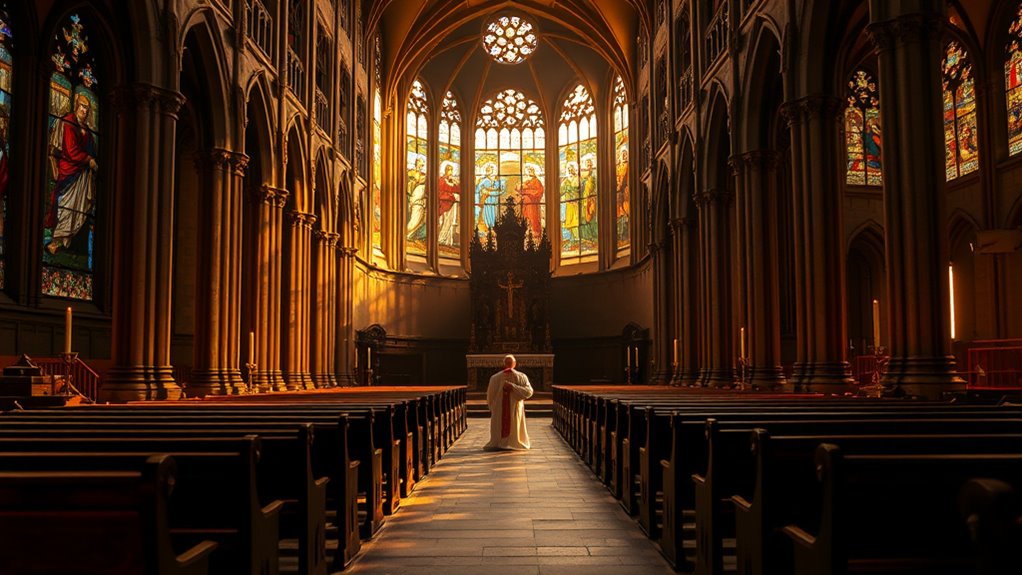
Across the United States, church pews that once held young families now sit noticeably emptier on Sunday mornings, a visible marker of a generational shift that has been building for decades. Millennials, now in their late twenties to early forties, remain largely absent from congregational life despite pastoral efforts launched around the turn of the millennium to engage them. Weekly church attendance among this cohort fell to approximately 21% by 2019, reflecting patterns of disengagement that stretch back to their formative years. This trend exists alongside enduring religious practices such as tithing, which in the Bible shifted from Old Testament obligations to New Testament emphases on generous, willing giving.
Empty pews tell the story of a generation that never returned, despite decades of pastoral outreach and institutional adaptation.
The roots of this absence run deep. Many Millennials grew up watching older generations’ attendance drop from about twice monthly in 2000 to 1.4 times monthly by 2025, weakening the institutional stability they observed during childhood. This visible decline contributed to reduced trust in organized religion’s relevance and *essential*.
Simultaneously, the rise of pluralism and individualized spirituality made opting out socially acceptable, with many Millennials identifying as “spiritual but not religious” rather than committing to institutional structures.
Institutional scandals compounded these trends. Widespread clergy abuse cases, financial misconduct, and leadership failures damaged trust across denominations precisely as Millennials were forming their worldviews. Political polarization within churches further alienated those who perceived congregations as overly partisan, particularly around culture-war issues. Conflicts over race, gender, and sexuality reinforced perceptions of hypocrisy among church leaders, while negative experiences during adolescence created long-term reluctance to re-enter church spaces.
Today, even self-described Christians attend only 1.6 times monthly on average, signaling looser ties to congregational life. Digital communities, activism networks, and cause-based groups now function as alternative meaning communities, competing for attention once directed toward Sunday gatherings. Millennials represent the highest share of religious “nones” among U.S. adults, a reflection of broader secularization. Church leaders now face the challenge of building momentum with congregants who participate less than weekly, requiring new discipleship strategies.
Yet the story remains unfinished. Some Millennial subgroups have shown renewed interest post-pandemic, suggesting that pathways back to community may still exist. Recent data shows Millennials now averaging 1.8 weekends monthly, marking a steady increase since pandemic lows. Understanding the quarter-century arc of disengagement offers churches insight into rebuilding trust, one honest conversation at a time.