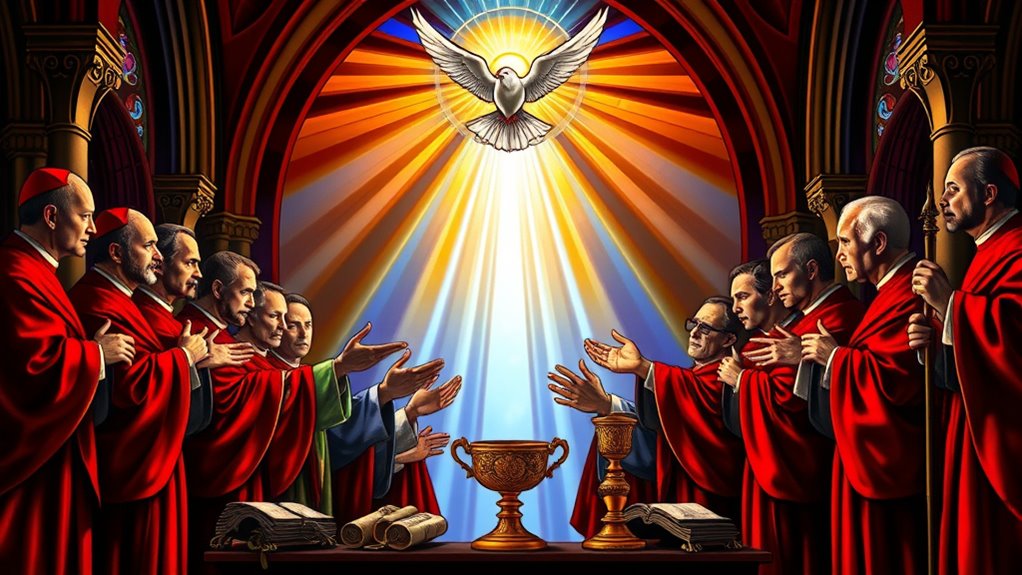
Pope Leo XIV convened an extraordinary consistory with 170 cardinals, urging them to embrace their role as visible instruments of communion around the Successor of Peter. He emphasized that “unity attracts” while “division scatters,” calling for concord in diversity rather than uniformity. The pontiff framed renewal not through new structures but through deeper holiness and pastoral conversion, with synodality enabling mutual listening and collaboration. Four priority themes were identified—mission, Holy See operations, synodality, and liturgy—though time constraints limited in-depth treatment to two topics, leaving significant ground for the cardinals to explore together.
Three words—unity, mission, and listening—defined the extraordinary consistory of cardinals convened by Pope Leo XIV this week, a gathering that brought together the Church’s senior advisors to reflect on the challenges and hopes facing the global Catholic community.
Pope Leo XIV convenes extraordinary consistory centered on unity, mission, and listening among the Church’s senior advisors.
In his opening address, the Pope identified unity as a central theme of his pontificate, stressing that ecclesial unity and charity are essential for credible missionary witness in the modern world.
Pope Leo XIV reminded the cardinals that “unity attracts” while “division scatters,” echoing Christ’s command to mutual love found in John 13:34–35.
He presented the College of Cardinals as a visible instrument of communion around the Successor of Peter, though he clarified that unity should not be confused with uniformity.
Instead, he framed it as concord in diversity, rooted in shared faith and common mission.
The consistory was convened to advise and collaborate on matters affecting the life and mission of the Church. The Pope also emphasized the biblical roots of God’s promises to a chosen people, noting how covenant and mission shape the Church’s identity and calling covenantal promises.
Four priority themes were identified: the Church’s mission in the modern world, the work of the Holy See, synodality, and the liturgy, though only two were treated in depth due to time constraints.
Cardinals were urged to help renew evangelization so the Church can bring the light of Christ “to every creature,” citing the opening line of Vatican II’s *Lumen Gentium*.
The Pope linked renewal to deeper holiness and pastoral conversion rather than merely new structures or methods.
Dominican Cardinal Timothy Radcliffe provided the opening meditation for the gathering.
Central to the gathering was Pope Leo XIV’s message: “I am here to listen.”
He called for cardinals to get to know one another and dialogue so that collaboration in service of the Church can improve.
170 cardinals participated in the extraordinary consistory, divided into 20 groups to facilitate focused discussion and reporting.
Synodality was highlighted as a method of walking together, listening to each other, and seeking the guidance of the Holy Spirit.
This style of mutual listening and discernment, the Pope stated, will notably assist the Petrine ministry in the future.
The Pope reaffirmed that the Church must embrace dialogue with the modern world in justice, peace, and fraternity, continuing the vision of Vatican II and helping echo the hopes and anxieties of peoples everywhere.