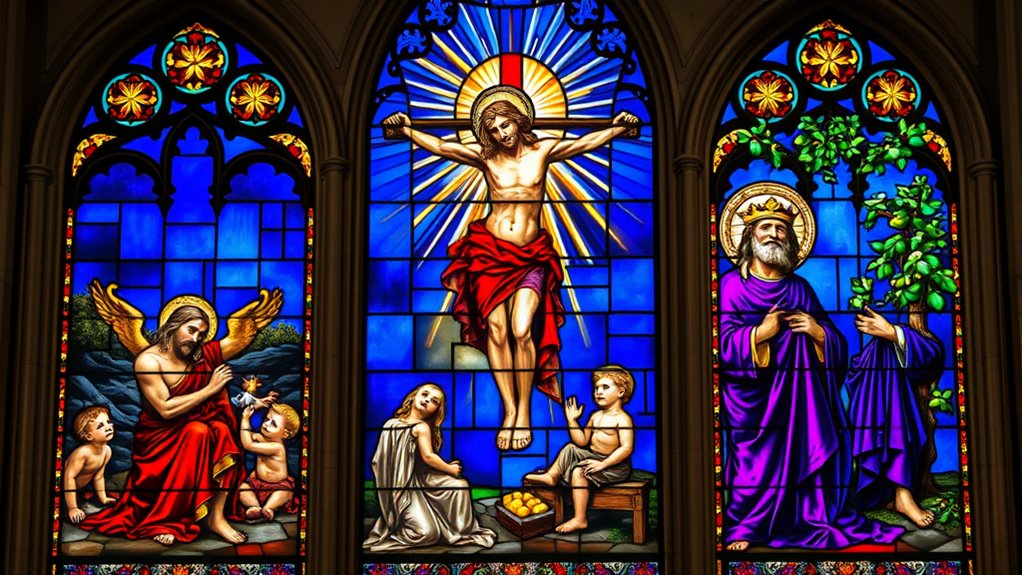






Baptism’s grace fundamentally transforms the soul by forgiving sins, infusing sanctifying grace, and incorporating believers into Christ’s Body, yet the Catechism emphasizes that this gift requires active cooperation in daily life. The sacrament imprints an indelible seal and infuses faith, hope, and love, but these theological virtues must shape practical choices, relationships, and responses to neighbors’ needs. Historical witnesses like Mother Teresa exemplify how baptismal grace produces fruits of patience, kindness, and self-control through intentional discipleship. The washing of regeneration offers renewal that flourishes only when believers consciously put on Christ each day, discovering how this foundational sacrament commissions ongoing mission and growth.
In the moments after water flows over a person’s head and sacred words are spoken, something fundamental shifts in the spiritual sphere. The Catholic Church teaches that baptism forgives all sins, including original sin inherited from humanity’s first parents and any personal sins committed before the sacrament. The soul receives what theologians call sanctifying grace, placing the newly baptized in a state of friendship with God and marking them permanently with a spiritual seal that cannot be erased.
Baptism forgives all sins and marks the soul with sanctifying grace, establishing permanent friendship with God through an indelible spiritual seal.
This transformation extends beyond forgiveness. The sacrament infuses three theological virtues: faith, hope, and love. It also grants gifts of the Holy Spirit that enable growth in holiness. According to Church teaching, the baptized person becomes a child of God, incorporated into the Body of Christ and the universal Church. This membership serves as the gateway to receiving other sacraments throughout life.
The question emerges whether such profound spiritual changes require corresponding action in everyday circumstances. Catholic theology suggests the answer is affirmative. The baptized person is called to put on Christ daily, allowing this new identity to shape interactions with family members, coworkers, and strangers. Scripture describes putting off the old self and living according to the likeness of God, responsive to both divine direction and neighbor’s needs. The New Testament also connects baptism with identification with Christ in both death and resurrection.
This calling manifests in concrete ways. The baptized are expected to pursue good works in their various roles, stewarding time, talent, and resources while working toward justice and peace. They are commissioned as laborers in Christ’s vineyard, charged with proclaiming the gospel through both deed and word. Daily life becomes the testing ground where baptism’s effects either flourish or lie dormant. The Catechism emphasizes that for all baptized, faith must grow after baptism, as reception of the sacrament alone does not ensure holiness. This spiritual washing of regeneration poured out richly through Christ brings renewal that must be lived out daily.
The fruits of baptism, when actively cultivated, include love, joy, peace, patience, kindness, goodness, faithfulness, gentleness, and self-control. Historical examples abound: Mother Teresa demonstrated profound humility, Pope John Paul II exhibited persistent kindness, and countless martyrs displayed extraordinary courage. These witnesses suggest that baptism’s grace, though freely given, demands intentional cooperation. The sacrament initiates a lifelong journey requiring perseverance, obedience to God’s Word, and daily decisions aligned with this foundational spiritual reality.