

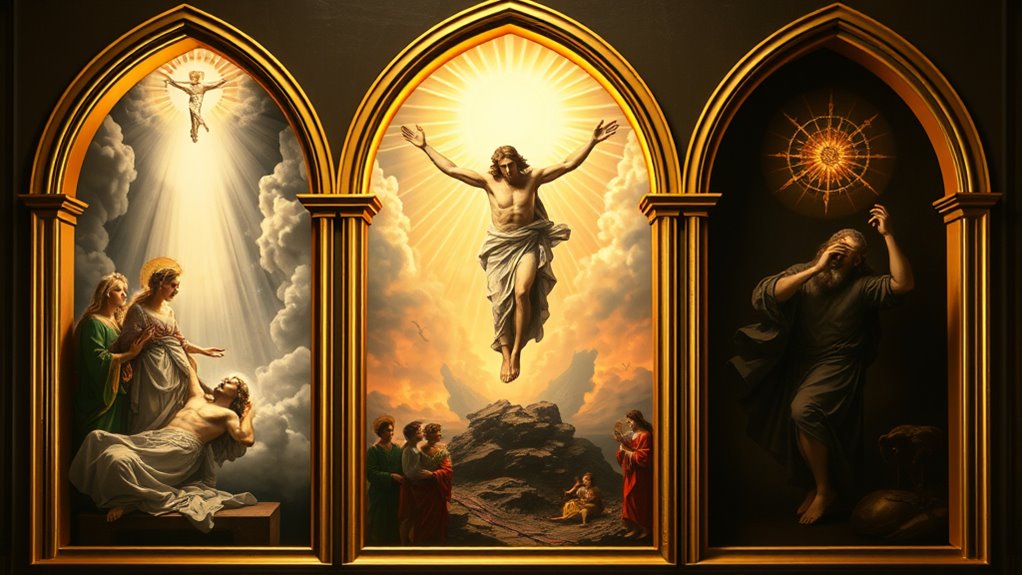
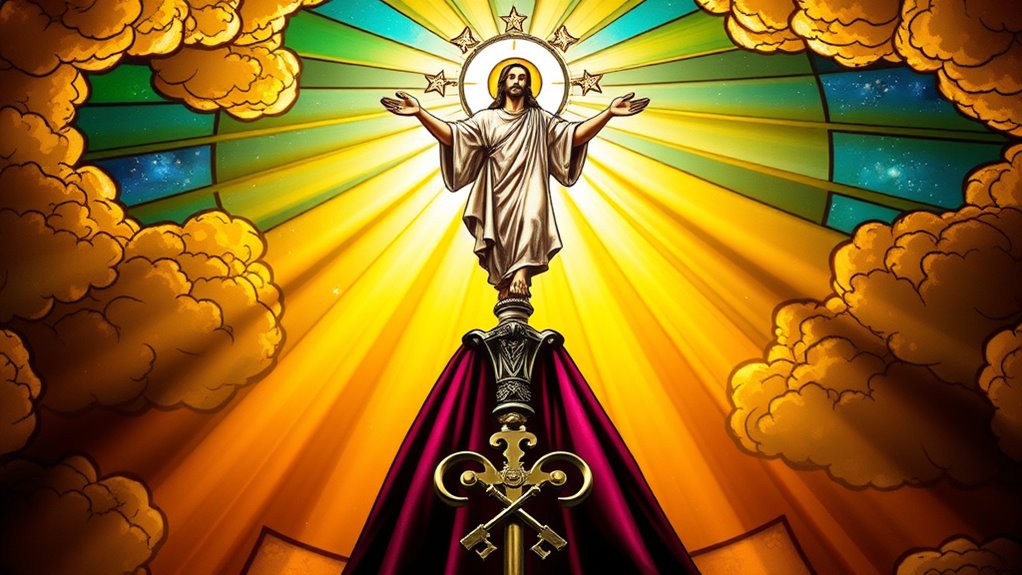
Pope Leo XIV’s new pastoral staff, debuted on the Solemnity of the Epiphany in January 2026, features a crucifix depicting Christ not in suffering but in glorified ascent to the Father. The design marks a theological shift from traditional imagery, emphasizing resurrection alongside crucifixion and aligning with the papal motto “In illo uno unum”—in the one Christ we are one. This ferula continues the post-Vatican II aesthetic introduced by Paul VI in 1965, when the papal staff transformed from a symbol of sovereign authority to one of shepherding witness, while its distinctive imagery invites deeper exploration of baptismal identity and Christian unity.
The ferula pontificalis, the distinctive pastoral staff carried by the Pope, emerged as a central symbol of papal authority during the High Middle Ages and has served ever since as a visual expression of the successor of Peter‘s mission to shepherd the universal Church. Unlike the curved crozier used by diocesan bishops, the papal staff stands as a unique emblem of the Bishop of Rome‘s universal jurisdiction and his role in presiding over the Church in charity.
The papal ferula symbolizes the Bishop of Rome’s universal shepherding mission, distinguishing him from other bishops through its unique design.
Pope Paul VI transformed the ferula’s character in 1965 when he adopted a silver staff designed by sculptor Lello Scorzelli at the closing of the Second Vatican Council. This shift marked a deliberate change in papal presentation, moving from portraying the Pope as a sovereign authority figure to presenting him as a shepherd bearing witness to the mystery of the Cross.
Following Paul VI’s adoption, the pastoral staff began appearing regularly in papal liturgies and became standard practice for his successors.
Pope Leo XIV’s new ferula maintains continuity with this tradition while introducing distinctive theological imagery. The crucifix depicts Christ with his glorified body in the act of ascending to the Father, no longer bound by the nails of the Passion. The image also invites reflection on baptism and identification with Christ as central to Christian life.
This design choice, influenced by Scorzelli’s original style, expresses the synthesis between Christ’s self-giving love revealed on the cross and its fulfillment in the Resurrection.
The staff functions as what Vatican observers have called a visual theology approach, positioning it as a preaching tool that communicates theological meaning before the Pope speaks. The imagery connects directly to Pope Leo XIV’s motto “In illo uno unum,” meaning “In the one Christ we are one,” which emphasizes unity and communion as central to the Petrine mission. This unity of Cross and Resurrection stands at the heart of the kerygma, the Church’s foundational proclamation.
The ferula thereby represents both the Pope’s specific mission to confirm brothers in the faith and his episcopal authority as supreme pastor of the entire Church, serving as a symbolic representation of apostolic succession rooted in Peter’s role. Popes traditionally receive their ferula after election when taking possession of the see in St. John Lateran Basilica. The new pastoral staff debuted on January 6, 2026, the Solemnity of the Epiphany, a feast celebrating the manifestation of Christ to the nations.