


The Bible commands believers not to neglect meeting together, as stated in Hebrews 10:25, emphasizing that regular assembly serves to encourage one another and prevent hearts from being hardened by sin’s deceitfulness. Early Christians devoted themselves to teaching, fellowship, breaking bread, and prayer, gathering weekly on the first day to honor Christ’s resurrection. Historical sources like the Didache and Justin Martyr confirm this pattern continued in the second century. The reasons behind these practices and their specific rhythms reveal deeper purposes for corporate worship.
Key Takeaways
- Hebrews 10:25 commands believers not to neglect meeting together, making regular assembly fundamental rather than optional.
- Corporate worship prevents hearts from being hardened by sin’s deceitfulness through mutual exhortation and encouragement.
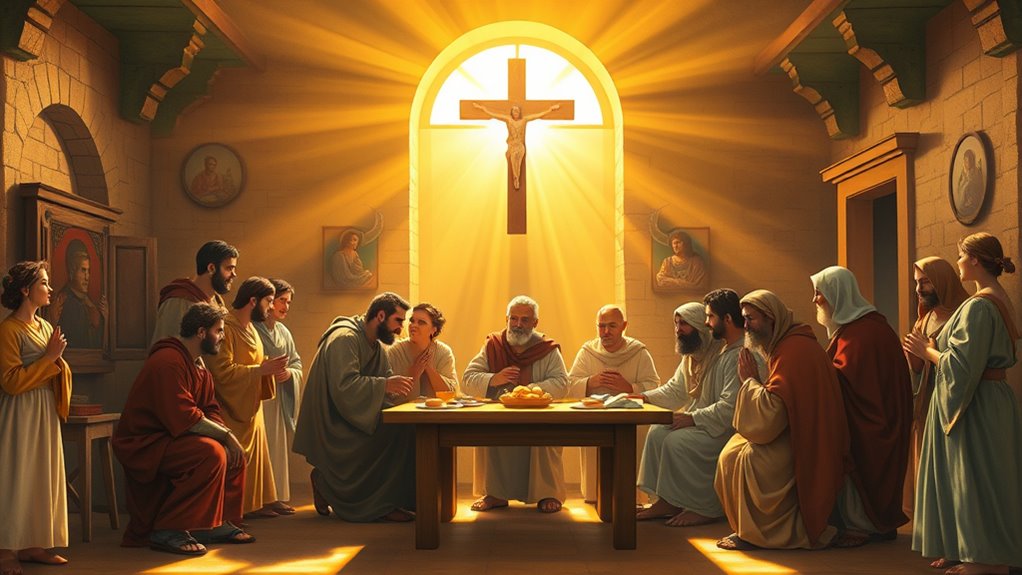
- The early church devoted themselves to teaching, fellowship, breaking bread, and prayer as established patterns for believers.
- Historical sources show Christians consistently gathered weekly on Sunday to honor Christ’s resurrection and share communion.
- Public reading and preaching employ God’s Word as living and active, enabling spiritual discernment in the assembled community.
Why God Commands Christians to Meet Together
Throughout Scripture, God establishes clear instructions for believers to gather regularly, treating corporate assembly not as an optional activity but as a fundamental practice of the Christian life.
Hebrews 10:25 directly commands believers not to neglect meeting together, as some habitually do, emphasizing the importance of encouraging one another as the Day approaches. This instruction aligns with Exodus 20:3, which prioritizes God and His Word through consistent attendance. This practice also reflects the biblical pattern of communal unity rooted in the doctrine of the Trinity.
The biblical text presents church gatherings as God’s primary means to prevent hearts from being hardened by sin’s deceitfulness, as warned in Hebrews 3:12-13. Regular assembly provides daily exhortation that counters the isolating influence of sin, maintaining believers’ responsiveness to truth and protecting against an evil, unbelieving heart that leads away from God. Scripture describes God’s Word as living and active, sharper than any two-edged sword, piercing to the division of soul and spirit, making the public reading and preaching during assembly essential for spiritual discernment. The early church demonstrated this commitment by devoting themselves to the apostles’ teaching, fellowship, breaking of bread, and prayer, establishing a pattern for believers throughout all generations.
How Often Early Believers Gathered for Worship
The New Testament record indicates that early believers gathered weekly on the first day of the week, with Acts 20:7 providing direct evidence of this pattern. Paul delayed his journey to Troas specifically to meet with believers on that day for breaking bread, suggesting an established custom rather than a spontaneous event.
The Didache, written around A.D. 120, confirms this practice by stating that Christians assembled each Lord’s day to break bread and give thanks. Justin Martyr, writing around 152, similarly described Sunday gatherings that included communion. These early sources demonstrate consistent weekly worship in the decades following the apostles. Notably, second-century evidence for daily communion is entirely absent from these historical records.
Beyond these primary Sunday meetings, believers also gathered in homes throughout the week for fellowship, prayer, and mutual encouragement. The first day held special significance because Jesus’ resurrection occurred on that day, making it an appropriate time to honor the Risen Lord. Regular practices like breaking bread and prayer helped develop these weekly rhythms into sustained communal worship.